Hotels and large commercial properties in the US face persistent labor shortages, rising operational costs, and increasing pressure to deliver consistent service across busy, multi-shift operations. Manual delivery of amenities, meals, and supplies often results in delays and inefficiencies, particularly in high-rise, multi-floor buildings with heavy guest traffic.
Automated commercial robotics for room service addresses these challenges by reliably handling repetitive delivery tasks across corridors, elevators, and back-of-house areas. In fact, a major hotel chain reported a 20% increase in sales after implementing mobile robot platforms for room service delivery, driven by faster response times and improved guest satisfaction.
This article explores how the robot room service hotel model is restructuring hospitality by examining key advantages, limitations, real-world examples, operational use cases, and emerging future trends.
Key Takeaways
Room service robots reduce labor dependency while maintaining consistent operational quality in high-foot-traffic hotels.
Automation ensures fast, reliable deliveries even during peak occupancy or overnight hours.
Integration with hotel systems supports efficient workflow management and task tracking.
Robots optimize energy use, reduce human errors, and contribute to sustainability goals.
Utilizing robots strategically enhances guest satisfaction, brand differentiation, and long-term cost optimization.
What is a Room Service Robot?
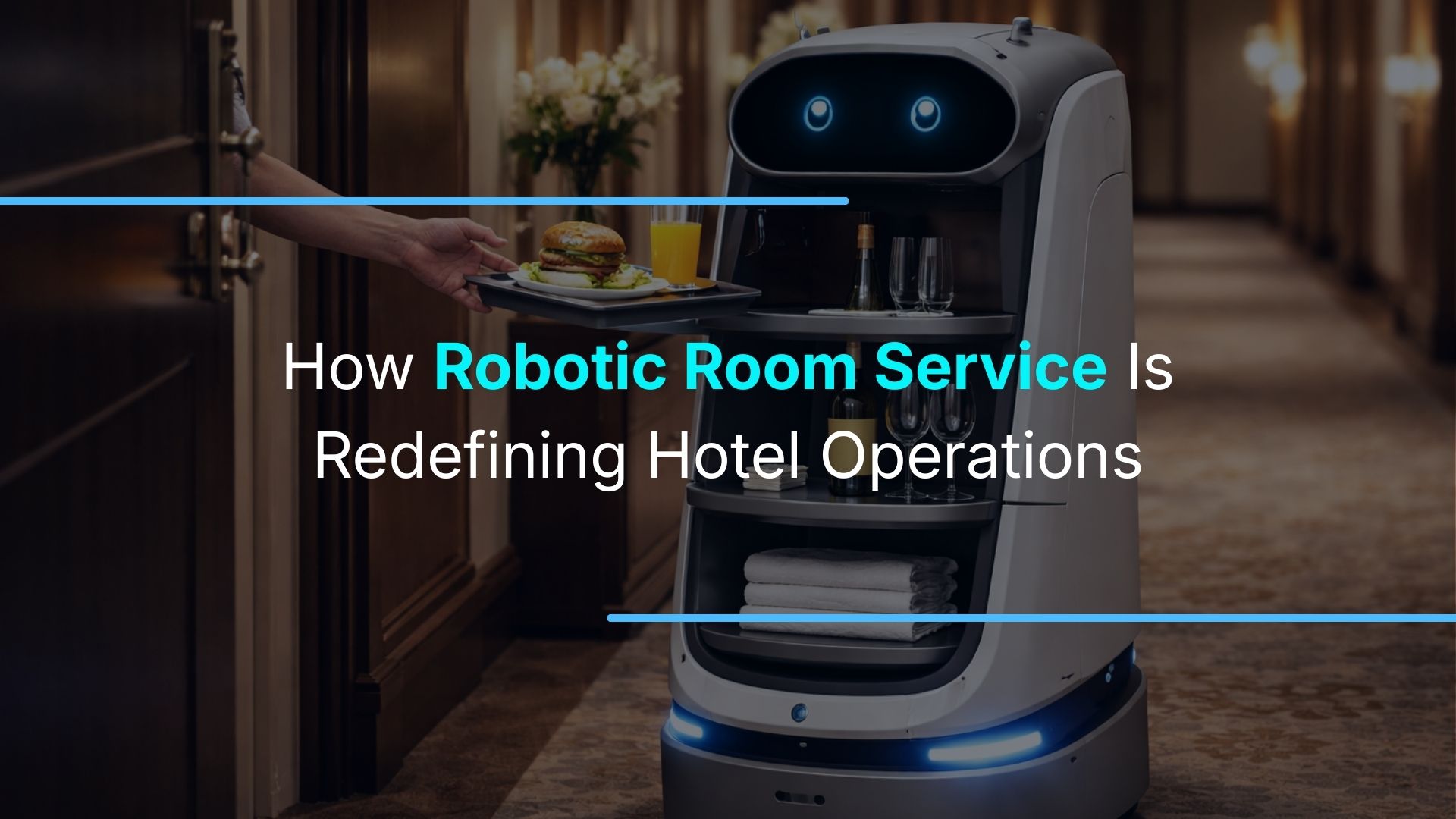
A room service robot is an autonomous commercial robot designed to transport items such as meals, linens, and amenities within hotels or other high-traffic commercial facilities. It navigates floors, elevators, and corridors efficiently, minimizing human labor for repetitive delivery tasks.
These robots rely on LiDAR, SLAM-based mapping, and obstacle detection to move safely and accurately across multi-level environments. Hotel room service robots ensure deliveries are carried out on schedule, improving operational consistency and reducing errors in high-volume service workflows.
Next, we explore why hotels are increasingly implementing these robots.
Why Are Hotels Using Room Service Robots?
Hotels use room service robots to address operational inefficiencies caused by high foot traffic, labor shortages, and repetitive delivery tasks. Robot room service hotel devices handle routine item transport, freeing staff for higher-value tasks.
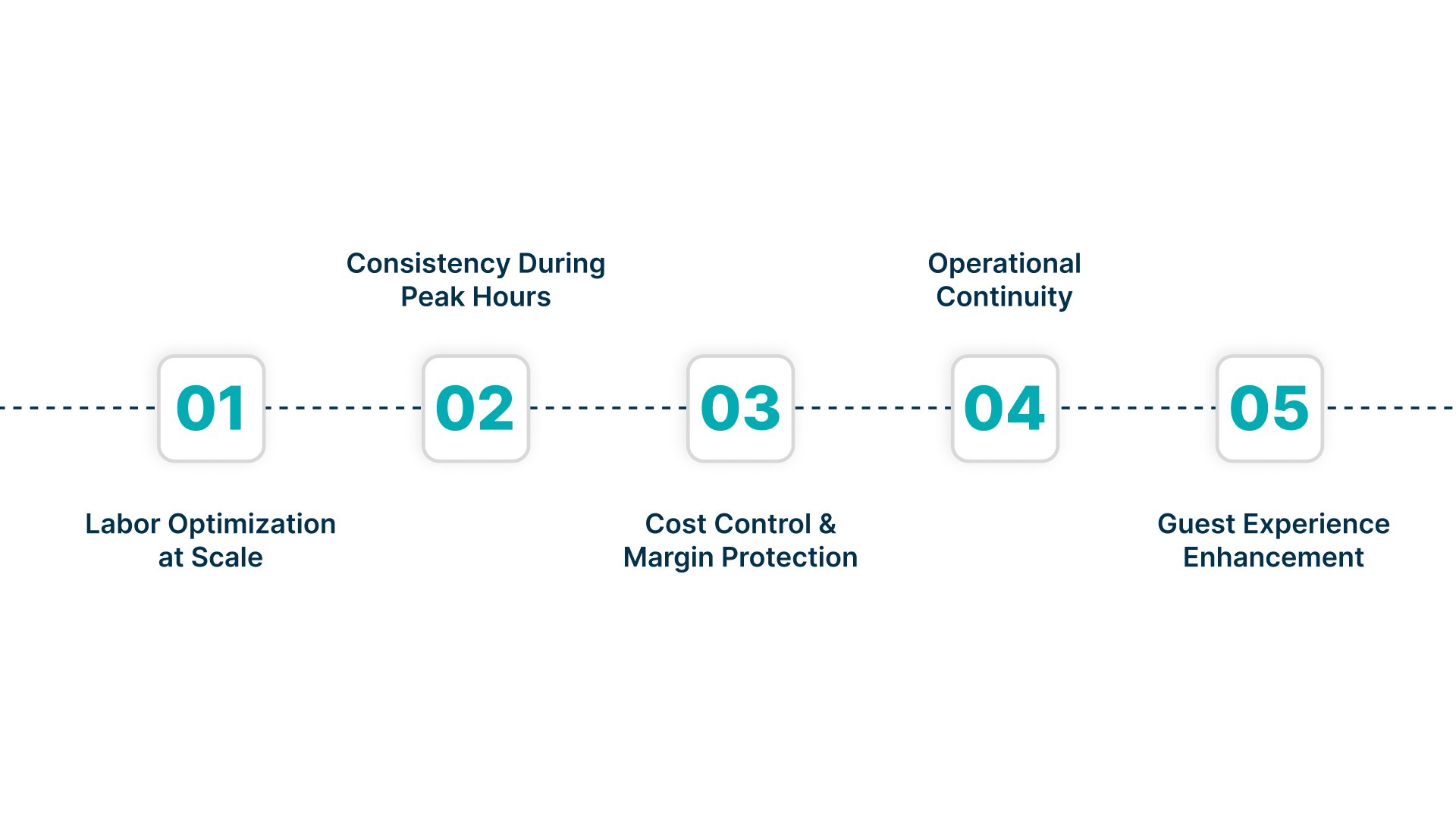
Labor Optimization at Scale: Robots manage frequent, low-complexity deliveries, reducing reliance on human staff during peak occupancy.
Consistency During Peak Hours: Automated robots maintain uniform performance without fatigue, ensuring predictable service across busy shifts.
Cost Control and Margin Protection: Using robots offsets rising labor costs while optimizing workforce allocation.
Operational Continuity: Robots provide uninterrupted service overnight or during sudden demand surges, supporting large-scale facility operations.
Guest Experience Enhancement: Reliable, timely delivery improves guest satisfaction and operational credibility in high-volume properties.
To understand their functionality, let’s break down the core components of these robots.
4 Key Components of a Room Service Robot in Hotels
Room service robots rely on precise hardware and software integration to handle high-volume, repetitive delivery tasks efficiently across commercial properties. Each component ensures reliability, safety, and operational scalability.
Navigation Systems: Advanced LiDAR, visual SLAM, and ultrasonic sensors enable precise indoor localization in crowded corridors and multi-floor buildings. Automatic path-planning algorithms optimize routes across elevators, hallways, and high-traffic areas, ensuring timely deliveries.
Manipulation Mechanisms: Motorized payload bays secure items during transit, preventing spills or damage. Load-balancing and stabilization systems allow smooth operation over carpet, tile, and transition thresholds without interruption.
Communication Interfaces: Robots integrate with hotel management systems, inventory platforms, and scheduling software using API-driven protocols. Real-time notifications update staff and track delivery completion, minimizing manual oversight.
Security Features: Encrypted delivery compartments restrict access to authorized users, while access logs and verification protocols ensure that items are delivered securely to the correct room or department.
Now, we’ll look at the advantages these robots bring to hotel operations.
5 Advantages of Room Service Robots in Hotels
Room service robots address operational inefficiencies in mid- to large-sized hotels, especially during high-traffic periods, by automating repetitive delivery tasks while supporting staff productivity.
Efficiency and Speed: Robots execute deliveries across multiple floors consistently, even during peak check-in and dining hours. They optimize routes in real time, reducing wait times and improving overall operational flow.
Round-the-Clock Availability: Robots operate continuously without the limitations of shifts or fatigue. Overnight or late-night service remains consistent, maintaining high service standards without increasing labor overhead.
Sustainability: Electric drive systems lower energy consumption compared to manual carts, while route optimization minimizes travel distance and operational emissions per delivery cycle.
Novelty and Brand Differentiation: Using robots signals technological maturity and innovation, reinforcing a hotel’s image as a forward-thinking, efficient, and guest-focused brand.
Next, It’s important to recognize their limitations.
3 Disadvantages of Room Service Robots in Hotels
Despite operational benefits, room service robots introduce new constraints that hotels must address to ensure seamless integration with human workflows.
Limited Versatility: Robots are designed for predefined delivery tasks and cannot interpret complex guest requests outside programmed workflows. Human intervention remains necessary for unstructured or personalized services.
Initial Costs and Maintenance: High upfront capital is required for hardware, software, and integration with elevators or PMS systems. Ongoing maintenance involves specialized technical support, software updates, and periodic calibration.
Guest Preferences: Some guests, particularly in premium segments, still prefer human interaction for deliveries or assistance. Hotels often utilize hybrid models to balance automation with personal service expectations.
Let’s categorize the different types available in the hotel industry.
5 Types of Hotel Room Service Robots
Hotels set up specialized automated robots depending on task complexity, traffic density, and operational needs, ensuring efficient delivery and service without replacing human staff entirely.
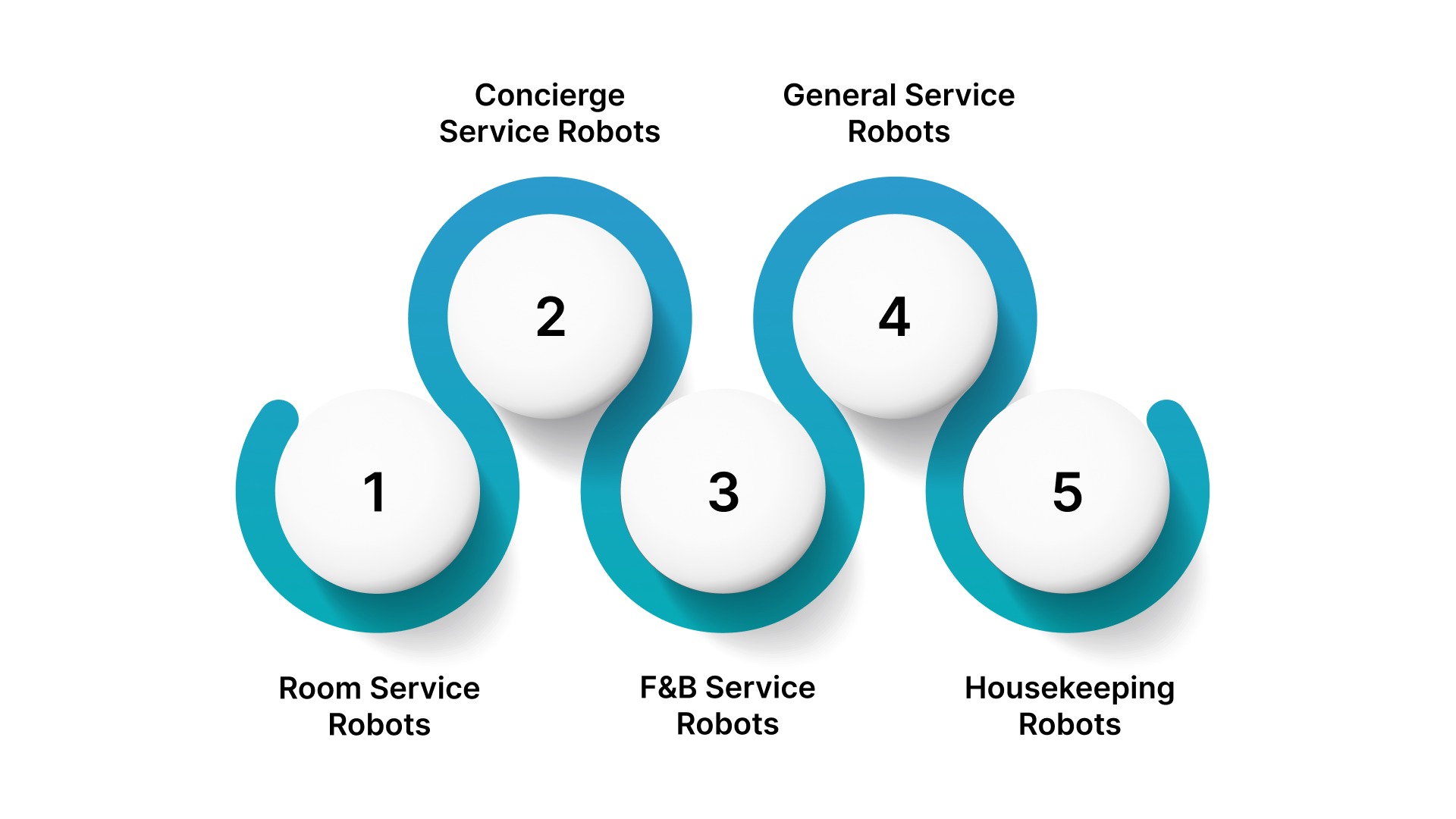
Room Service Robots: These robots handle point-to-point deliveries of meals, linens, and amenities. They operate autonomously across multiple floors, using sensors and programmed routes to maintain consistent delivery times.
Concierge Service Robots: Designed to provide wayfinding assistance, local recommendations, and basic guest guidance. They support staff by handling routine inquiries and escalating complex requests to human personnel.
F&B Service Robots: These robots transport prepared food from kitchens to rooms or service zones. Temperature-controlled compartments and programmed delivery sequencing ensure meals arrive on time and in optimal condition.
General Service Robots: Used for internal logistics across departments, including document transport, supply redistribution, and inter-floor asset movement. They reduce repetitive manual labor and improve operational efficiency.
Housekeeping Robots: These units automate floor cleaning, linen transport, and sanitation tasks. Scheduling aligns with occupancy data to minimize guest disruption while maintaining hygiene standards across high-traffic areas.
Next, we’ll explore the diverse use cases these robots serve.
6 Different Use Cases of Hotel Room Service Robots
Hotel room service robots streamline repetitive tasks and enhance operational efficiency in high-traffic hotels. They are used to improve delivery speed, reduce labor strain, and maintain consistent service standards across guest areas.
In-Room Amenity Delivery: Robots transport towels, toiletries, bottled water, and linens using secure payload compartments. Each delivery is logged to ensure accountability and consistent service for all rooms.
Food and Beverage Transport: Autonomous units deliver meals, snacks, and beverages with temperature-controlled compartments. This preserves food quality and reduces staff movement during busy hours.
Contactless Guest Requests: Robots fulfill app- or mobile-triggered requests, allowing hotels to provide on-demand service efficiently while minimizing direct human contact.
Housekeeping Supply Replenishment: Robots move linen carts, cleaning supplies, and other essentials between storage and guest floors, freeing housekeeping staff to focus on detailed cleaning tasks.
After-Hours Operations: Automated robots maintain service during overnight hours when staffing is limited, ensuring continuous guest support without additional labor costs.
Infection-Control Zones: In wellness or hospital-adjacent hotels, robots deliver supplies to isolation or recovery rooms, reducing human exposure and supporting strict hygiene protocols.
Next, we’ll see some top robot solutions for the hotel and hospitality industry.
Top 7 Room Service Robots for the Hotel Industry
Hotel operators implement room service robots to automate repetitive, high-frequency tasks, ensuring consistent service across floors and departments. These systems directly address staffing gaps and peak-hour operational demands.
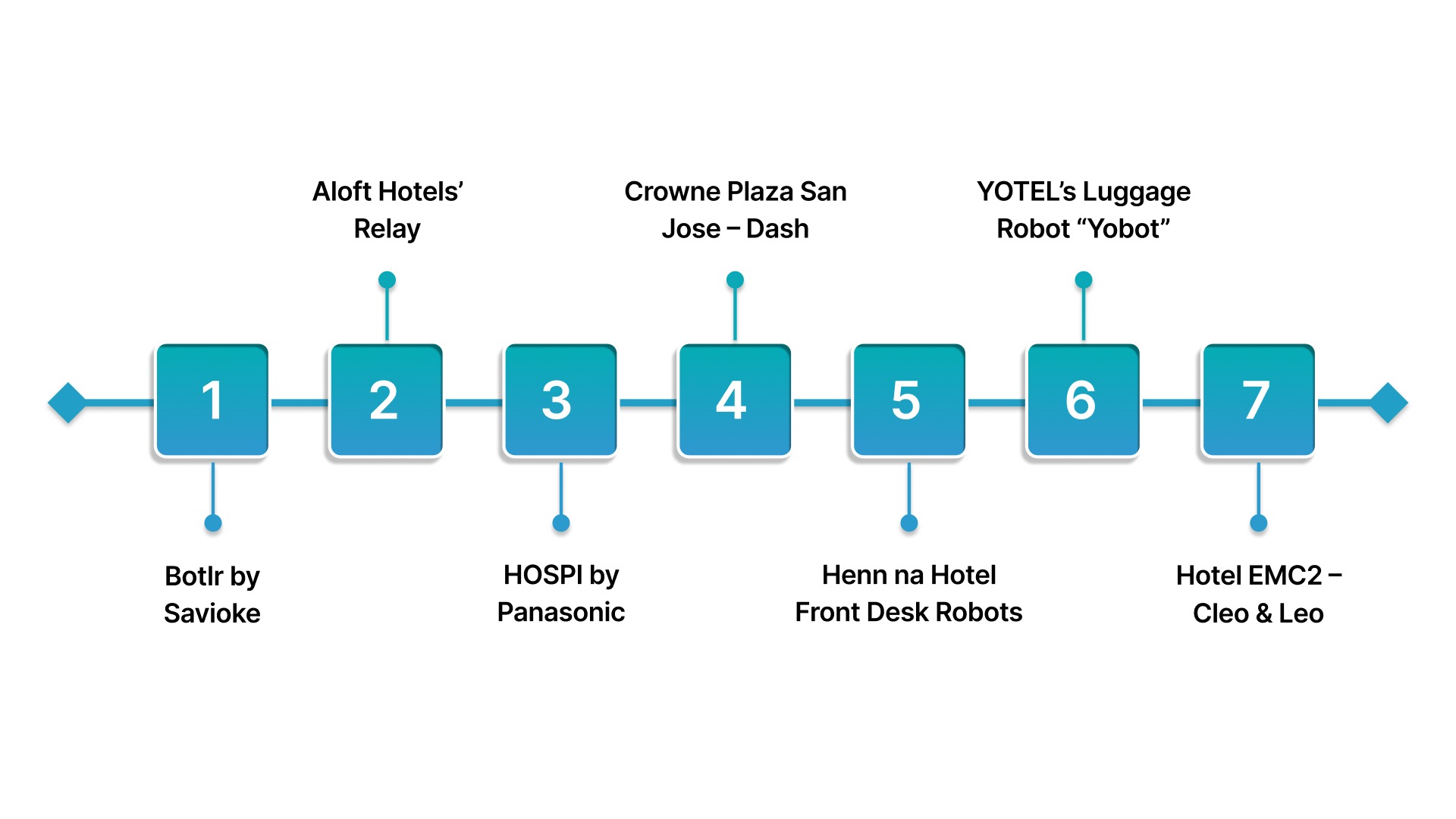
Botlr by Savioke
Botlr is an autonomous delivery robot designed for hotel logistics, capable of navigating corridors and elevators to deliver towels, amenities, and snacks. Its secure compartments ensure contactless delivery, while programmed routes maintain timely and predictable service for guests, even during peak occupancy periods.
Aloft Hotels’ Relay
Relay robots operate across multiple Aloft properties, autonomously transporting frequently requested items while reducing front desk interruptions. They can prioritize deliveries, navigate multi-floor layouts efficiently, and maintain consistent service levels, making them a reliable solution for high-traffic hotels with labor shortages.
HOSPI by Panasonic
HOSPI robots specialize in precision delivery for hospitality and healthcare environments. Their closed payload system ensures hygiene-sensitive transport of meals, linens, and medical items, while advanced obstacle avoidance and fleet coordination allow them to move reliably through crowded corridors without human intervention.
Crowne Plaza San Jose – Dash
Dash autonomously delivers snacks, toiletries, and guest-requested items across multiple floors. Using Wi-Fi-based localization and cloud monitoring, it monitors its battery, returns to charging stations independently, and executes deliveries consistently, providing uninterrupted service even during peak hours or overnight shifts.
Henn na Hotel Front Desk Robots
Humanoid robots at Henn na Hotel manage check-in, guest guidance, and identity verification. Facial recognition replaces traditional keycards, and in-room units control lighting and HVAC systems, offering a futuristic, automated guest experience while freeing staff for higher-value tasks.
YOTEL’s Luggage Robot “Yobot”
Yobot automates luggage storage and retrieval, handling up to 300 bags daily. It speeds up guest check-in, minimizes human contact, and reallocates staff from manual baggage handling to customer engagement and operational efficiency.
Hotel EMC2 – Cleo and Leo
Cleo and Leo function as autonomous service couriers, delivering towels, snacks, and essentials on scheduled and on-demand workflows. Their placement ensures continuity of service during off-hours, high-traffic periods, or staff shortages without increasing labor costs.
Apart from these solutions, ToDo Robotics distributes autonomous room-service robots from leading manufacturers, including Pudu Robotics, to improve hotel delivery operations. Platforms such as PuduBot 2, SwiftBot, and KettyBot Pro are deployed to handle amenity, linen, and in-room deliveries with speed and reliability. PuduBot 2 moves through complex corridors and high-ceiling spaces using advanced VSLAM+ mapping, while SwiftBot uses intelligent collision sensing to move safely through crowded hallways without interrupting guest traffic.
Next, let’s examine the trends influencing the future of hotel robotics.
6 Future Trends in Hotel Robotics for Room Service Management
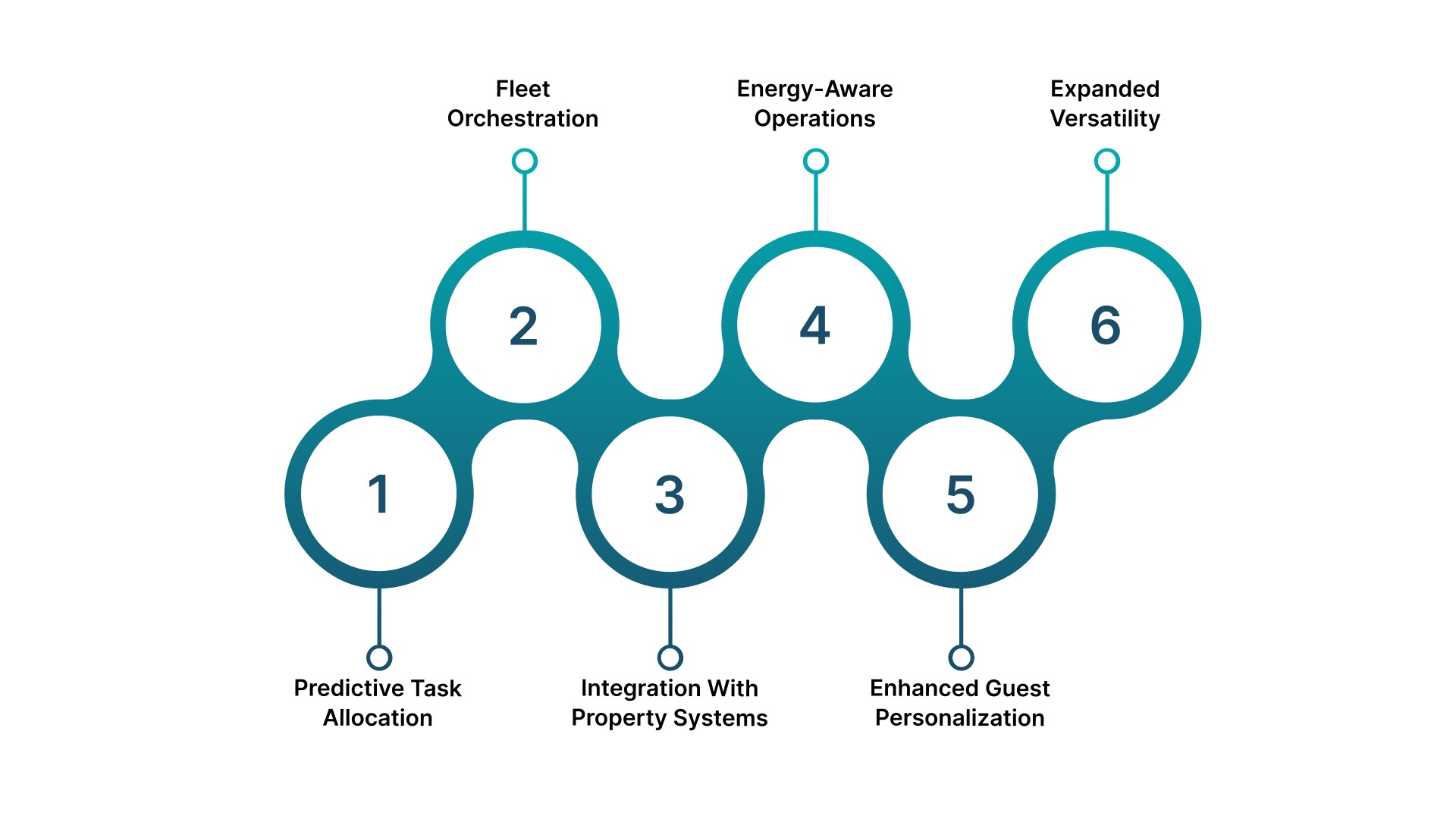
Future projects in hotel robotics focus on smarter fleet management, energy efficiency, and seamless coordination with hotel operations.
Predictive Task Allocation: Robots will pre-position themselves based on occupancy forecasts, event schedules, and historical service patterns, ensuring rapid response during peak demand periods.
Fleet Orchestration: Centralized platforms will coordinate multiple robots simultaneously, optimizing routes, elevator access, and task prioritization to maximize throughput across large properties.
Integration with Property Systems: Future robots will connect directly to property management and point-of-sale systems, automatically creating delivery tasks and updating status in real time.
Energy-Aware Operations: Advanced route optimization, charging cycles, and idle-time reduction will lower energy consumption per delivery while maintaining continuous service.
Enhanced Guest Personalization: Robots will recognize frequent guests, preferred delivery times, and room-specific requests, enabling more tailored and efficient automated service.
Expanded Versatility: Future models may handle additional tasks, from luggage handling to minor maintenance, further reducing labor demands and operational bottlenecks.
Here’s how ToDo Robotics is setting the next standard in robot room service.
Enable Next Gen Robot Room Service with ToDo Robotics as Your Distributor and Deployment Partner
Designed for high-traffic hotels in major NFL cities and other dense urban markets, ToDo Robotics enables reliable robot room service by distributing and helping integrate proven delivery robots from Pudu Robotics. These systems reduce labor pressure while elevating guest experience by automating repetitive deliveries across elevators, corridors, and guest floors, without disrupting existing staff workflows. Robots operate continuously, supporting peak check-in periods and late-night demand.
FlashBot: FlashBot automates secure room-to-room delivery using elevator integration and IoT connectivity. Password, phone, and NFC verification ensure controlled access for guest orders, amenities, and linen transport across multi-floor hotels.
BellaBot Pro: BellaBot Pro supports premium in-room dining delivery with precise tray detection and multimodal guest interaction. Its compact 65 cm clearance allows smooth navigation through busy hotel corridors and service elevators.
HolaBot: HolaBot handles high-volume service runs with a 60 kg payload and an IPX5 waterproof cabin. Its paging and notification functions help housekeeping and room service teams coordinate deliveries without manual follow-ups.
KettyBot Pro: KettyBot Pro combines room service delivery with guest guidance and digital promotion. The 18.5-inch display enables hotels to promote dining offers or amenities while the robot completes delivery routes.
PuduBot 2: PuduBot 2 supports continuous hotel operations using VSLAM+ navigation with marker-less installation. It adapts quickly to layout changes and performs reliably in large lobbies and high-ceiling properties.
SwiftBot: SwiftBot prioritizes guest safety using real-time collision sensing and adaptive path planning. It navigates crowded hallways during peak hours while maintaining consistent delivery timelines.
PUDU D7 (Semi-Humanoid Service Robot): PUDU D7 adds advanced manipulation for hotels seeking higher automation maturity. It can operate elevators, open doors, and complete complex service tasks that typically require staff intervention.
With ToDo Robotics as a deployment partner, hotels transform room service into a scalable, autonomous operation that improves service consistency, protects margins, and meets modern guest expectations.
Conclusion
Automated commercial robots for room service have transitioned from novelty to operational necessity in mid- to large-scale hotels. They efficiently handle repetitive delivery tasks, reducing dependence on human staff while maintaining high service standards during peak occupancy periods.
These robot room service hotel models now integrate with elevators, floor mapping systems, and operational workflows, ensuring seamless navigation and reliable performance. Installing them strategically allows hotels to optimize labor costs, maintain round-the-clock service, and improve guest satisfaction without replacing human hospitality roles.
For large hotels in major markets, ToDo Robotics acts as a deployment partner, helping properties implement autonomous solutions such as HolaBot and KettyBot Pro for amenity delivery, late-night requests, and guest guidance. With high payload capacity, paging functions, and compact navigation, these robots are integrated into active hotel environments to fit existing workflows, freeing staff from repetitive runs while preserving service quality and brand differentiation.
Contact ToDo Robotics to see how enterprise-ready service robots can modernize room service operations across your hotel portfolio.
FAQs
Are room service robots replacing hotel staff?
No, they handle repetitive deliveries, freeing human staff to focus on guest engagement, problem resolution, and higher-value services.
Do guests prefer robot-based room service?
Guest usage is strongest for contactless and late-night deliveries, where robots provide consistent service without disrupting privacy or in-room experiences.
Can room service robots operate in older hotel buildings?
Yes, but effective operation depends on elevator integration, Wi-Fi coverage, and accurate digital floor maps of corridors and service areas.
How secure are hotel room service robots?
Modern robots use locked delivery compartments, room-level authentication, access logging, and encrypted communications integrated with property management systems.
What is the ROI timeline for room service robots in hotels?
Mid- to large-scale hotels typically achieve ROI within 12–24 months through labor savings and improved operational consistency during peak hours.