A packed dining room quickly shows where your operation feels the most pressure. When 45% of restaurant operators say they do not have enough staff to meet current customer demand, that strain becomes obvious during busy shifts.
Every extra step works against you. Servers spend more time running food than engaging guests, support staff rush to keep pace, and managers fill gaps. The result is slower turns, tired staff, and an experience that slips when expectations are highest.
Restaurant robots shift that pressure. By handling routine movement and cleaning tasks, they reduce daily workload and help service stay consistent, even as staffing levels change.
In this blog, you’ll explore where robots actually fit into restaurant operations, how they work in real settings, and how to decide whether automation solves real problems on your floor.
Key Takeaways:
Robots take over routine movement: They handle food delivery and cleaning so your team doesn’t spend shifts walking back and forth.
Service stays consistent at peak: Robots keep service moving during rush hours without extra staff or overtime.
Staff focuses on guests: Your team spends more time on hospitality instead of transport and cleanup.
Labor pressure drives adoption: Staff shortages and rising wages make automation a practical choice.
Results show in daily operations: Restaurants see time saved, smoother flow, and less physical strain on staff.
What are Robots in Restaurants?
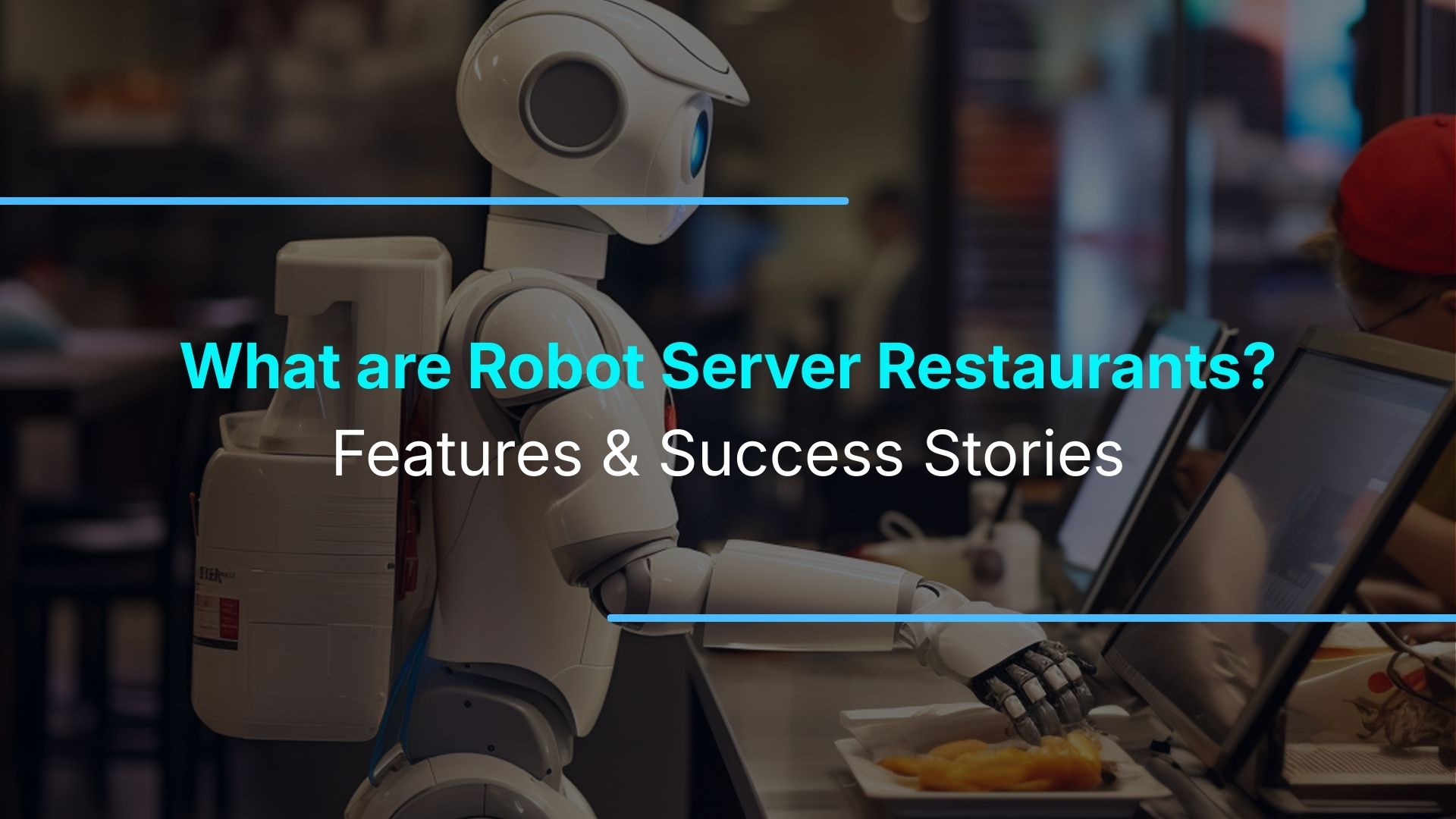
Robots in restaurants are autonomous machines that handle specific, repetitive tasks in your dining and service areas. You can use them to support day-to-day operations.
Their role stays centered on movement, delivery, and maintenance work that follows the same pattern every shift.
These robots operate autonomously, using built-in navigation and safety systems to move through dining rooms, kitchens, and service areas. You can assign them clear tasks, such as carrying food, moving supplies, or cleaning floors.
Once you understand what robots are and how they fit into restaurant settings, it becomes clearer how they are being used in everyday operations.
How Restaurants are Using Robots in Day-to-Day Operations?
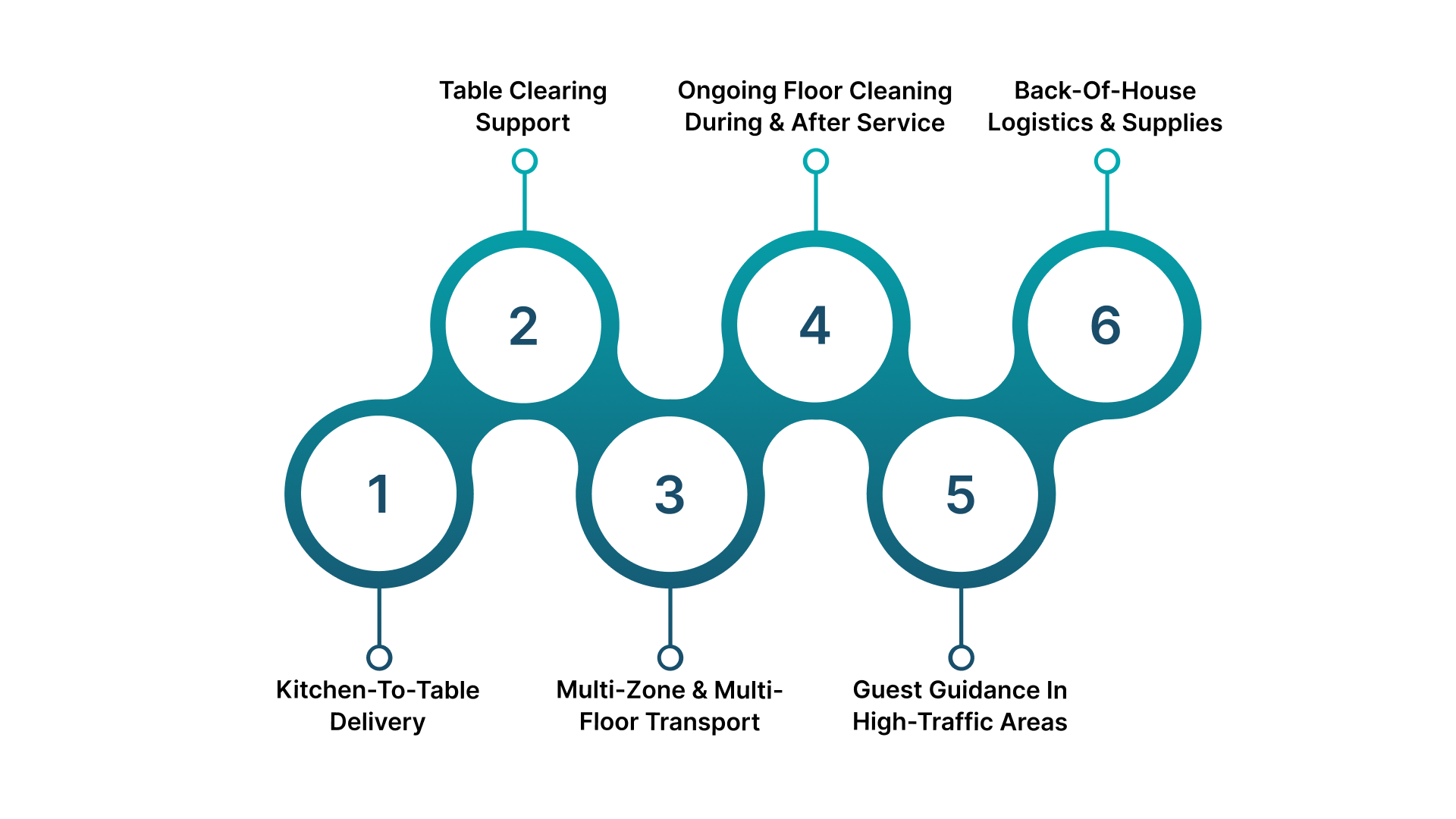
Restaurants use robots to keep daily service running smoothly without putting more strain on teams that are already stretched thin. These robots take over routine tasks that slow things down and pull staff away from guests.
Here’s how restaurants use robots in day-to-day operations:
Food and Item Delivery Between the Kitchen and the Tables
Robots handle regular delivery runs from the kitchen to dining areas throughout service. This cuts down foot traffic in tight spaces and lets servers spend more time with guests instead of walking back and forth. Service stays on pace during busy hours without needing extra staff.
Table Clearing Support
Robots help collect used plates, trays, and service items once guests finish dining. This keeps tables turning at a steady speed when teams are short-handed. The dining area stays clean and organized without rushing the process.
Multi-Zone and Multi-Floor Transport
In larger restaurants and hotels, robots move items between kitchens, service stations, and different dining areas. With elevator access, they remove the need for manual handoffs between floors. This helps prevent the delays that often slow down multi-level operations.
Continuous Floor Cleaning During and After Service
Cleaning robots handle routine floor cleaning during slower periods and overnight. This keeps floors consistently clean without pulling staff away from service. Cleanliness stays on track without gaps in the schedule or extra overtime.
Back-of-House Logistics and Supply Movement
Robots move supplies, racks, and prep items between stations throughout long shifts. This reduces interruptions in kitchen flow during peak service. Line staff focus on cooking and plating rather than handling transport tasks.
With support from providers like ToDo Robotics, you can deploy proven robots that follow defined routes and routines as part of daily operations. This helps you maintain standards without adding new roles or creating complex schedules.
As robots become part of daily restaurant workflows, this naturally leads to a closer look at restaurants where they are deployed effectively.
Popular Use Cases Where Restaurants Are Using Robots
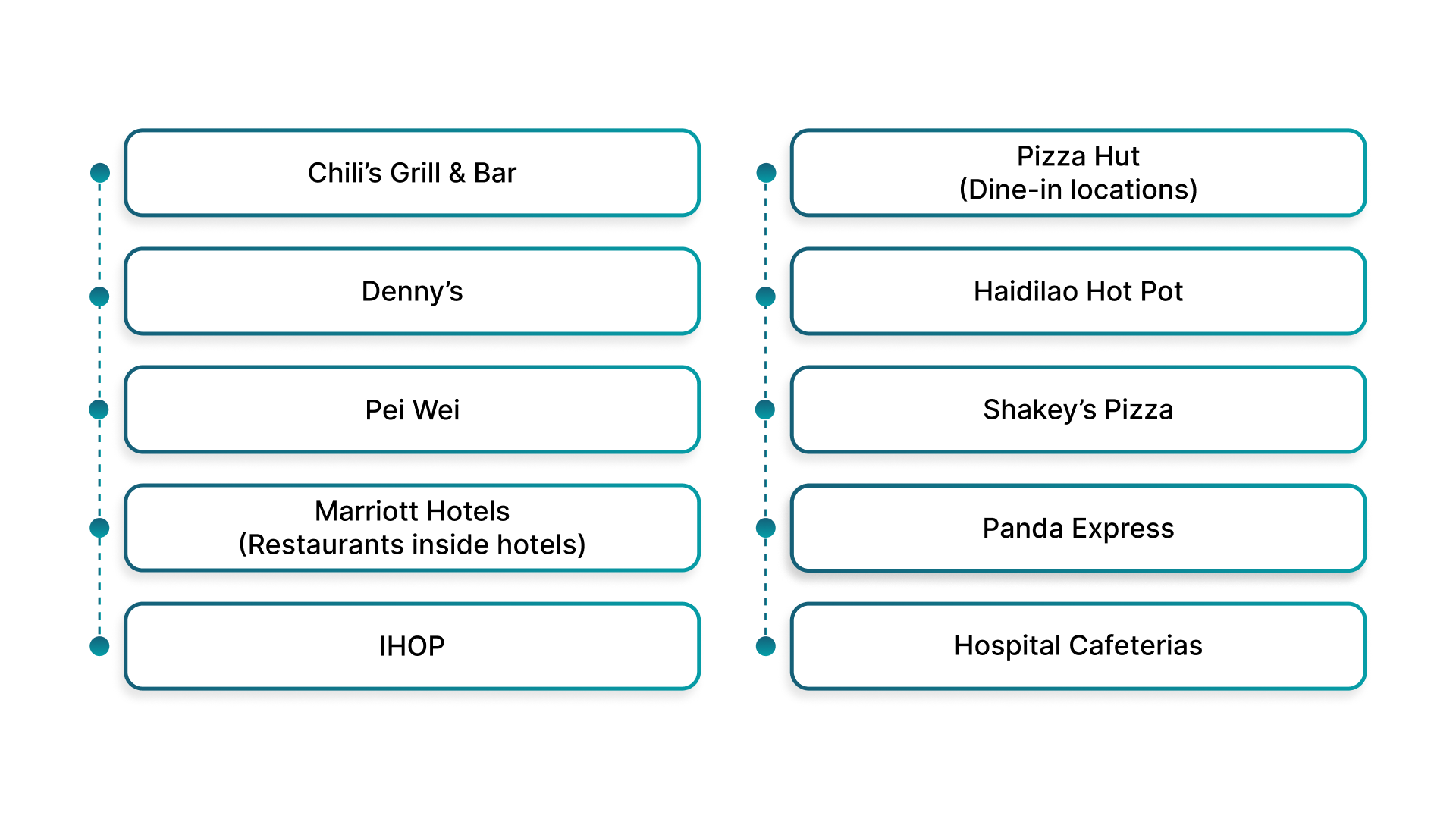
Restaurants use robots in areas where daily operations start to strain under staff shortages, long distances, and repetitive work. Below are popular use cases for restaurants using robots.
Chili’s Grill & Bar
Chili’s uses service robots to run food and help with table clearing during peak hours. This cuts down the constant back-and-forth that slows servers in large dining rooms.
Staff stay focused on guests while robots handle predictable movement. The result is a smoother, more consistent service flow during busy shifts.
Denny’s
Some Denny’s locations use robots to transport food and dishes from the kitchen to tables. The goal is to maintain service stability as staffing levels change.
Robots take on repetitive transport so smaller teams can handle more tables. This keeps service consistent without adding stress to already stretched staff.
Pei Wei
Pei Wei has tested service robots to support food running and table clearing in fast-moving environments. These robots manage repeated movement during busy periods.
Staff stay guest-facing instead of walking long routes. This helps maintain speed without increasing headcount.
Marriott Hotels (Restaurants inside hotels)
Restaurants inside Marriott properties use robots for internal food delivery and transport across large spaces. Long corridors and multi-zone layouts make manual movement inefficient.
Robots handle these routes reliably across shifts. This reduces delays without changing how service teams work.
IHOP
Some IHOP locations use robots to help with food delivery and bussing during high-volume periods. The robots absorb extra workload when table turnover is high.
Staff avoid rushing between tables and kitchen areas. Guests still get the same service experience from human servers.
Pizza Hut (Dine-in locations)
Pizza Hut dine-in restaurants in certain markets use robots to deliver food to tables. This helps maintain consistency when order volume spikes.
Robots handle predictable delivery paths while staff manage pacing and guest needs. This setup works well in dining rooms with stable layouts.
Haidilao Hot Pot
Haidilao uses service robots to deliver ingredients and dishes directly to tables. The robots handle transport in large, busy dining rooms with constant movement.
Staff focus on hospitality and guest interaction instead of carrying items. This supports high service standards without adding staff.
Shakey’s Pizza
Shakey’s locations use robots to deliver food and help with table clearing in large family dining settings. High table turnover creates repeated transport tasks during peak hours.
Robots help manage this flow consistently. Staff stay focused on guests rather than on logistics.
Panda Express
Some Panda Express locations have tested robots for internal food transport and service support. Robots handle repetitive movement during peak traffic periods.
This reduces congestion behind the counter and in service areas. Staff keep up speed without extra physical strain.
Hospital Cafeterias
Hospital cafeterias use robots to deliver food trays and maintain floor cleanliness throughout the day. These environments need consistent service with little room to adjust staffing.
Robots support predictable movement and cleaning schedules. This keeps operations steady without adding labor.
After seeing how robots are being used in real restaurant settings, the next question is whether they make sense for your own operation.
Are Robot Waiters Worth It for Your Restaurant?
Robot waiters create a practical decision point for restaurant operators. Their impact depends on whether they truly reduce the daily load on staff or add another system that needs oversight.
When a robot’s role aligns well with your service flow and physical layout, it supports smoother operations.
Decision Area | When Robot Waiters Make Sense |
Walking Distance and Layout | Large dining rooms or multi-zone spaces where staff spend significant time walking. |
Peak Service Periods | Rush hours where order volume exceeds available service coverage. |
Floor Plan Predictability | Restaurants with fixed layouts and clearly defined movement paths. |
Role in Hospitality | When robots handle transport, while staff focus on guest interaction. |
Return on Investment | When value is measured by time saved rather than headcount reduction. |
Once the value of robot waiters is weighed, it’s natural to think about how their role fits alongside human staff in the long run.
Will Robots Replace Humans in Restaurants?
Robots will not replace people in restaurants because hospitality relies on judgment, timing, and a real human connection. What robots do change is how routine work gets handled during a shift. That difference matters when you think about staffing over the long run.
Hospitality Remains Human: Guest interaction, service pacing, special requests, and problem-solving stay firmly in human hands. These moments require empathy and situational awareness that robots cannot replicate.
Service Decisions Stay With Staff: Robots do not decide when to check on tables, adjust service flow, or handle unexpected issues. Your team remains fully in control of the guest experience.
How Robot Waiters Support Restaurant Teams?
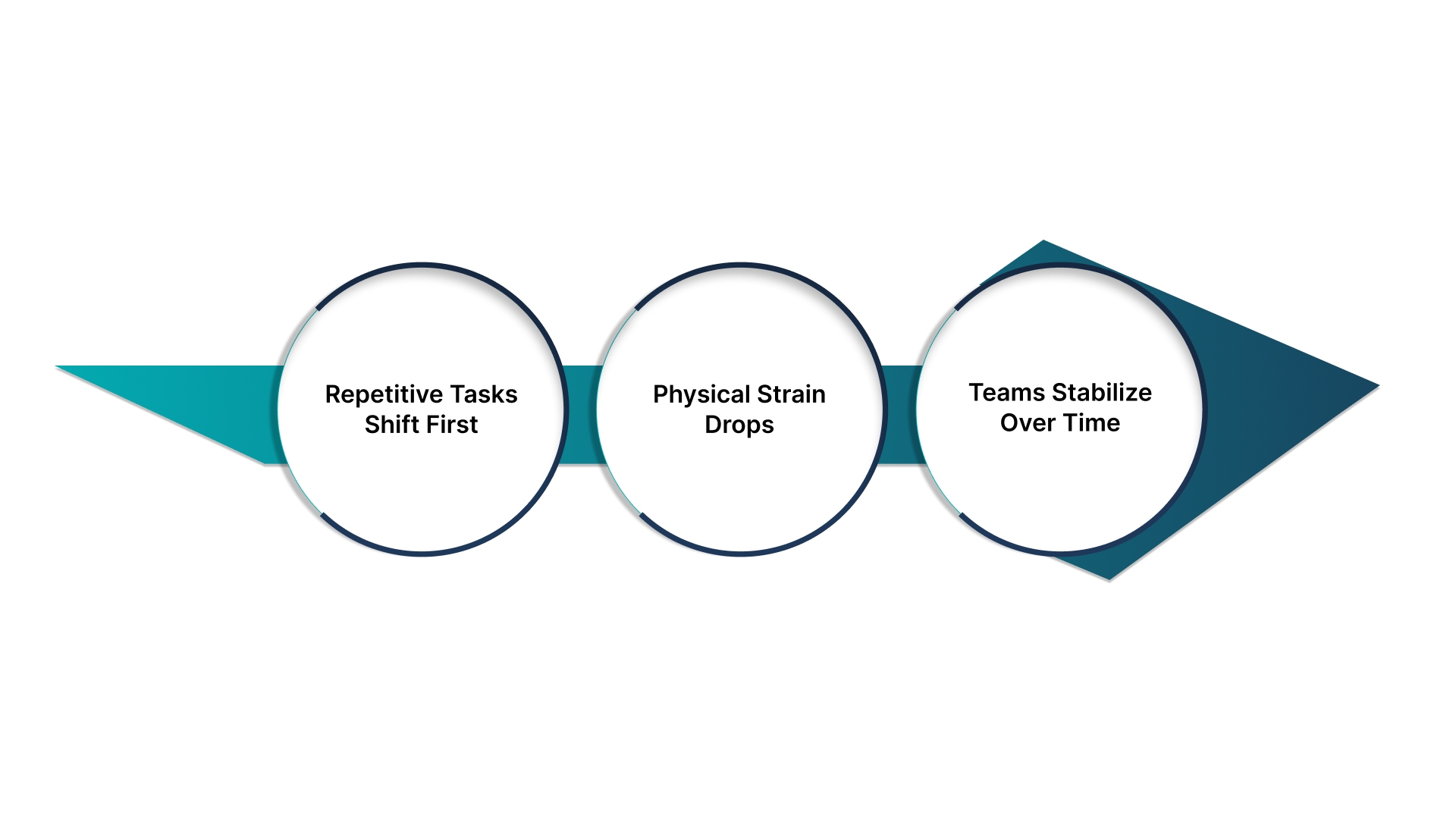
Here’s how robot waters support restaurant teams:
Repetitive Tasks Shift First: Robots handle movement-heavy tasks like food delivery and item transport, which repeat every shift and consume staff time without adding much guest value.
Physical Strain Drops: By taking over walking, carrying, and routine runs, robots reduce fatigue during long shifts and peak hours.
Teams Stabilize Over Time: When staff focus more on service skills and less on physical workload, teams tend to stay longer and perform more consistently.
How Does ToDo Robotics Support Restaurant Operations?
ToDo Robotics helps you use robots where they actually make a difference during service. The focus stays on delivery, cleaning, and internal movement. These are the same tasks that slow teams down and create physical strain when staffing runs tight.
The company works as a distributor and integration partner for commercial-ready robots already used in restaurants, hotels, and large facilities. These robots are built for daily use in live environments where safety, reliability, and consistent performance matter.
For restaurant environments, this usually includes:
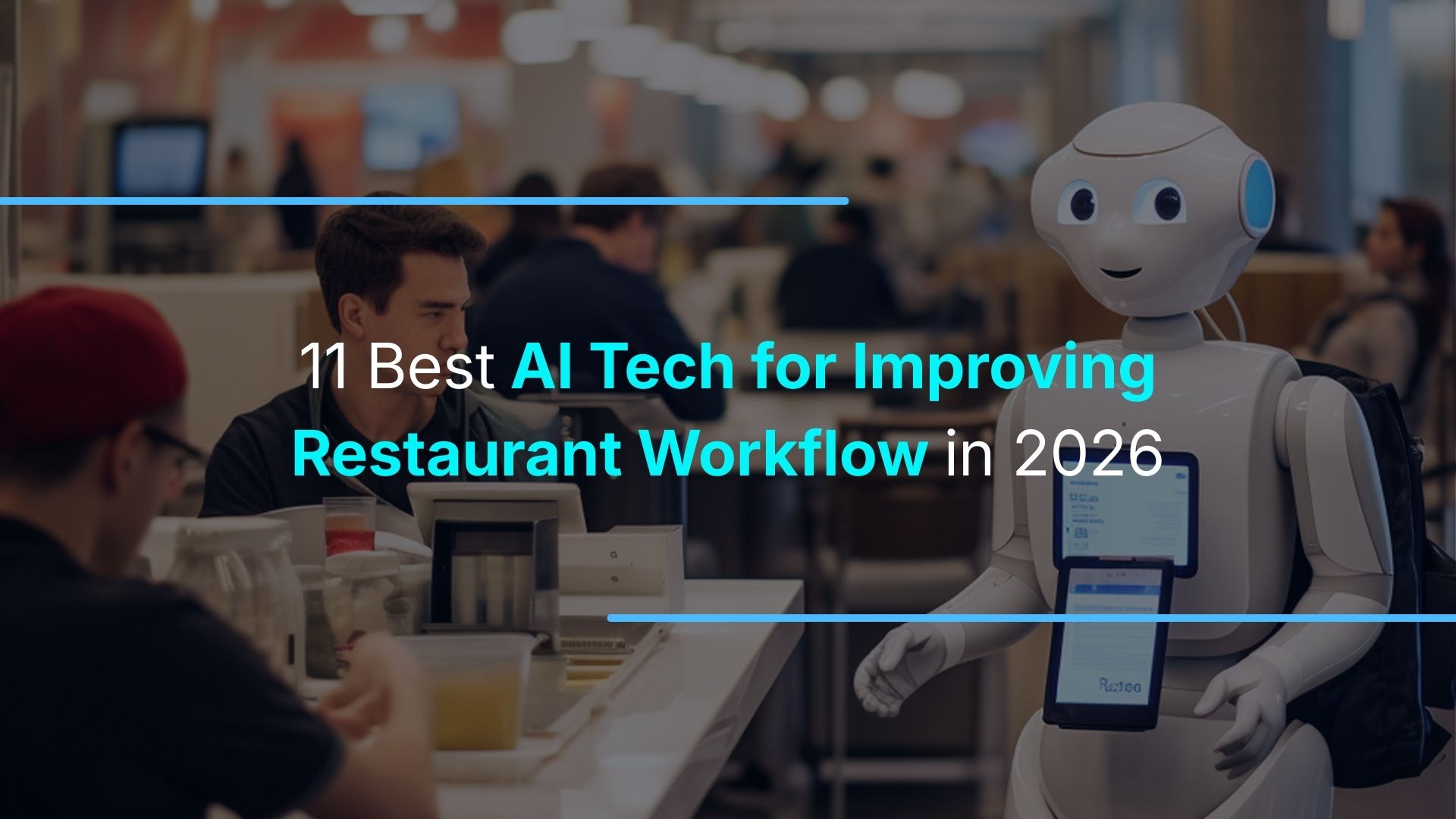
BellaBot Pro: A customer-friendly delivery robot built for restaurants and hospitality spaces, with high carrying capacity and an interactive design that improves the guest experience.
PuduBot 2: A multi-tray delivery robot designed for busy service environments, helping move items efficiently and reduce staff workload during peak hours.
KettyBot Pro: A versatile robot that combines food delivery, navigation, and on-screen messaging, making it well-suited for customer-facing spaces.
CC1 & Vacuum 40: Autonomous cleaning robots that help maintain consistent cleanliness with minimal hands-on effort.
ToDo Robotics helps you assess where automation fits, see the robots in action through demos, and deploy them to match your floor layout and service flow. The aim is to make adoption smooth and avoid adding extra complexity to daily operations.
Final Thoughts
Before bringing in any robot, walk your floor during peak service and notice how much time your team spends just moving from one place to another. That simple check makes it easier to decide what to automate first and what should remain human-led.
ToDo Robotics helps you turn this approach into action by deploying robots for delivery, cleaning, and internal transport in real restaurant settings. With proven robots, flexible deployment options, and hands-on support, you can smoothly and without disruption bring automation into daily operations.
FAQs
Q1. How long does it take to deploy a restaurant robot?
A1. Most restaurants can get a robot up and running in a few days, not months. Setup usually includes mapping the floor, setting routes, and showing staff how to interact with it. In most cases, you do not need construction work or major layout changes.
Q2. Do restaurant robots require constant supervision?
A2. No. Once you set the routes and tasks, robots work independently during service. Staff involvement remains minimal, typically limited to loading trays or assigning tasks at the start of a shift.
Q3. Can robots operate safely around guests and children?
A3. Yes. Commercial restaurant robots use sensors, obstacle detection, and speed controls to move safely through busy dining rooms. They slow down or stop when people approach, making them suitable for family-friendly spaces.
Q4. What happens if a robot encounters an unexpected obstacle?
A4. Robots either pause, reroute, or notify staff based on the situation. They do not push through crowds or force movement. This helps keep service areas safe and avoids disruption during busy hours.
Q5. How much training does staff need to work with robots?
A5. Training is light. Most teams pick up basic operations in a single session. Robots fit into existing workflows instead of changing how your staff serves guests.