What if a single robot could save your business hours of staff time every day while improving service consistency at the same time? For many hotels, hospitals, and retail spaces, that question is no longer hypothetical; it’s an operational reality.
Service robots, autonomous or semi-autonomous machines designed to assist humans with everyday tasks like delivery, cleaning, and customer guidance, have quickly moved from novelty to necessity. According to the International Federation of Robotics, nearly 200,000 professional service robots were deployed globally in 2024, with adoption accelerating across hospitality, healthcare, and commercial facilities.
In real-world settings, service robots are already saving businesses time and money, handling repetitive tasks, reducing staff strain, and enabling teams to focus on higher-value, human-centric work. This shift isn’t about replacing people; it’s about rethinking operations.
Key Highlights
Service robots save time and improve consistency by automating repetitive tasks like delivery, cleaning, and guidance.
Designed for people-centric spaces, they operate safely around humans and deploy faster than industrial robots.
They address real operational challenges, including labor shortages, staff fatigue, service gaps, and rising costs.
Greatest impact is seen in high-volume environments such as hospitality, healthcare, retail, and commercial facilities.
ToDo Robotics simplifies adoption, providing proven service robots and hands-on support for smooth, real-world deployment.
What Service Robots Are, and What They Are Not?
Service robots are autonomous or semi-autonomous machines designed to assist humans by performing practical tasks in everyday environments such as hotels, hospitals, retail stores, offices, and public spaces. These tasks typically include delivery, cleaning, guidance, and customer interaction.
What service robots are not are heavy industrial machines built for repetitive manufacturing processes. They are designed to operate safely around people, adapt to dynamic environments, and support daily operations rather than production lines.
Service Robots vs. Industrial Robots: Key Differences
Although both fall under the umbrella of robotics, service robots and industrial robots serve fundamentally different purposes.
Aspect | Service Robots | Industrial Robots |
|---|---|---|
Primary Environment | Public and commercial spaces | Factories and production lines |
Human Interaction | Designed to work safely around people | Usually isolated from humans |
Mobility | Fully mobile and autonomous | Fixed or limited movement |
Tasks | Delivery, cleaning, guidance, assistance | Welding, assembly, heavy handling |
Deployment | Flexible and fast | Complex and infrastructure-heavy |
Core Capabilities That Power Service Robots
Modern service robots combine several advanced technologies to operate efficiently:
Autonomous Navigation – Robots use sensors, cameras, and mapping technology (SLAM) to move safely through dynamic spaces.
AI Interaction – Voice interfaces, touchscreens, and visual recognition enable robots to interact naturally with customers and staff.
Task Automation – Predefined workflows allow robots to perform routine tasks consistently, such as deliveries, cleaning routes, or customer guidance.
These capabilities allow service robots to work reliably without constant human supervision.
Why Service Robots Are Easier to Deploy Than Ever?
Earlier generations of robots required significant infrastructure changes and technical expertise. Today’s service robots are designed for fast deployment, often requiring minimal setup, no structural modifications, and intuitive software interfaces.
Cloud connectivity, improved battery life, and user-friendly controls mean businesses can deploy robots in days, not months. Providers like ToDo Robotics further simplify adoption by offering tailored recommendations, training, and ongoing support, ensuring robots integrate smoothly into real operational workflows.
The Operational Problems Service Robots Solve
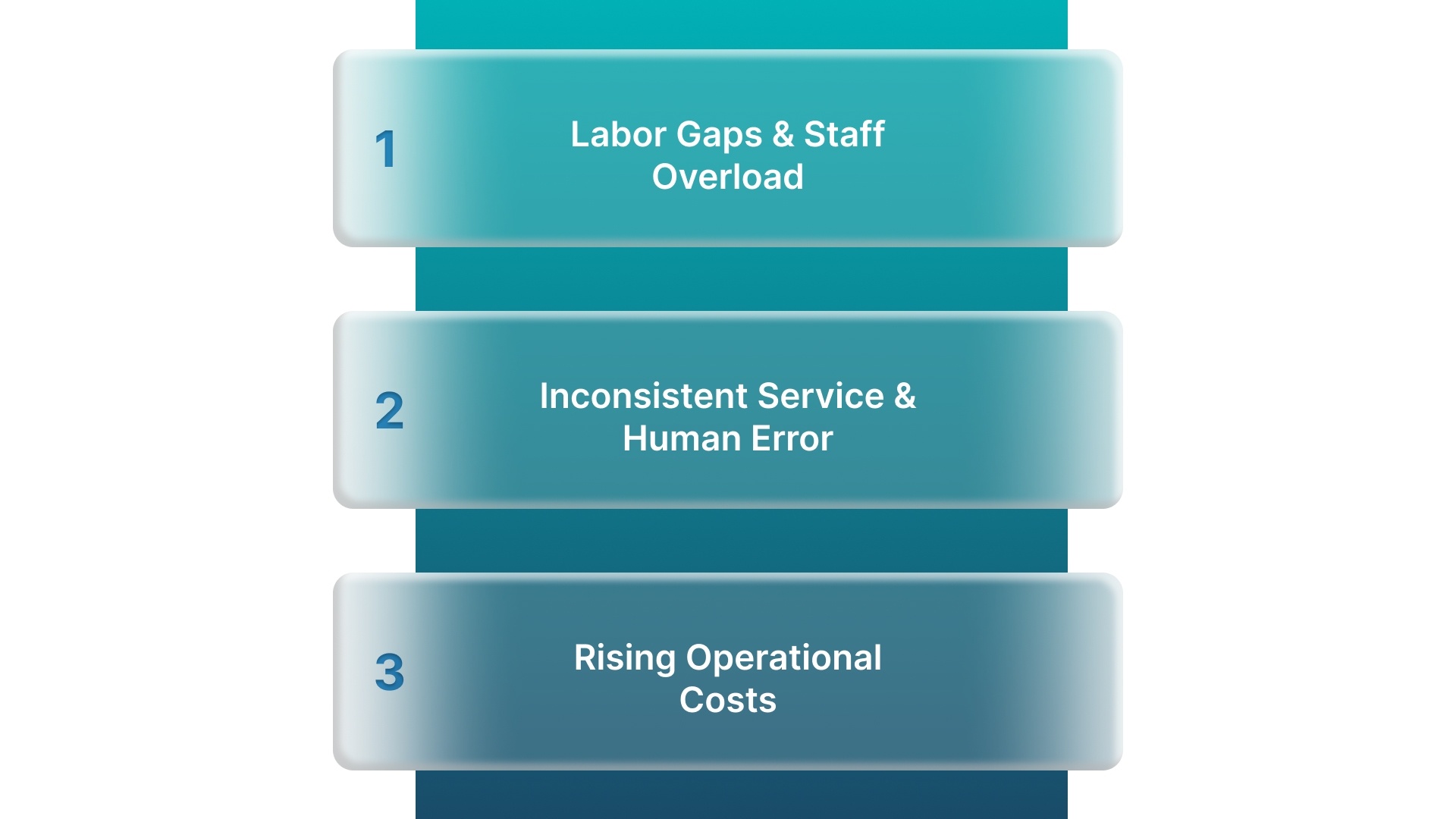
Service robots are deployed to solve specific, recurring operational issues that impact productivity, service quality, and costs, not to act as novelty technology.
1. Labor Gaps & Staff Overload
Ongoing labor shortages and high turnover rates have increased pressure on existing teams and made it harder to sustain service levels.
How service robots help:
Automate repetitive, low-skill tasks such as internal deliveries and routine transport
Reduce physical strain and burnout among staff
Maintain operational continuity during staff shortages or peak hours
Support lean teams without compromising service quality
Business impact:
Employees focus more on customer interaction and problem-solving
Improved staff satisfaction and retention
More efficient use of human resources
2. Inconsistent Service & Human Error
Manual processes often result in service variability, especially across shifts, locations, or high-demand periods.
How service robots help:
Perform tasks using predefined, repeatable workflows
Deliver consistent service regardless of time, workload, or staffing changes
Reduce errors caused by fatigue, distraction, or rushed execution
Maintain standardized cleaning, delivery, and assistance routines.
Business impact:
Predictable and reliable service outcomes
Stronger brand consistency across locations
Improved customer trust and satisfaction
3. Rising Operational Costs
Increasing labor expenses and operational inefficiencies continue to strain business margins.
How service robots help:
Operate for long hours without overtime or productivity decline
Lower cost per task through high-frequency repetition
Reduce dependency on additional hiring during peak periods
Deliver measurable ROI over time.
Business impact:
Improved cost control and operational predictability.
Faster return on investment compared to recurring labor costs.
Scalable automation without proportional cost increases.
Where Service Robots Are Making the Biggest Impact?
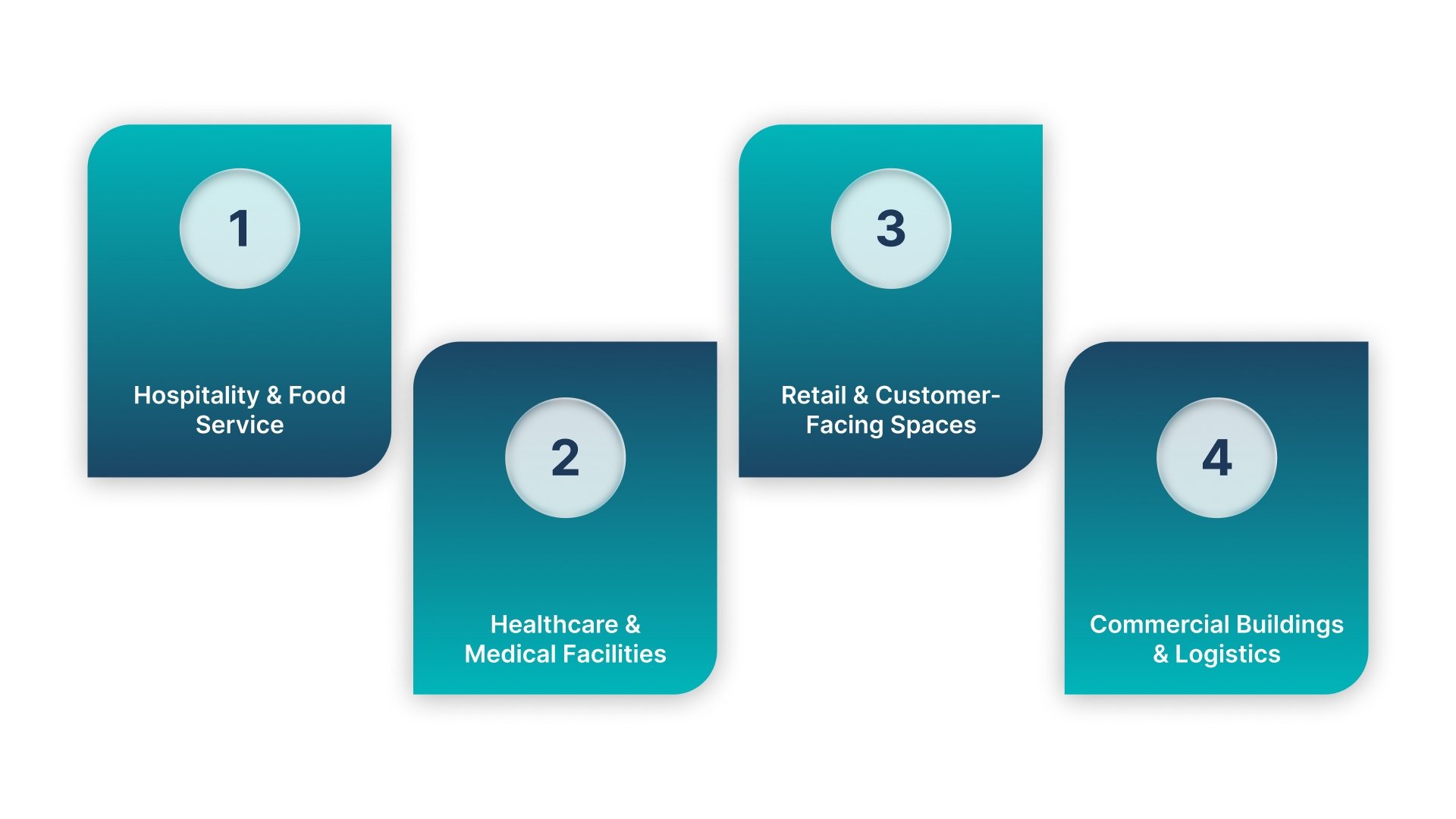
Service robots are most transformative in environments with high task volume, repetitive workflows, and frequent human interaction. Across industries, these robots are enabling businesses to improve operational efficiency and customer satisfaction simultaneously.
1. Hospitality & Food Service
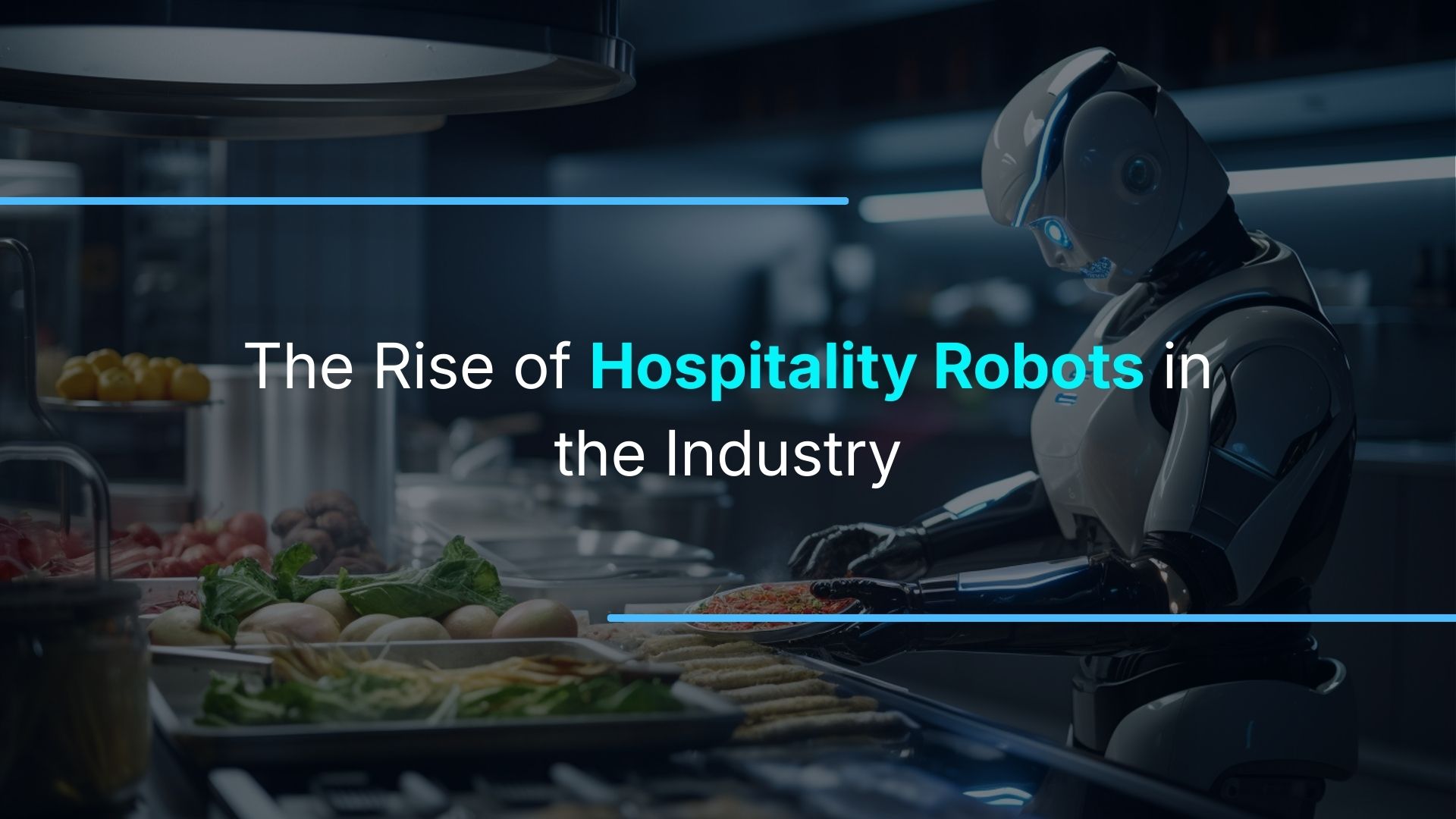
In hospitality and food service, speed, consistency, and quality define guest experience. Robots are helping businesses manage high volumes of service tasks while reducing labor strain.
Key Uses
Table delivery & room service: Autonomous robots deliver meals and amenities directly to guests, reducing wait times and service bottlenecks.
Guest interaction support: Robots provide information, directions, and basic assistance, freeing staff to focus on personalized service.
Impact: Studies show that guest satisfaction ratings can improve significantly when service delivery times are faster and more consistent. In fast-paced food service environments, robots can perform multiple delivery cycles per hour, helping manage peak service periods without adding staff.
2. Healthcare & Medical Facilities
Healthcare environments demand strict hygiene, fast delivery of supplies, and minimal disruption to clinical workflows. Service robots are stepping in to assist.
Key Uses
Autonomous delivery of supplies: Robots transport medications, linens, and equipment between departments with minimal staff intervention.
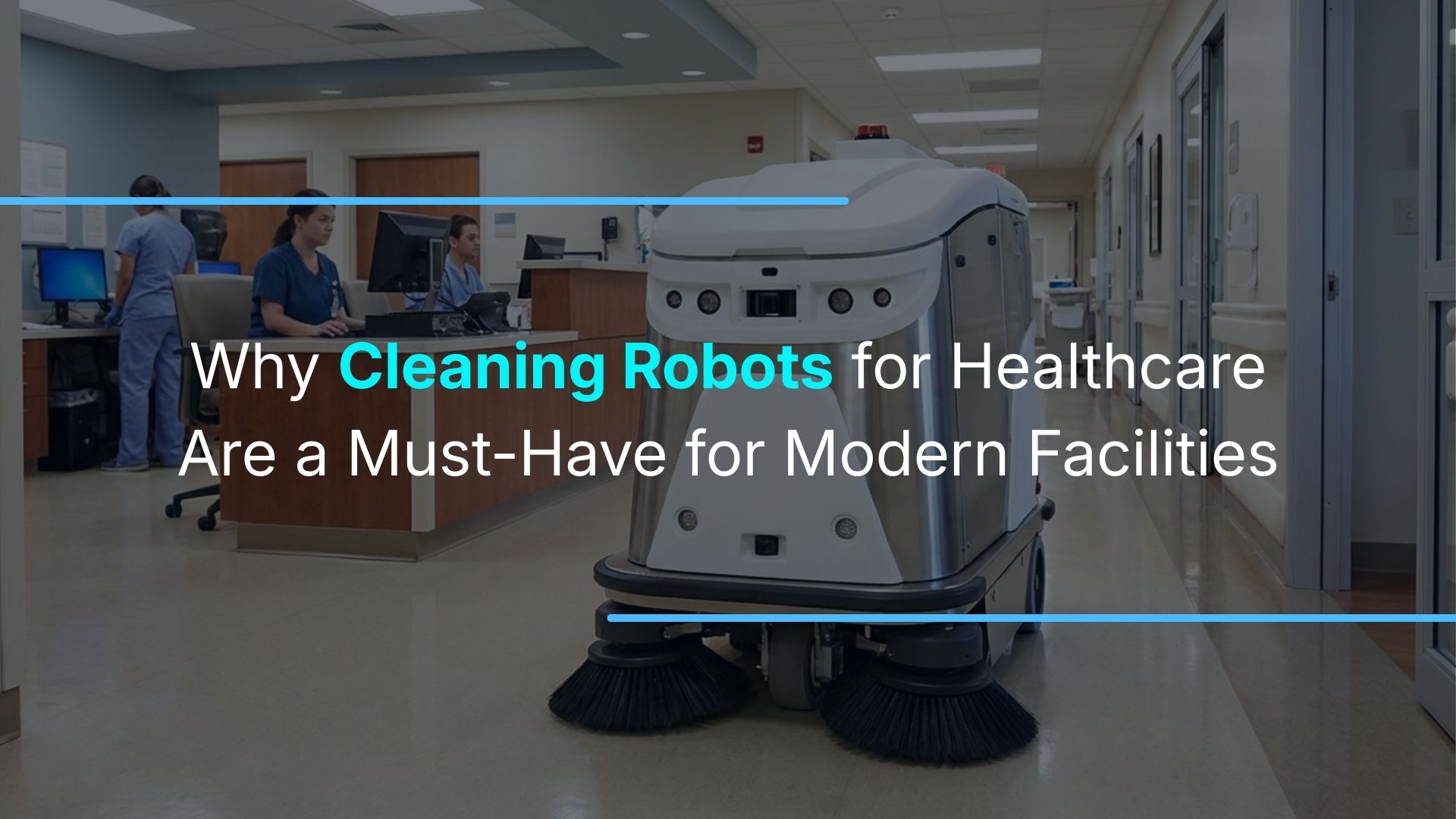
Cleaning and sanitation support: Autonomous cleaning robots maintain high hygiene standards, important for patient safety.
Impact: Automation in healthcare logistics can reduce staff walking time by allowing teams to devote more time to patient care.
Robots performing cleaning tasks help maintain infection control protocols, particularly in high-traffic or high-risk areas.
3. Retail & Customer-Facing Spaces
In retail, the ability to guide customers, display promotions, and enhance in-store experience can directly influence sales.
Key Uses
Wayfinding & assisted navigation: Robots help customers find products, departments, or promotions quickly.
Mobile brand ambassadors: With integrated screens and interactive features, robots can deliver tailored marketing messages.
Impact: Retailers using interactive service robots report measurable increases in customer engagement and average dwell time. Studies suggest enhanced in-store experiences can improve conversion rates and build customer loyalty.
4. Commercial Buildings & Logistics
Large facilities such as office complexes, airports, and distribution centers benefit from robots that handle routine internal movements, transport, and maintenance.
Key Uses
Internal deliveries & multi-floor transport: Robots streamline the movement of documents, parcels, and supplies across floors and departments.
Cleaning robots: Autonomous cleaning units ensure large areas are consistently maintained without constant human supervision.
Impact: Facilities using autonomous internal delivery and cleaning robots report improved operational flow and reduced task backlog. By automating repetitive chores, companies can reduce manual errors and free staff for supervisory or customer-focused roles.
Human + Robot Collaboration: What Actually Changes
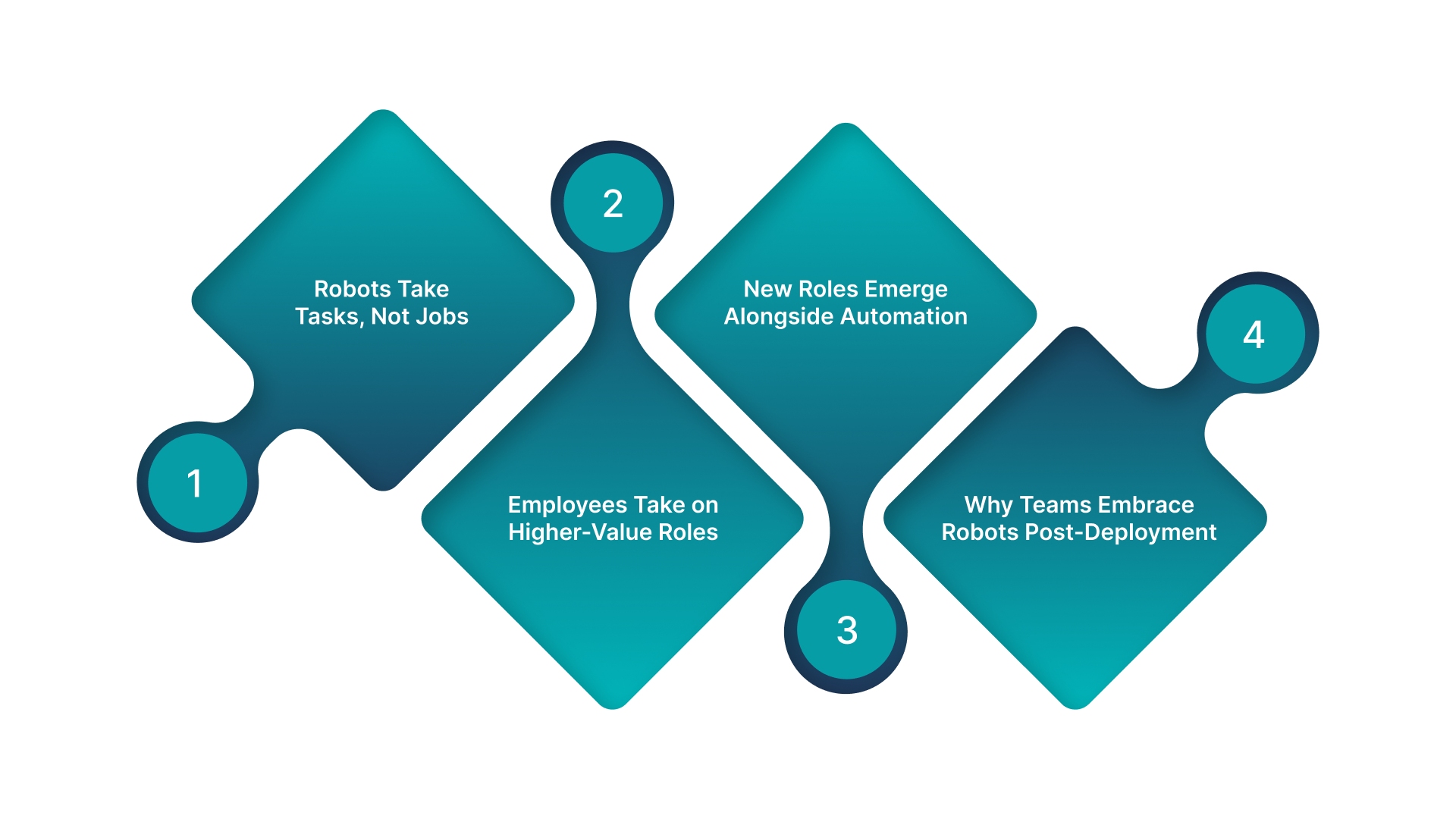
The introduction of service robots doesn’t eliminate human roles; it changes how work gets done. In most real-world deployments, robots become tools that support teams, not replacements for them.
1. Robots Take Tasks, Not Jobs
Service robots are designed to handle specific, repetitive, and physically demanding tasks such as deliveries, cleaning routes, or routine guidance. These are tasks that consume time but add limited strategic value when performed manually.
By taking over these activities, robots reduce operational pressure without removing the need for human oversight, judgment, and interaction. Businesses that adopt service robots typically redeploy staff rather than reduce headcount.
2. Employees Shift to Higher-Value Responsibilities
When robots manage routine workflows, employees gain time to focus on work that requires human skills:
Customer engagement and service personalization
Problem-solving and decision-making
Quality control and supervision
Cross-team coordination
This shift often leads to improved service quality and higher job satisfaction, as staff spend less time on physically repetitive or low-impact work.
3. New Roles Emerge Alongside Automation
Rather than eliminating roles, service robot adoption creates new operational responsibilities, including:
Robot supervisors who monitor performance and task completion
Operations managers who optimize workflows involving both humans and robots
Maintenance and support coordinators ensure uptime and efficiency
These roles are typically easier to train for than traditional technical positions and provide opportunities for upskilling existing staff.
4. Why Teams Often Welcome Robots After Deployment
Initial skepticism is common, but experience often changes perception. Once deployed, teams frequently recognize that robots:
Reduce physical strain and repetitive movement
Help manage peak workloads without added pressure
Improve workflow predictability and reduce chaos
Support rather than compete with human staff
As robots become part of daily operations, they are often viewed as reliable teammates, not threats, contributing to smoother operations and a healthier work environment.
3 Challenges to Consider Before Adoption
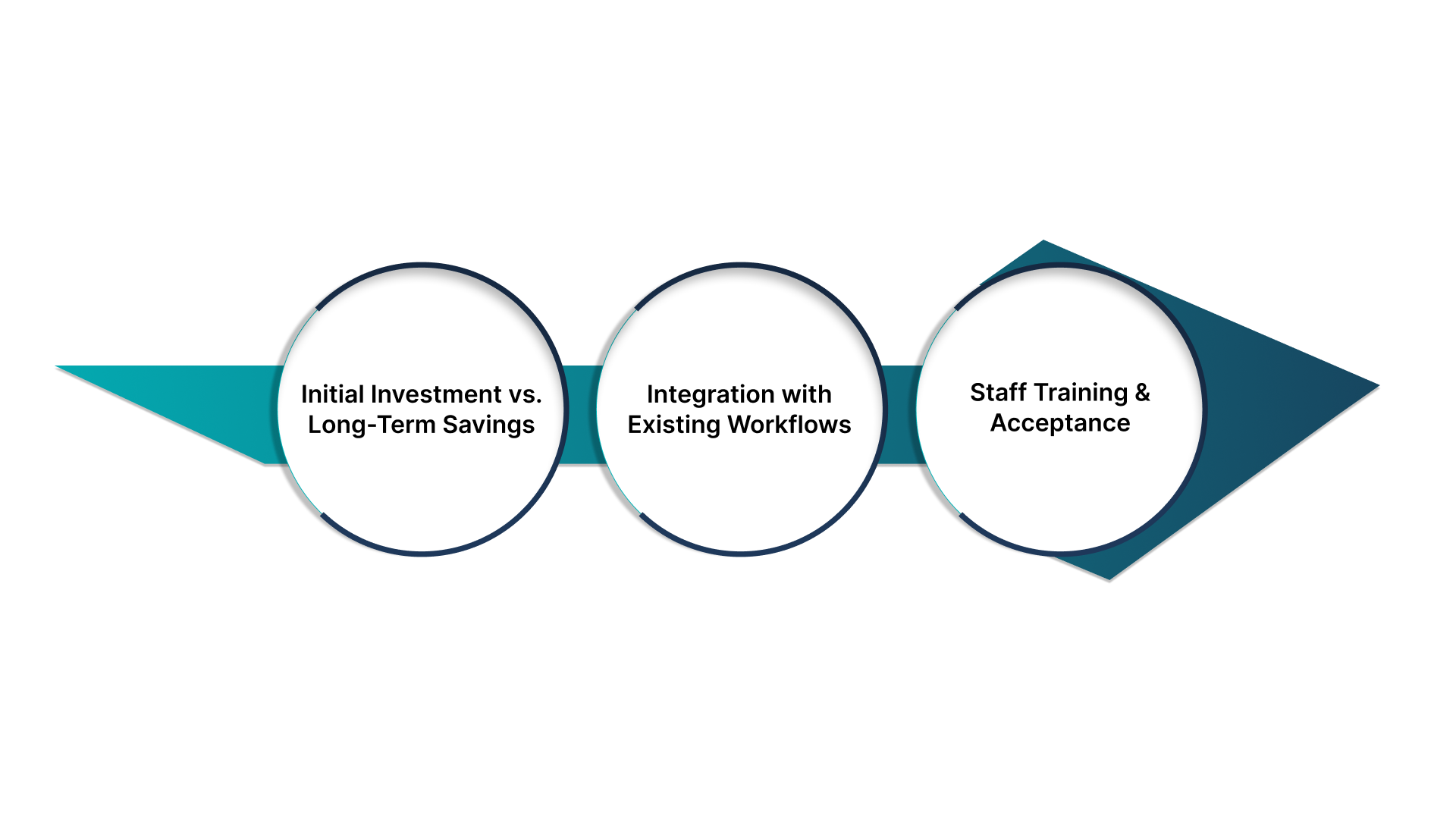
While service robots offer clear operational benefits, successful adoption requires thoughtful planning. Understanding the challenges upfront helps businesses avoid common pitfalls and maximize return on investment.
1. Initial Investment vs. Long-Term Savings
Service robots require an initial investment, but their financial value emerges over time through operational efficiencies.
Key considerations:
Evaluate the total cost of ownership, not just the upfront price
Factor in robot lifespan, maintenance, and productivity
Compare long-term savings against recurring labor costs.
2. Integration with Existing Workflows
Robots must support daily operations rather than disrupt them.
Key considerations:
Identify tasks best suited for automation
Ensure robots can operate smoothly in real environments
Define clear handoff points between staff and robots.
3. Staff Training and Acceptance
People play a central role in successful robot adoption.
Key considerations:
Provide early and practical training
Communicate clearly that robots support, not replace, staff.
Encourage hands-on interaction to build trust.
Real Results: What Businesses Gain
Service robots deliver tangible outcomes that go beyond automation. When deployed correctly, they improve daily operations in ways that are measurable and sustainable.
Faster service times: By handling routine deliveries, cleaning, and guidance tasks, service robots reduce delays and bottlenecks. Businesses experience quicker turnaround during peak hours, enabling smoother operations without adding staff.
Lower operational strain: Robots absorb repetitive and physically demanding work, reducing fatigue and pressure on human teams. This leads to more balanced workloads and helps organizations maintain performance even with limited staffing.
Improved customer satisfaction: Consistent service, shorter wait times, and reliable task execution directly enhance customer experience. In customer-facing environments, robots also add a sense of innovation that strengthens brand perception.
Measurable efficiency improvements: Automation introduces predictability into operations. Businesses can track improvements in task completion rates, staff utilization, and cost per task, making it easier to quantify return on investment over time.
How ToDo Robotics Supports Modern Operations
ToDo Robotics focuses on delivering commercial-ready service robots that are already proven in live business settings. Their portfolio is built specifically for environments where reliability, safety, and efficiency matter most.
The company provides solutions across hospitality, healthcare, retail, and commercial facilities, addressing core operational challenges such as delivery, cleaning, and customer interaction. Beyond hardware, ToDo Robotics emphasizes end-to-end support, offering product guidance, live demos, and deployment expertise to ensure robots are successfully integrated into existing workflows.
This approach helps businesses move from interest to implementation with clarity and confidence. ToDo Robotics offers a focused lineup of service robots designed to support everyday operations across industries:
BellaBot Pro: A customer-friendly delivery robot designed for restaurants and hospitality environments, featuring high carrying capacity and interactive design to enhance guest experience.
PuduBot 2: A multi-tray delivery robot built for busy service environments, supporting efficient internal transport and reducing staff workload during peak hours.
KettyBot Pro: A versatile robot that combines delivery, navigation, and marketing display capabilities, making it ideal for retail and customer-facing spaces.
CC1 & Vacuum 40: Autonomous cleaning robots designed for large commercial spaces, helping facilities maintain consistent cleanliness with minimal manual effort.
FlashBot & FlashBot Arm: Intelligent delivery robots engineered for commercial buildings, supporting secure, multi-floor transport and streamlined internal logistics.
The Future of Everyday Operations
Service robots are quickly becoming a standard part of modern business operations, driven by efficiency demands and ongoing labor challenges.
Robots as Standard Operational Tools: According to the International Federation of Robotics (IFR), professional service robots are seeing steady, mainstream adoption worldwide. As reliability improves and costs stabilize, robots are increasingly treated as essential operational assets.
Smarter Human–Robot Collaboration: The future of operations is collaborative. Service robots handle repetitive tasks, while human teams focus on customer experience, oversight, and decision-making, improving productivity without losing the human touch.
Wider Adoption by Small and Mid-Sized Businesses: Simpler deployment and scalable solutions are making service robots accessible to small and mid-sized businesses, not just large enterprises.
Early Adoption Creates Lasting Advantage: Early adopters gain operational experience sooner, refine workflows faster, and build efficiency advantages that compound over time, helping them stay competitive as automation becomes standard.
Conclusion
Service robots are no longer experimental technology; they are reshaping how everyday work gets done across industries. By automating repetitive tasks and supporting human teams, robots are helping businesses operate more efficiently, consistently, and sustainably.
Organizations that act early gain more than short-term efficiency. They build operational resilience, scale with greater confidence, and position themselves ahead of competitors as automation becomes standard practice. The shift is already underway, and the question for businesses is no longer if service robots will play a role, but when.
Start your service robotics journey today with ToDo Robotics.
FAQ
1. What is the return on investment (ROI) for service robots?
ROI depends on usage and task volume, but businesses typically see savings through reduced labor strain, consistent performance, and lower cost per task over time.
2. How are service robots different from industrial robots?
Industrial robots are built for manufacturing and operate in controlled environments, while service robots are designed to work safely around people in dynamic, real-world settings.
3. Which industries benefit the most from service robots?
Hospitality, healthcare, retail, and commercial facilities see the greatest impact due to high task repetition, labor intensity, and customer interaction.
4. Do service robots replace human jobs?
No. Service robots automate tasks, not roles. They reduce workload pressure and allow employees to focus on customer service, supervision, and higher-value responsibilities.
5. How quickly can service robots be deployed?
Most modern service robots can be deployed within days. Providers like ToDo Robotics support setup, testing, and integration to ensure smooth deployment.