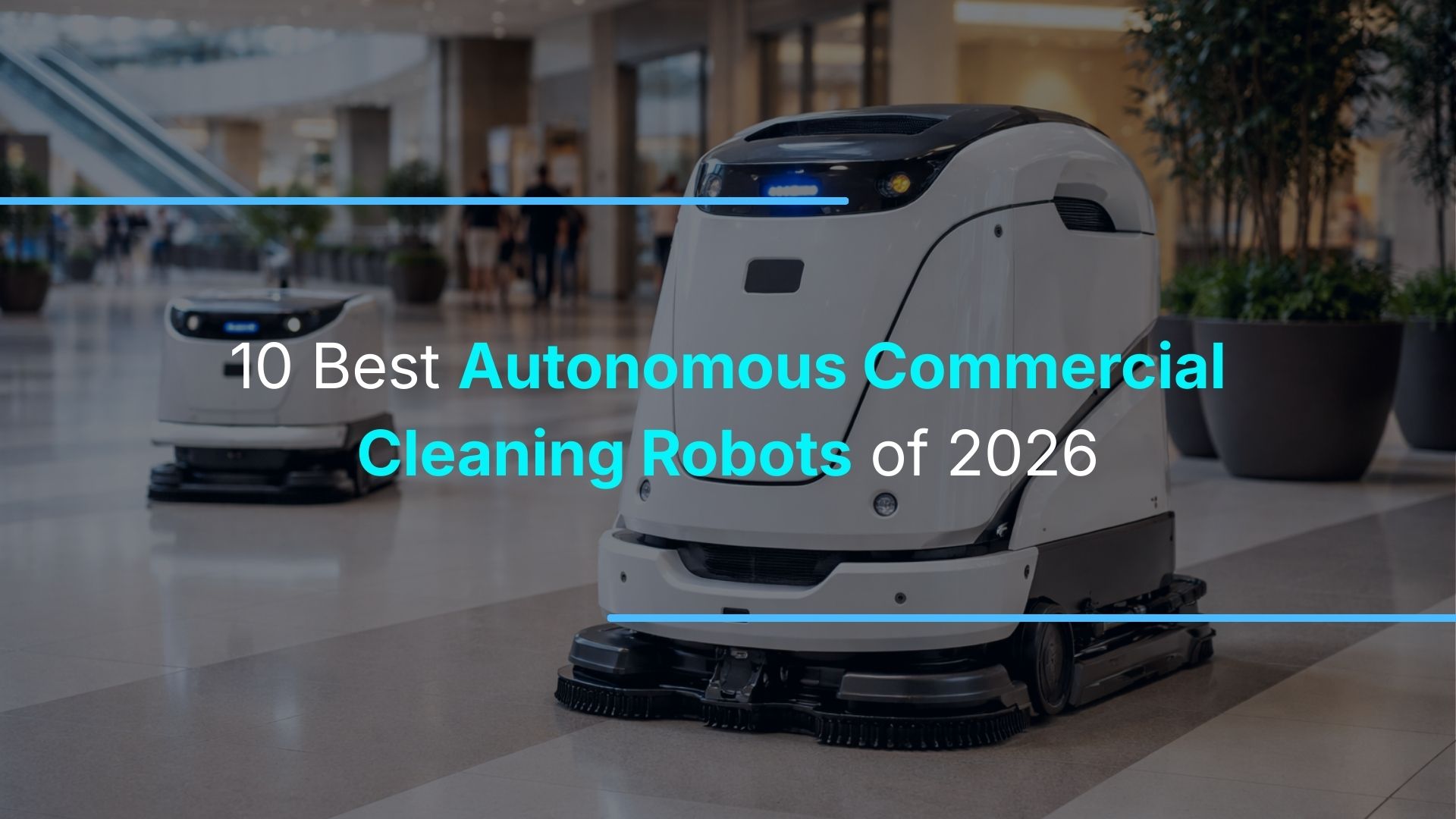
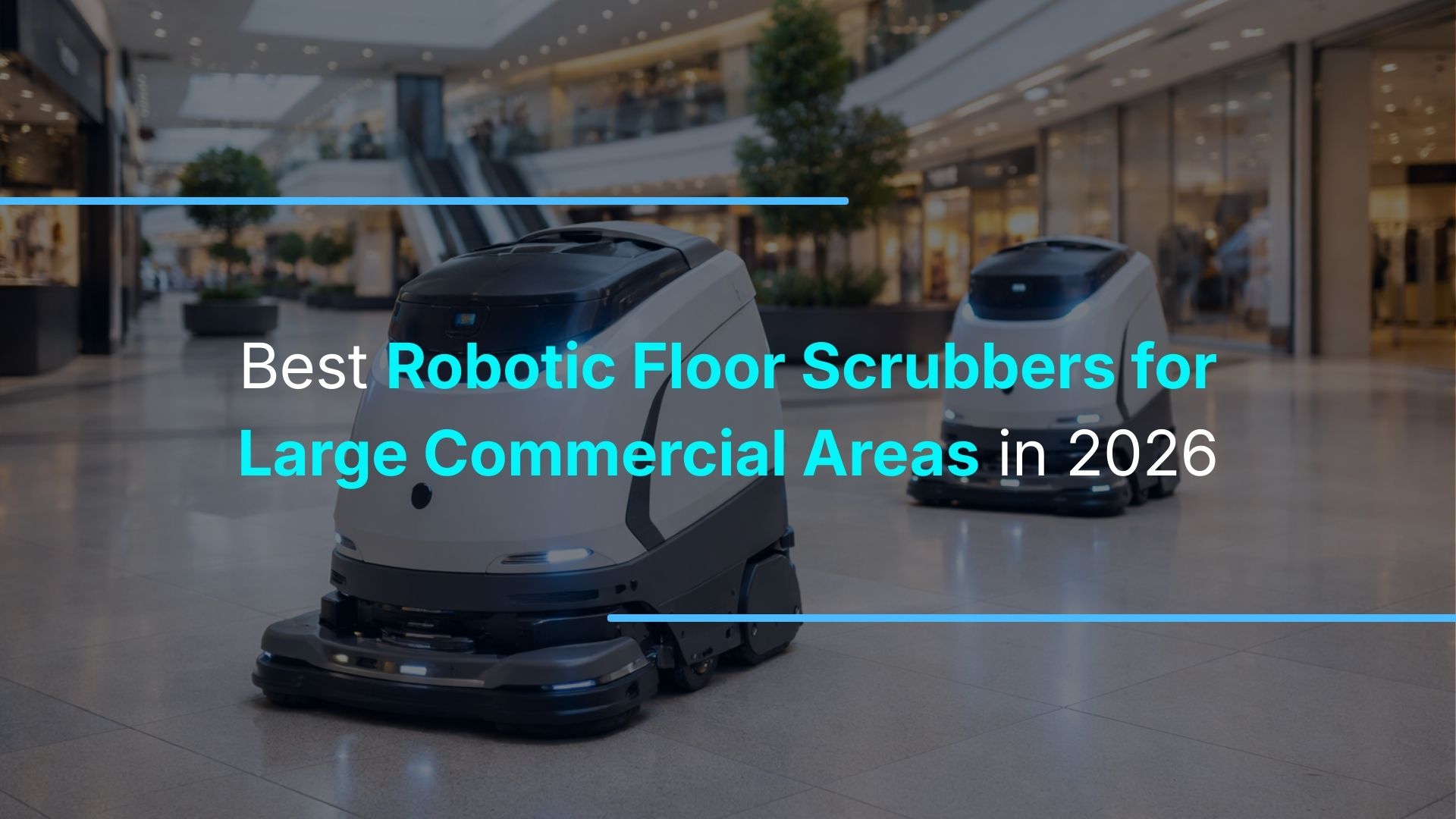
Large commercial facilities struggle to maintain consistent floor cleanliness as foot traffic increases and cleaning staff availability continues to decline. Manual scrubbing often falls behind during peak hours, leading to uneven coverage, safety risks, and rising labour costs.
Robotic floor scrubbers are increasingly being used to address these gaps across malls, hospitals, airports, and office buildings. These autonomous machines perform routine scrubbing and drying throughout the day, operating safely around people and equipment while maintaining consistent hygiene standards.
Adoption is being driven by practical needs rather than novelty, as facility managers look for dependable cleaning coverage with fewer staffing pressures. This guide explains how robotic floor scrubbers are used today, where they fit best, and what to evaluate when selecting a solution for large commercial areas in 2026.
Key Takeaways
Robotic floor scrubbers are increasingly used in large commercial facilities to maintain consistent cleaning coverage despite labour shortages.
Different environments such as hospitals, airports, malls, and warehouses require different robot types based on layout and traffic patterns.
Autonomous scrubbers, vacuum robots, and multi-function cleaners each serve specific operational roles rather than acting as one-size-fits-all solutions.
Successful implementation depends on site assessment, workflow alignment, docking placement, and realistic maintenance planning.
ToDo Robotics supports facilities with application-specific robot selection, deployment planning, training, and long-term service support.
What Are Robotic Floor Scrubbers? Relevance in 2026
Robotic floor scrubbers are autonomous cleaning machines designed to handle routine floor scrubbing and drying in large commercial environments. Unlike traditional ride-on or walk-behind machines, these robots operate independently, following predefined cleaning routes while safely navigating active spaces.
They are typically used in facilities where consistent coverage is required throughout the day, such as malls, hospitals, airports, and office buildings. Once deployed, cleaning teams supervise performance rather than manually operating the equipment.
How robotic floor scrubbers operate
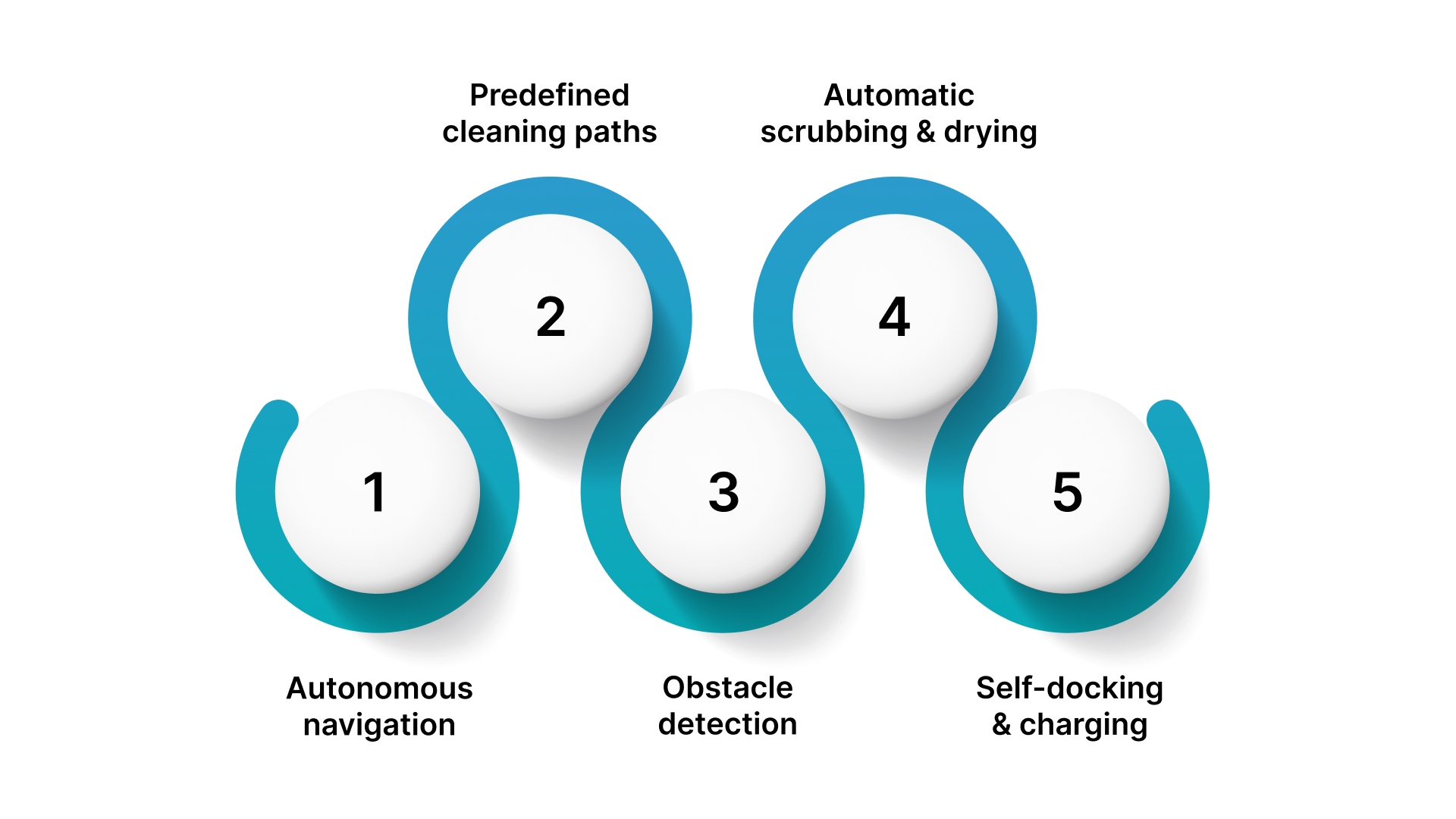
Autonomous navigation: The robot uses onboard sensors or cameras to map the facility and plan cleaning routes without human control.
Predefined cleaning paths: Cleaning zones and schedules are set in advance, allowing the robot to follow consistent routes across large floor areas.
Obstacle detection: The machine identifies unexpected objects such as carts, chairs, or pedestrians and slows down, stops, or reroutes in real time.
Automatic scrubbing and drying: Water dispensing, brush pressure, and squeegee operation are managed automatically to maintain uniform cleaning results.
Self-docking and charging: After completing a task, the robot returns to its charging station without manual assistance.
These capabilities allow robotic floor scrubbers to support daily cleaning operations while reducing dependence on continuous manual labour.
5 Key Features to Look For in Commercial Robotic Floor Scrubbers
Selecting a robotic floor scrubber for large facilities requires evaluating how well the machine performs under daily operational conditions.
The following features have the greatest impact on cleaning consistency, safety, and long-term usability in commercial environments:
Cleaning capacity and coverage: Coverage rate determines how much floor area the robot can clean per hour. Large venues such as malls, airports, and convention centres require machines capable of maintaining consistent coverage across thousands of square feet without frequent refilling or downtime.
Navigation and mapping reliability: Reliable navigation allows the robot to follow repeatable cleaning paths while adapting to layout changes. Commercial-grade models use stable mapping systems that perform consistently in wide open spaces, narrow corridors, and mixed-traffic zones.
Battery life and charging automation: Extended battery runtime supports longer cleaning cycles. Automated docking and charging reduce manual handling and allow robots to operate during off-peak or overnight hours.
Safety systems and compliance standards: Commercial robots should include obstacle detection, emergency stop functions, visual alerts, and certifications aligned with public-space safety requirements.
Integration with facility cleaning workflows: Robots must fit into existing janitorial schedules. Many enterprise-ready platforms, such as those used by providers like Gausium, support scheduled cleaning routines, performance monitoring, and simplified staff oversight rather than replacing cleaning teams entirely.
These features help determine whether a robotic scrubber can operate reliably in real commercial conditions rather than controlled environments.
Top Commercial Cleaning and Scrubbing Robots in 2026
ToDo Robotics works with Gausium to provide a range of autonomous cleaning robots suited to different commercial cleaning needs, from full floor scrubbing to vacuuming and all-in-one floor care.
These robots help facilities maintain consistent cleanliness in busy environments with limited manual cleaning resources:
Gausium Scrubber 75
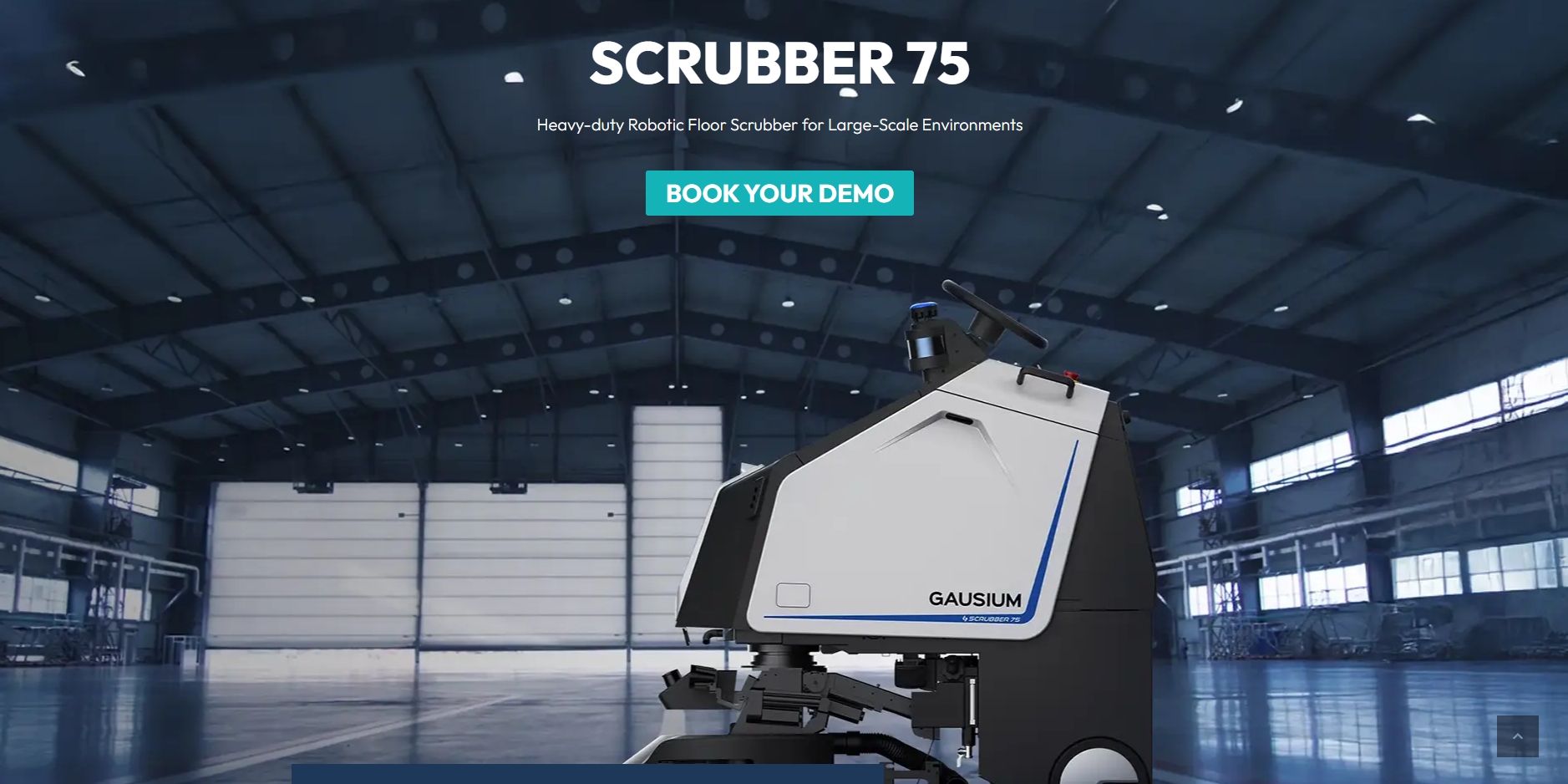
The Scrubber 75 is a heavy-duty autonomous floor scrubber designed for large indoor spaces that require consistent, thorough cleaning. It is equipped with advanced navigation and a wide scrub deck, making it suitable for high-traffic commercial environments.
Best for:
Airports and large transportation hubs
Convention and exhibition centres
Big-box retail spaces and logistics buildings
This model is built for large cleaning missions and can handle continuous routes across wide floor areas. It integrates multiple sensors for environmental awareness and adapts its path in real time based on traffic and obstacles.
Safety & maintenance:
20+ onboard sensors for robust navigation and obstacle avoidance
Flashing lights and headlights to communicate robot presence
Automatic route replanning when obstructions are detected
Docking station support for self-charging and water management
Routine brush and tank checks manageable by facility staff
The Scrubber 75 is ideal for facilities that need stable, wide-area cleaning with minimal human oversight, especially where floor space is extensive and staff availability varies.
Sparkoz TN70
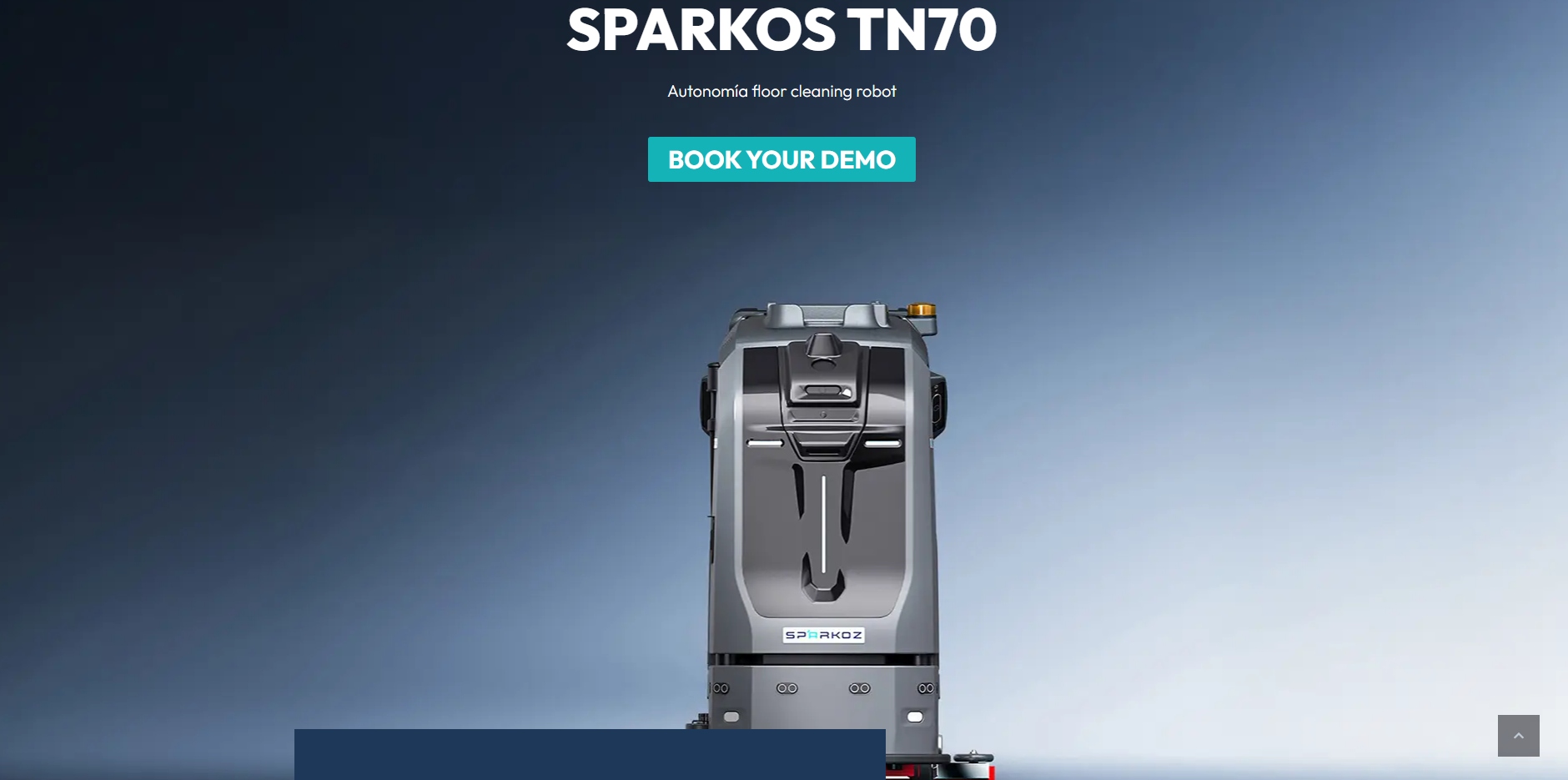
The Sparkoz TN70 is an autonomous cleaning robot equipped for large commercial and industrial floor maintenance. It combines scrubbing and powerful debris handling with advanced navigation tech, making it suitable for high-traffic environments.
Best for:
Warehouse and distribution floors
Airports and transit terminals
Shopping malls and large retail commons
This robot uses smart navigation with LiDAR and sensor fusion to map and clean efficiently across changing floor layouts.
Safety & maintenance:
Advanced obstacle detection and avoidance systems
Sensors for 360° awareness in busy spaces
Scheduled docking for charging and idle periods
Robust construction for extended commercial use
Routine inspections of brushes, sensors, and batteries
The TN70 is suited for facilities with high cleaning demands where autonomous operation and strong navigational intelligence are priorities.
Gausium Scrubber 50
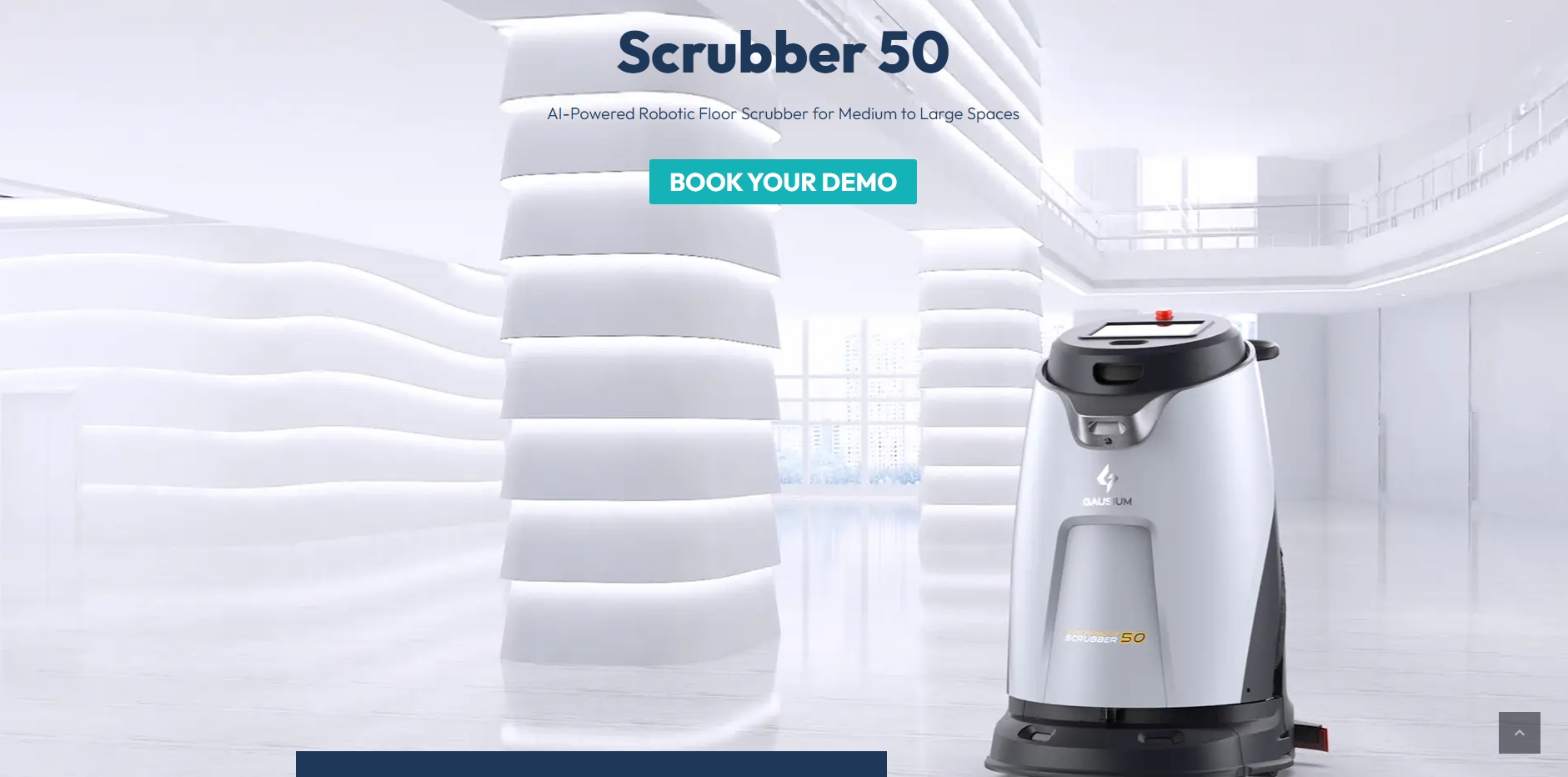
The Scrubber 50 is an autonomous floor scrubber designed for medium to large commercial environments that need reliable daily cleaning without disrupting customer movement. Its compact size allows it to operate comfortably in shared public spaces.
Best for:
Shopping centres and retail corridors
Hotels and hospitality common areas
Office buildings and educational facilities
This robot supports scheduled cleaning routines across frequently used walkways and open areas. It is often deployed in facilities transitioning from manual walk-behind scrubbers to autonomous cleaning.
Safety & maintenance:
Sensor-based navigation for accurate indoor mapping
Real-time obstacle detection for people and movable objects
Automatic speed adjustment in high-traffic zones
Visual and audible safety alerts during operation
Simple daily cleaning of brushes, tanks, and squeegees
The Scrubber 50 is well suited for facilities seeking consistent floor cleaning with minimal operational complexity and limited staff retraining.
Gausium Vacuum 40
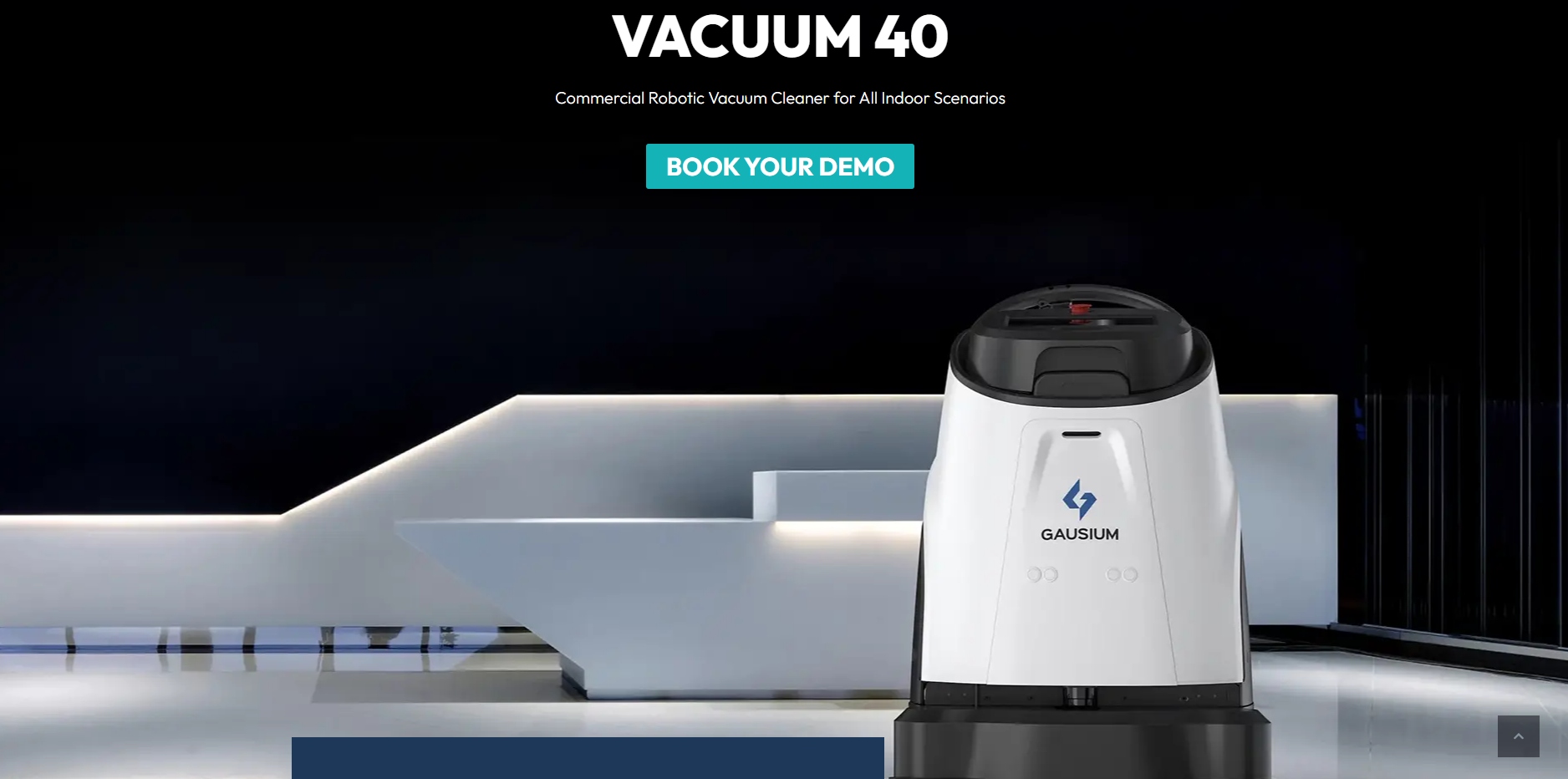
The Vacuum 40 is an autonomous robotic vacuum cleaner designed for commercial indoor environments. It performs vacuuming and dry mopping on both hard and soft floors, helping maintain cleanliness in spaces where dust and debris accumulate frequently.
Best for:
Hotels and hospitality common areas
Office buildings with mixed hard and carpeted floors
Healthcare facilities and retail centres with frequent foot traffic
This model uses advanced sensors to identify floor types and switch cleaning modes accordingly. It can operate quietly and consistently, making it suitable for daytime use when guests or staff are present.
Safety & maintenance
3D cameras and anti-drop sensors for safe navigation
Side brushes and powerful suction to capture fine dust
H13 HEPA filtration for improved indoor air quality
Automatic docking for charging
Dust bag and tray checks as part of daily routine
The Vacuum 40 is a versatile vacuuming solution for facilities with significant dust and debris challenges, especially across mixed floor surfaces.
Gausium Phantas
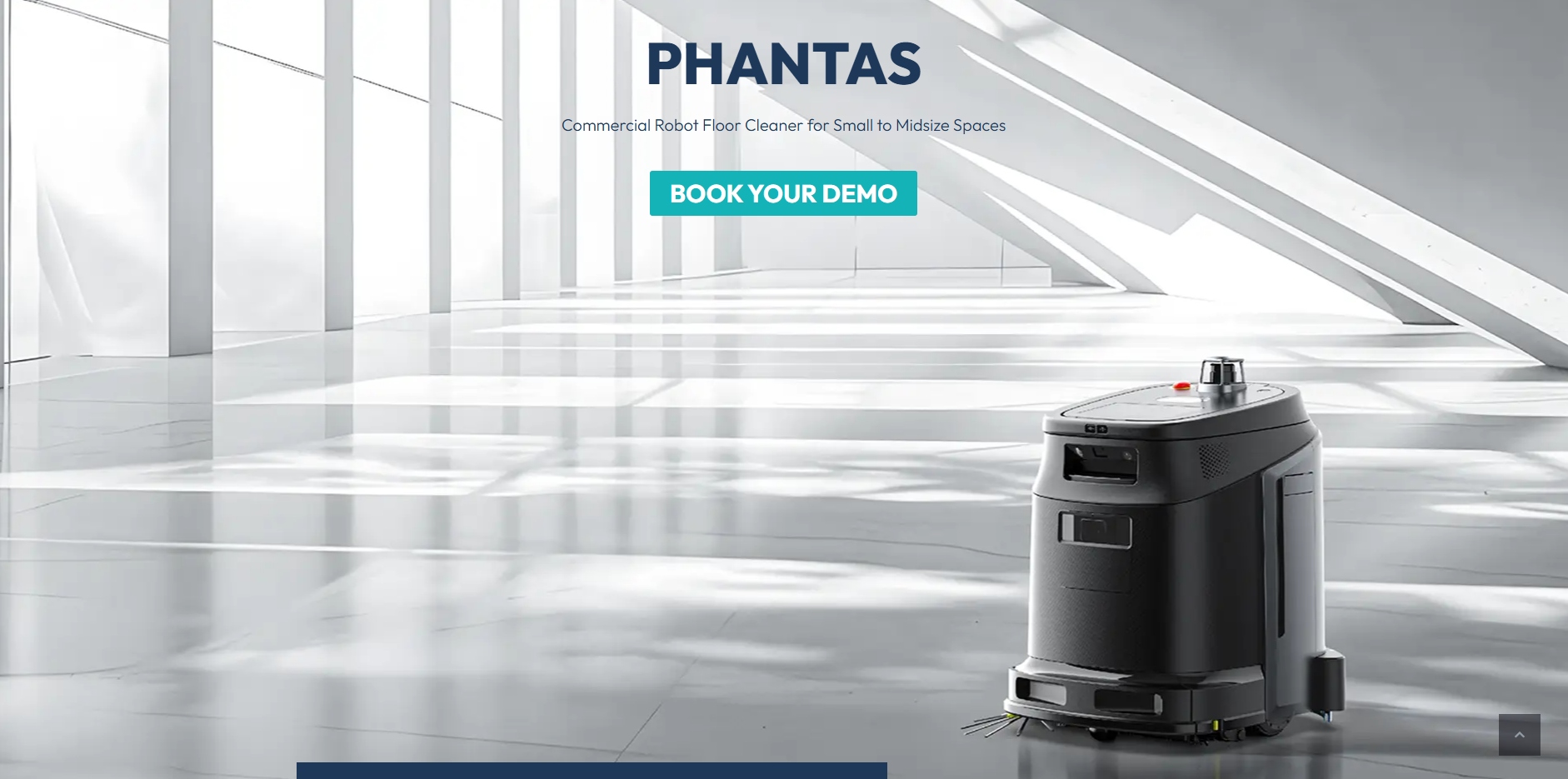
Phantas is an all-in-one autonomous floor cleaner that integrates vacuuming, sweeping, scrubbing, and dust-mopping in a single platform. Its versatility makes it effective wherever facilities have diverse floor types or mixed cleaning needs.
Best for:
Corporate offices
Mixed-use commercial spaces
Education facilities with varied flooring
Phantas automatically selects the appropriate cleaning mode based on surface type. It combines multiple cleaning actions in one pass, reducing the need for separate machines.
Safety & maintenance
High-precision sensors for 0cm edge cleaning
AI-driven navigation to map and adapt to changes
Compact size for maneuvering narrow aisles
Integrated dust-mop and sweeper systems
Daily checks of brushes, vacuums, and waste bins
Phantas is a versatile multipurpose cleaner ideal for facilities that need a single robot capable of handling various cleaning tasks efficiently.
CC1 Intelligent Commercial Cleaning Robot
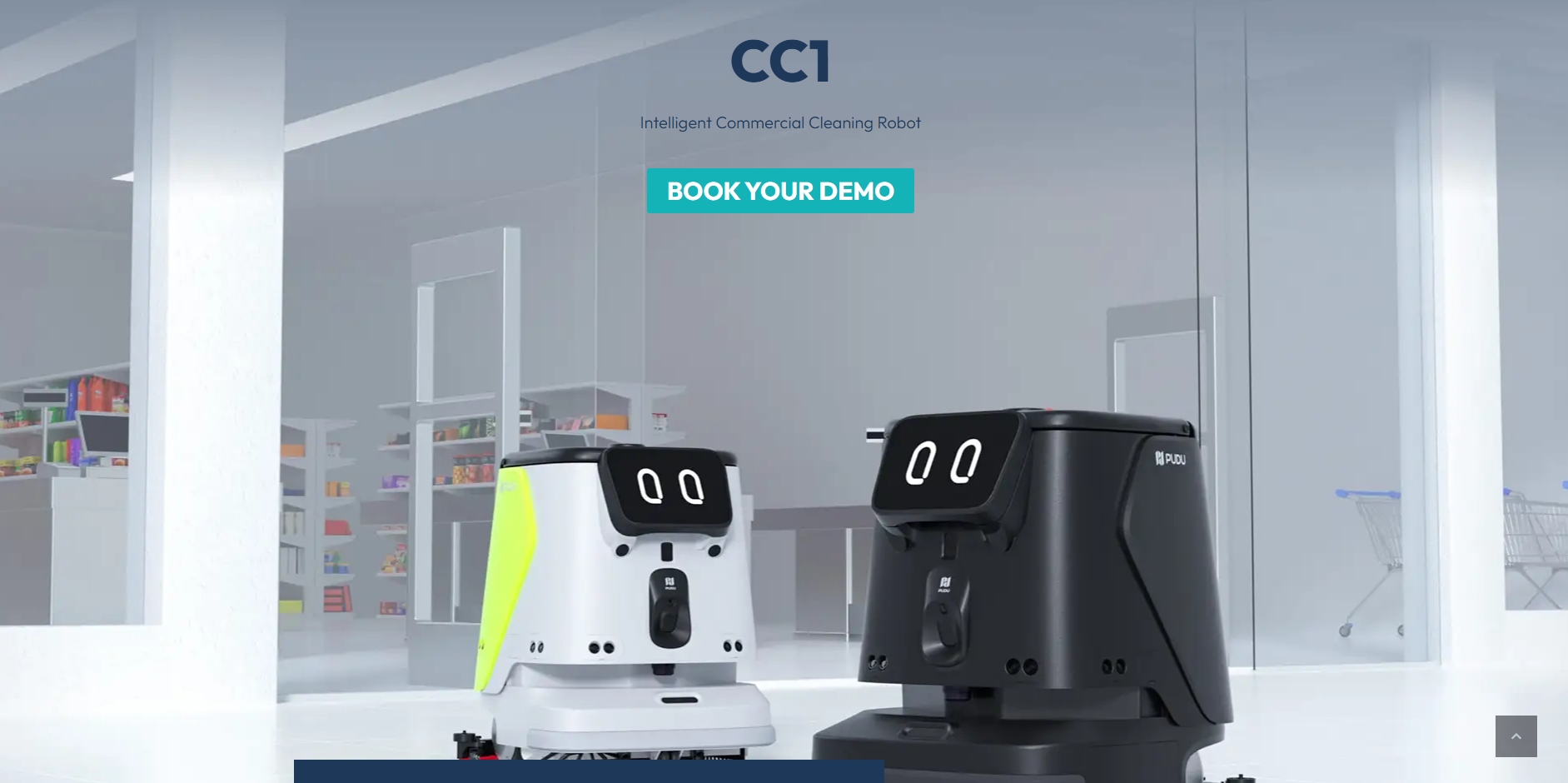
The CC1 is an all-purpose autonomous cleaning robot used in large commercial spaces. It combines functions such as sweeping, vacuuming, scrubbing, and mopping into one platform, simplifying floor care operations in environments with diverse cleaning needs.
Best for:
Large offices with mixed flooring
Healthcare facilities with varied surface types
Hotels and hospitality venues
This model supports extended operations with digital reporting and long runtime capabilities.
Safety & maintenance:
Autonomous navigation with digital route reporting
Multi-surface cleaning modes
Automated docking for charging
Sensors to detect obstacles and people
Routine component checks manageable by facility staff
CC1 is well suited for facilities seeking a single robot that covers multiple cleaning tasks across a variety of floor types.
PUDU MT1
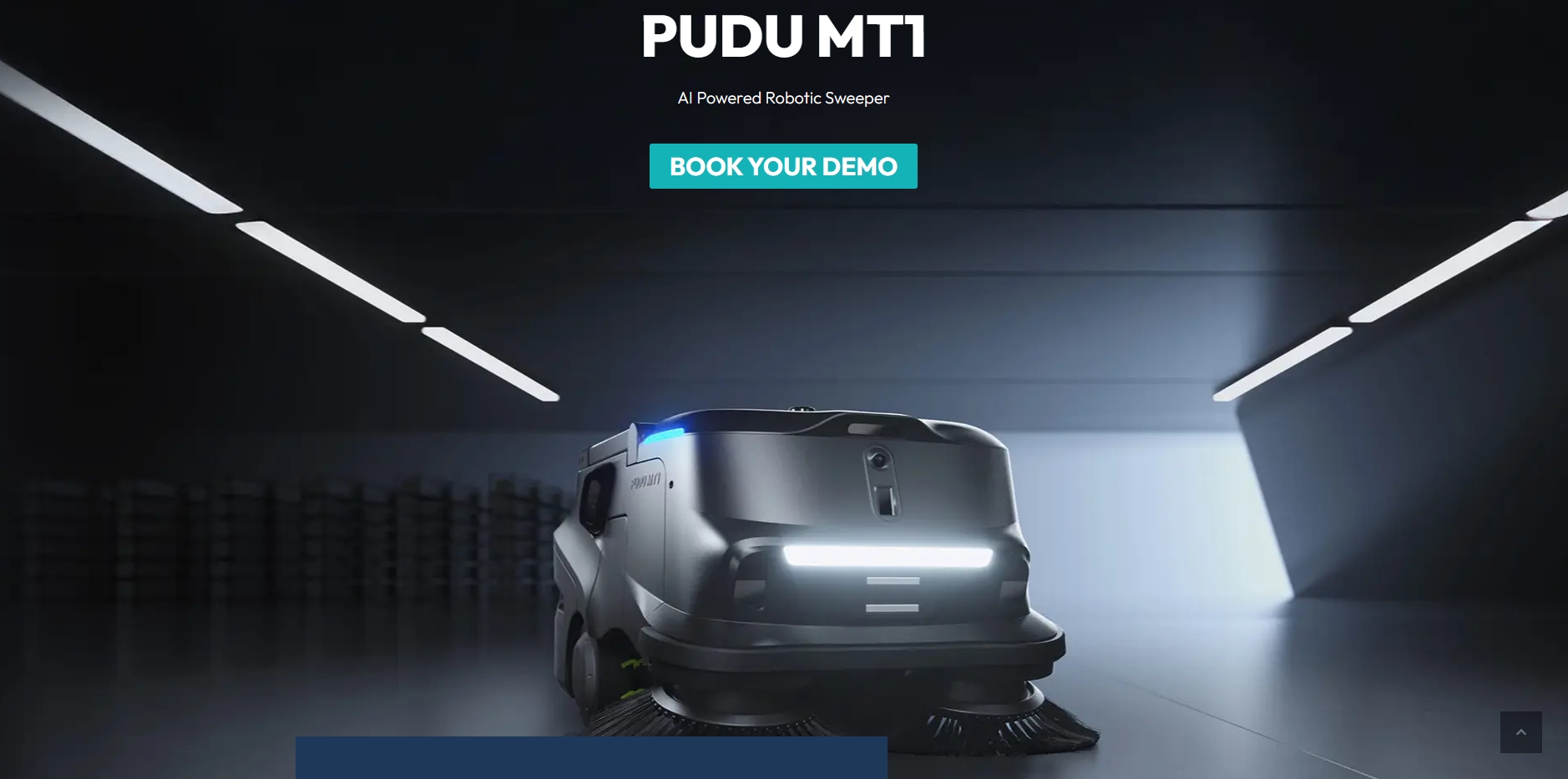
The PUDU MT1 is a multifunction autonomous cleaning and service robot that also supports waste handling and operational assistance. It is designed for continuous floor service in large facilities with heavy traffic and mixed needs.
Best for:
Shopping malls and entertainment complexes
Airports and transit hubs
Large mixed-use buildings
This robot leverages AI trash recognition and extended runtime capabilities to support prolonged autonomous cleaning and service missions.
Safety & maintenance:
Autonomous navigation with trash detection features
Obstacle avoidance in busy environments
Scheduled docking for charging
Digital reporting for real-time performance monitoring
Regular maintenance routines for sensors and waste modules
The MT1 is ideal for operations that need cleaning plus auxiliary services without frequent human intervention.
ZACO X1000
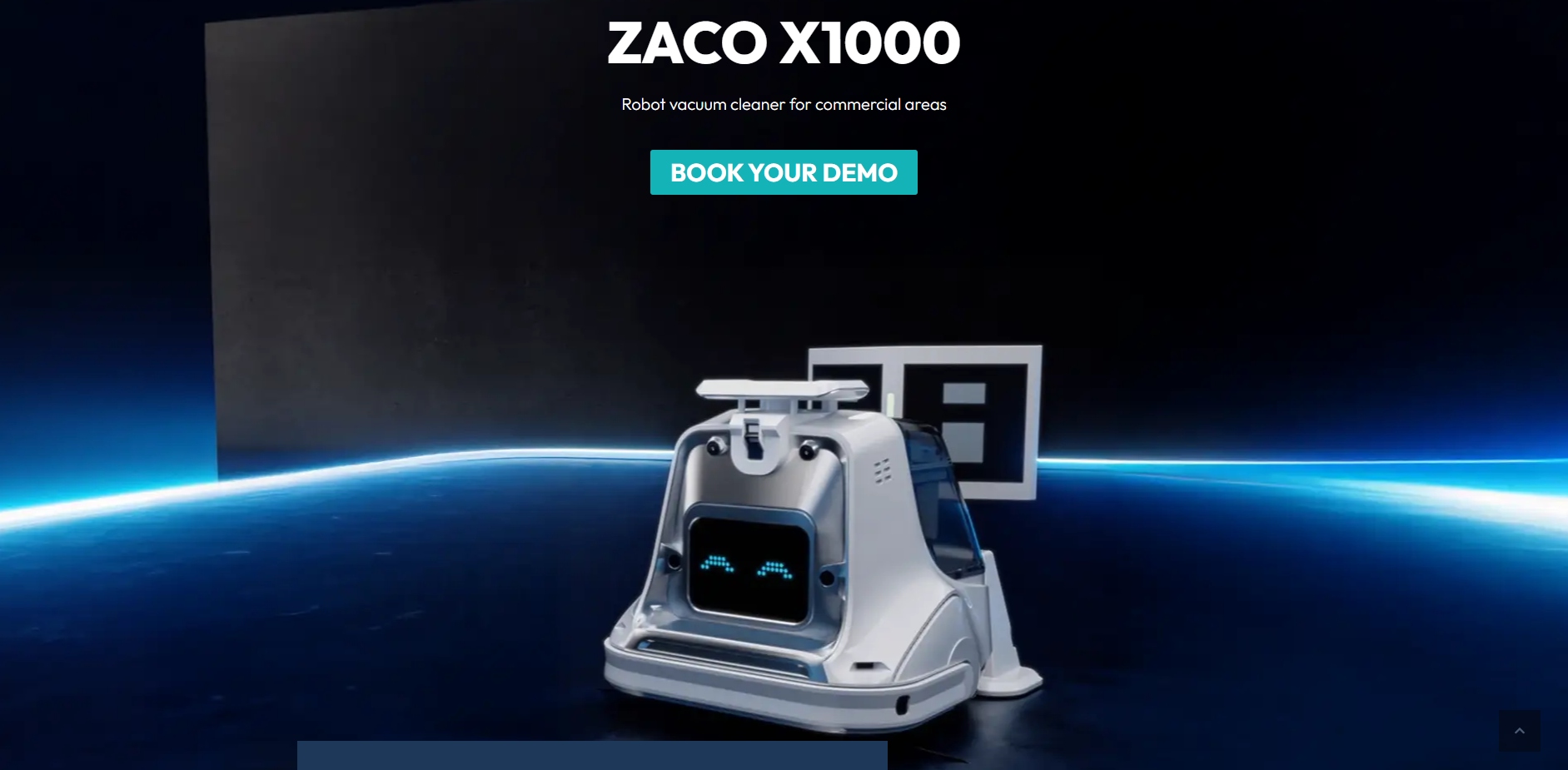
The ZACO X1000 is a commercial robotic vacuum designed to handle dust, debris, and particulate removal across indoor spaces. With strong suction power and advanced mapping sensors, it supports regular vacuuming tasks that complement deeper floor cleaning robots.
Best for:
Office spaces and lobbies
Hotels and restaurants
Mixed flooring environments
This robot scans environments with lasers and sensor arrays to create efficient vacuuming paths.
Safety & maintenance:
Precise navigation using multi-sensor detection
Collision and drop sensors for safe movement
HEPA filtration for improved air quality
Automatic charging dock support
Daily dustbin and brush checks
The X1000 is effective where routine vacuuming and dust control are key to cleaning plans.
PUDU SH1
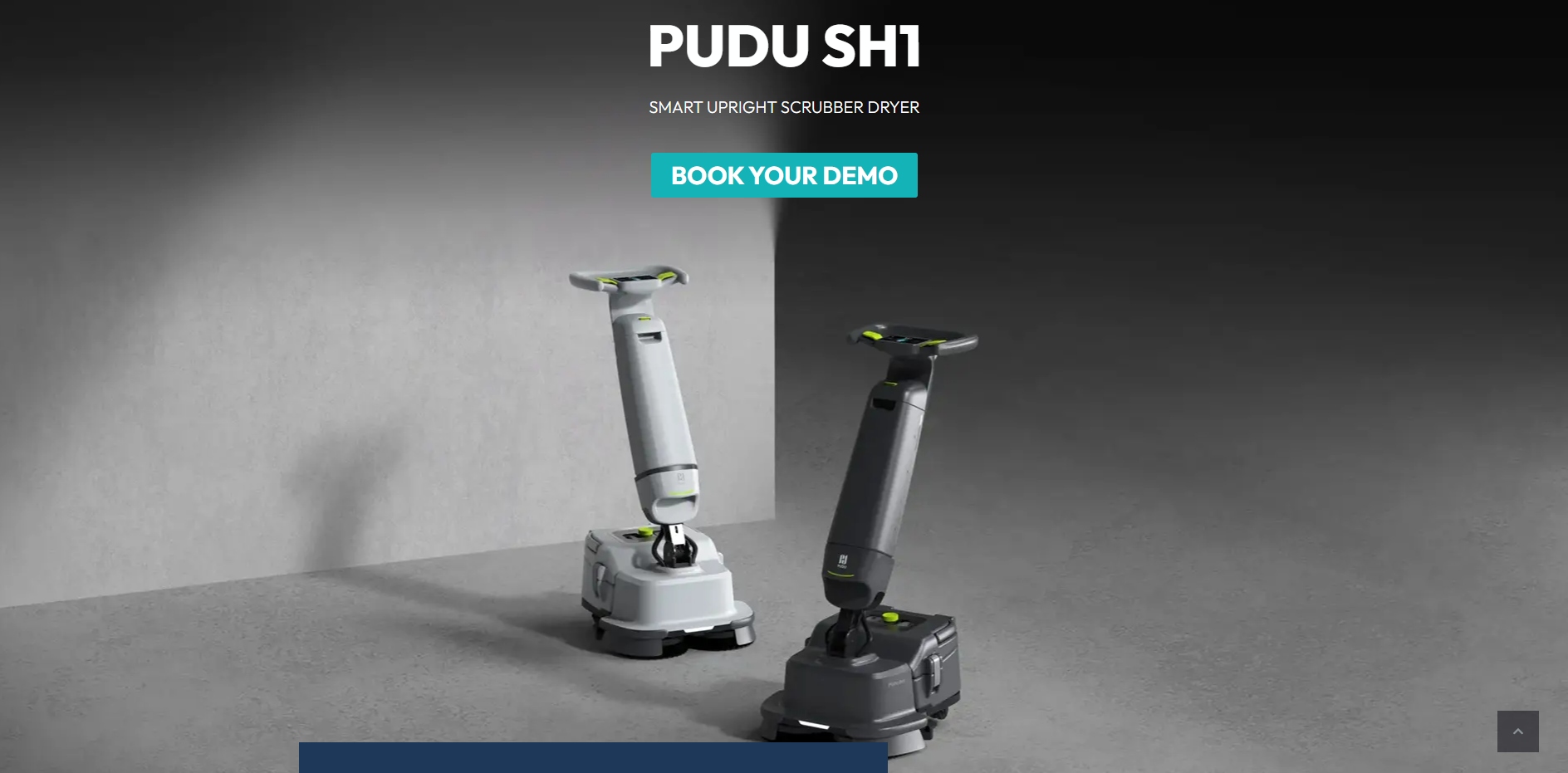
The PUDU SH1 is a commercial scrubber that focuses on water-efficient cleaning and high-pressure brushing. It is suitable for facilities that prioritise aggressive scrubbing performance over broader autonomous features.
Best for:
Industrial facility corridors
Backend areas in retail and logistics
Hospitality cleaning backrooms
This machine emphasises deep cleaning through brush pressure and efficient water usage.
Safety & maintenance:
Autonomous navigation with basic obstacle avoidance
High-pressure scrubbing setup
Scheduled maintenance reminders
Docking support for charging
Routine brush and tank checks
The SH1 suits operations focused on intensive scrubbing tasks in specific zones.
Choosing the right robot involves matching facility size, floor types, and cleaning priorities with the robot’s strengths. ToDo Robotics supports this decision process with site assessments, deployment guidance, and ongoing service.
How to Choose the Right Robotic Scrubber for Your Facility
Selecting the right robotic scrubber depends less on brand names and more on how well the machine fits daily operations. Facility managers should evaluate cleaning requirements based on traffic patterns, space layout, hygiene standards, and staffing realities rather than relying on generic performance claims.
Below are the key operational factors that should guide the decision:
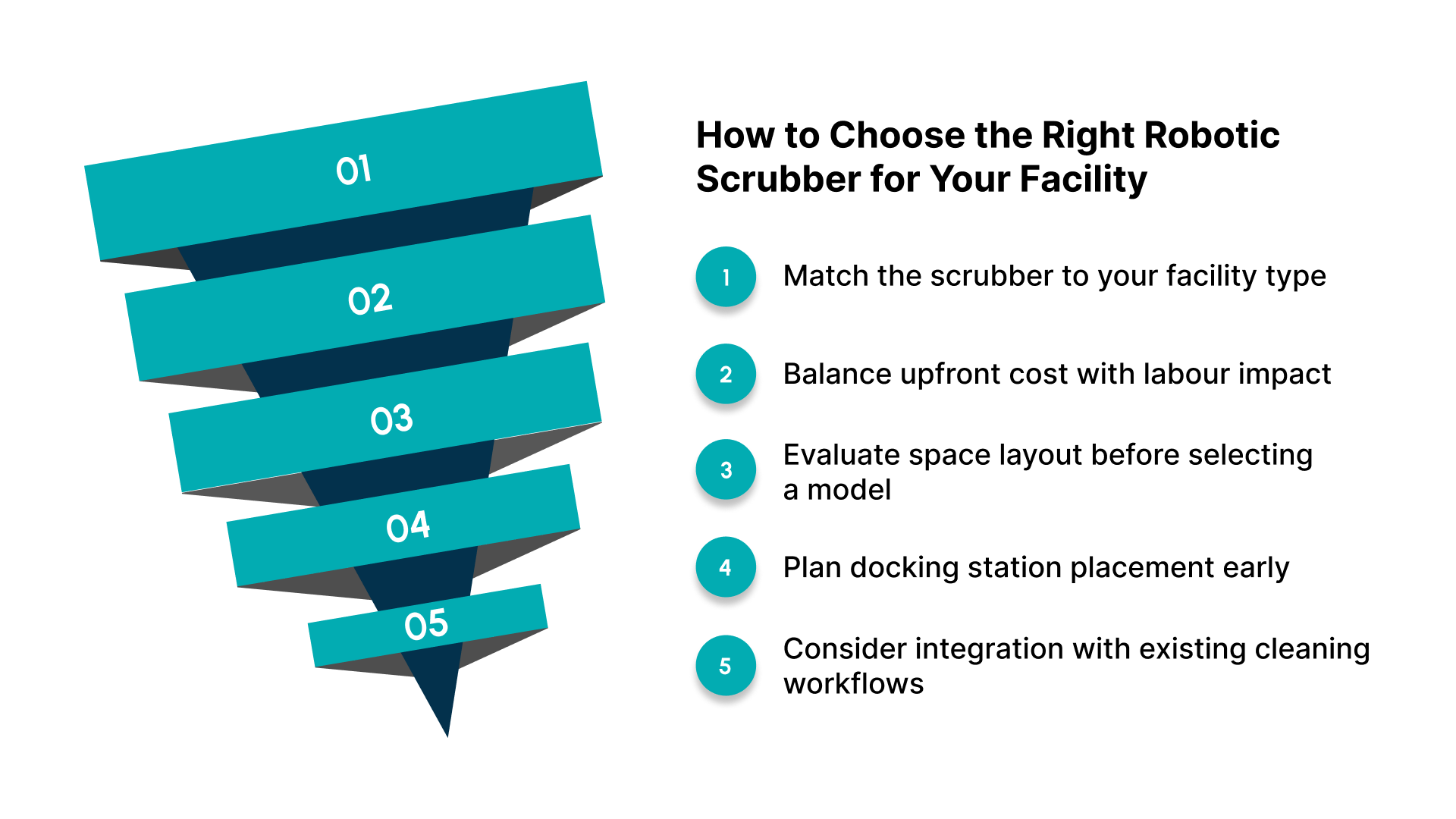
1. Match the scrubber to your facility type: Different environments place very different demands on cleaning equipment.
Hospitals and healthcare facilities require predictable coverage, controlled movement, and consistent hygiene across corridors and patient areas. Models such as the Gausium Scrubber 50 or Scrubber 75 are commonly used in these settings due to their stable navigation and suitability for long corridor layouts.
Airports and transportation hubs prioritise wide-area coverage and uninterrupted cleaning during extended operating hours. Larger robots like the Scrubber 75 are better suited for terminals, concourses, and baggage claim areas where floor space is extensive.
Retail malls and mixed-use buildings benefit from flexible machines that can operate safely during business hours. Compact scrubbers or multifunction cleaners such as Scrubber 50 or CC1 fit well in environments with varied layouts and changing foot traffic.
2. Balance upfront cost with labour impact: Robotic scrubbers are not intended to eliminate cleaning teams, but to reduce reliance on repetitive manual scrubbing.
Facilities typically see value when robots are used to:
Cover large areas that require frequent re-cleaning
Reduce overtime or overnight manual shifts
Maintain consistency when staffing levels fluctuate
For example, using a Scrubber 75 for routine wide-area scrubbing allows staff to focus on spill response, restroom sanitation, and detailed cleaning tasks that robots cannot handle. The balance comes from using robots for predictable work while people manage judgement-based cleaning.
3. Evaluate space layout before selecting a model: Facility layout has a direct impact on robot performance.
Wide open spaces such as airport halls or exhibition centres benefit from larger scrubbers with long route capability.
Narrow corridors and mixed-use zones require compact robots that can navigate tight turns and shared walkways.
Facilities with mixed flooring may require support from vacuum or combination robots such as Vacuum 40 or Phantas alongside scrubbers.
A site assessment helps determine whether one robot is sufficient or if multiple machines are needed for different zones.
4. Plan docking station placement early: Docking stations are a critical part of autonomous operation.
Facility managers should consider:
Access to water supply and drainage where applicable
Electrical availability near cleaning zones
Avoiding obstruction of public walkways
Central placement to minimise travel time between routes
For large facilities, placing docking stations near service corridors or janitorial closets often improves cleaning efficiency and reduces unnecessary robot travel.
5. Consider integration with existing cleaning workflows: Robotic scrubbers perform best when integrated into current routines rather than replacing them.
Successful deployments typically include:
Scheduled robotic cleaning during predictable time windows
Manual teams handling detailed and reactive cleaning
Supervisors monitoring performance rather than operating machines
For example, robots may handle nightly scrubbing of main corridors while staff focus on spot cleaning during peak hours.
The right robotic scrubber is the one that fits your facility layout, cleaning priorities, and staffing model. Large venues often benefit from combining multiple robots, such as a heavy-duty scrubber for open areas and a compact unit or vacuum robot for secondary spaces.
ToDo Robotics supports this process through site evaluation, model selection, deployment planning, and ongoing service, helping facilities adopt robotic cleaning in a way that aligns with real operational demands rather than theoretical performance metrics.
Real World Use Cases of Robotic Floor Scrubbers and Cleaners
Robotic floor scrubbers are already being used in operational environments where maintaining consistent cleanliness is difficult with manual labour alone.
Facilities with long operating hours, heavy foot traffic, and large floor areas have adopted autonomous cleaning to support daily maintenance rather than replace cleaning teams.
Mall Cleaning During Peak Hours
In several shopping centres, autonomous cleaning robots have been integrated into the regular cleaning schedule to maintain floor quality during busy periods.
One major mall in Singapore deployed commercial floor scrubbers that operate during off-peak and transition hours, helping cleaning teams manage corridors, food court areas, and common touchpoints with less manual effort.
These robots clean large areas efficiently and consistently, supporting a predictable standard of cleanliness even when foot traffic is heavy.
Airport and Transportation Hub Floors
Robotic floor cleaners have been deployed in airports and other transportation hubs to manage cleanliness in vast open spaces. Autonomous scrubbers operate during off-peak hours or continuously in less congested zones to ensure floors remain clean and safe for passengers.
These machines help airports maintain visible cleanliness standards, freeing staff to focus on deep sanitisation and high-touch areas.
Improving Hospital Hygiene
Hospitals and healthcare facilities use robotic scrubbers to support stricter sanitation protocols and preserve sterile corridors.
Autonomous floor cleaning robots deliver consistent cleaning paths that cover patient waiting areas, hallways, and entrance lobbies, helping reduce the risk of infection and supporting facility hygiene standards.
Because these robots can operate on schedules that avoid peak patient movement, they help maintain cleanliness without disrupting care delivery.
Logistics Centres and Warehouses
Large warehouses and logistics centres also benefit from autonomous cleaners. These robots handle large floor areas where dust, debris, and spills accumulate due to forklift traffic and high throughput.
Facilities deploying floor robots report improvements in operational uptime and safety, as robots maintain floor conditions without pulling staff away from core logistics tasks.
These examples show practical, measurable applications of robotic cleaning technology in real commercial contexts, not hypothetical scenarios, and underscore the growing role of autonomous cleaning in facility operations across industries.
Maintenance and Cost Considerations for Robotic Floor Scrubbers
Robotic floor scrubbers are designed to reduce repetitive manual cleaning, but they still require routine oversight to operate consistently. Understanding maintenance needs and ongoing costs helps facilities plan realistic deployments and avoid operational disruptions.
These machines are typically managed by existing cleaning teams, with responsibilities focused on inspection and supervision rather than active machine operation.
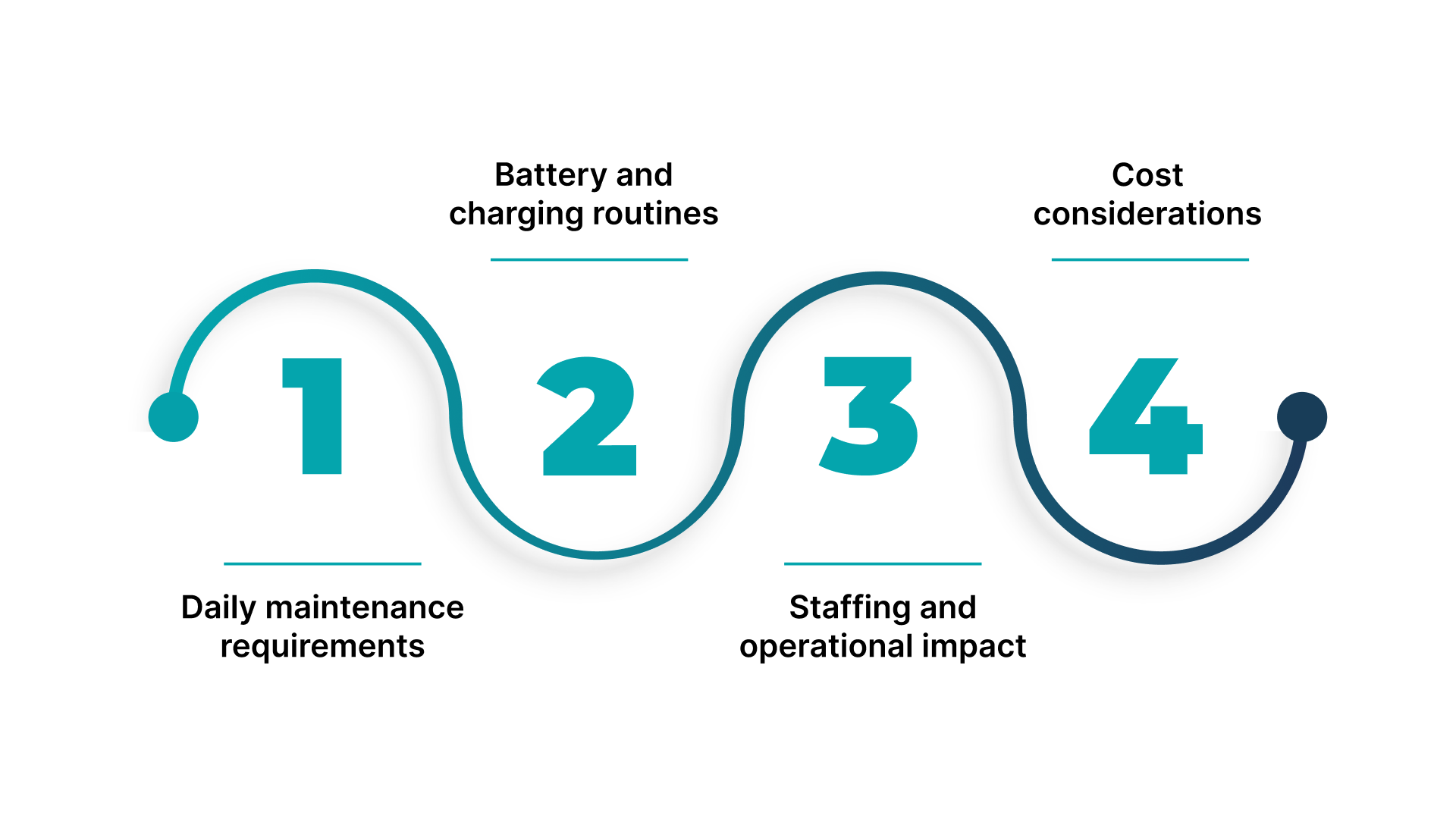
1. Daily maintenance requirements: Routine checks are simple and usually completed at the beginning or end of each shift.
Brush and squeegee inspection: Cleaning components should be rinsed and checked for wear.
Tank and waste emptying: Recovery tanks or dust bins must be emptied after scheduled runs.
Sensor cleaning: Cameras and sensors should be wiped to ensure accurate navigation.
System review: Cleaning reports are checked to confirm routes were completed.
2. Battery and charging routines: Robotic scrubbers rely on predictable charging cycles to maintain uptime.
Automatic docking: Robots return to their charging stations without manual handling.
Overnight charging: Charging is typically scheduled during low-traffic hours.
Battery monitoring: System dashboards allow staff to track battery health and readiness.
Proper dock placement near service areas improves efficiency and reduces unnecessary travel.
3. Staffing and operational impact: Robots are not intended to replace cleaning teams but to support them.
Robots handle large, repetitive floor areas.
Staff focus on detailed cleaning, spills, and restrooms.
Overtime and overnight manual scrubbing can often be reduced.
This approach helps stabilize cleaning coverage when staffing levels fluctuate.
4. Cost considerations: Beyond initial investment, facilities should plan for:
Preventive maintenance and replacement parts
Electricity, water, and cleaning chemicals
Service and support agreements
Rather than short-term ROI, most facilities evaluate robotic scrubbers based on consistency, coverage reliability, and reduced dependency on manual labour.
These considerations help ensure robotic floor scrubbers integrate smoothly into daily operations while delivering long-term operational value.
How ToDo Robotics Implements Robotic Floor Scrubbers
As commercial facilities across the US face ongoing labour shortages, rising cleaning costs, and increased hygiene expectations, robotic floor scrubbers have become a practical way to maintain consistent cleaning coverage in large indoor environments.
ToDo Robotics works with facility operators to deploy autonomous floor cleaning solutions designed specifically for real-world commercial settings such as malls, hospitals, airports, warehouses, and office buildings.
Rather than offering standardised equipment packages, ToDo Robotics follows an application-specific implementation approach based on facility size, floor type, operating hours, traffic flow, and existing cleaning workflows.
Depending on operational requirements, ToDo Robotics provides:
Autonomous floor scrubbers designed for wide-area commercial cleaning
Compact scrubbers suited for corridors, lobbies, and mixed-traffic zones
Vacuum and multi-function cleaning robots for facilities with varied floor surfaces
Navigation systems using LiDAR and vision-based mapping for safe movement in active environments
Robot selection is based on how cleaning is performed in practice, including cleaning frequency, route length, peak-hour activity, staffing availability, and hygiene standards.
To support reliable daily operation, deployments may include:
Site mapping and route configuration aligned with facility layout
Docking station planning for charging, water access, and drainage
Cleaning schedules coordinated around business hours and foot traffic
Speed zoning and safety settings for public and restricted areas
This approach ensures robotic floor scrubbers operate as part of the existing cleaning program rather than as standalone machines.
Beyond scrubber deployment, ToDo Robotics provides a full implementation and support framework, including:
Facility assessments to evaluate layout suitability and cleaning objectives
Installation and commissioning, including testing and performance validation
On-site or remote staff training for daily operation and supervision
Preventive maintenance programs and technical support
Software updates, system monitoring, and parts availability
By combining autonomous cleaning robots, deployment expertise, and long-term service under one operational framework, ToDo Robotics helps commercial facilities implement robotic floor scrubbers in a controlled, practical, and sustainable way.
Conclusion
Robotic floor scrubbers involve different operational considerations depending on facility size, layout complexity, floor type, traffic volume, and daily cleaning workflows. Deploying the wrong robot, or introducing cleaning automation without proper planning, can limit effectiveness and create operational inefficiencies.
ToDo Robotics supports commercial facilities through application-specific robotic scrubber selection, workflow-aligned deployment planning, and full-lifecycle support designed for real cleaning environments.
Speak with ToDo Robotics to discuss how robotic floor scrubbers can support your facility operations and long-term automation strategy.
Frequently Asked Questions (FAQs)
1. Can robotic floor scrubbers operate while a facility is open to the public?
Yes. Most commercial robotic scrubbers are designed to operate safely in shared environments. They use sensors, lights, and speed controls to move around people, carts, and equipment, allowing cleaning to continue during business hours when required.
2. How long does it typically take to deploy a robotic floor scrubber after purchase?
Deployment timelines vary by facility size and layout, but most installations are completed within days rather than weeks. This includes site mapping, route configuration, testing, and basic staff training.
3. Do robotic scrubbers require dedicated technical staff to operate them?
No. Day-to-day operation is usually handled by existing cleaning staff. The robots are supervised rather than manually driven, with most interaction limited to starting schedules, checking reports, and performing routine maintenance.
4. Can multiple robotic cleaners be used together in one facility?
Yes. Large facilities often use a combination of scrubbers, vacuum robots, or sweepers assigned to different zones. This approach helps optimize coverage across open areas, corridors, and mixed flooring environments.
5. What happens if the facility layout changes after deployment?
Cleaning routes can be updated if layouts change due to renovations, fixture movement, or seasonal reconfiguration. Robots can be remapped or adjusted without replacing the system, ensuring long-term usability as spaces evolve.