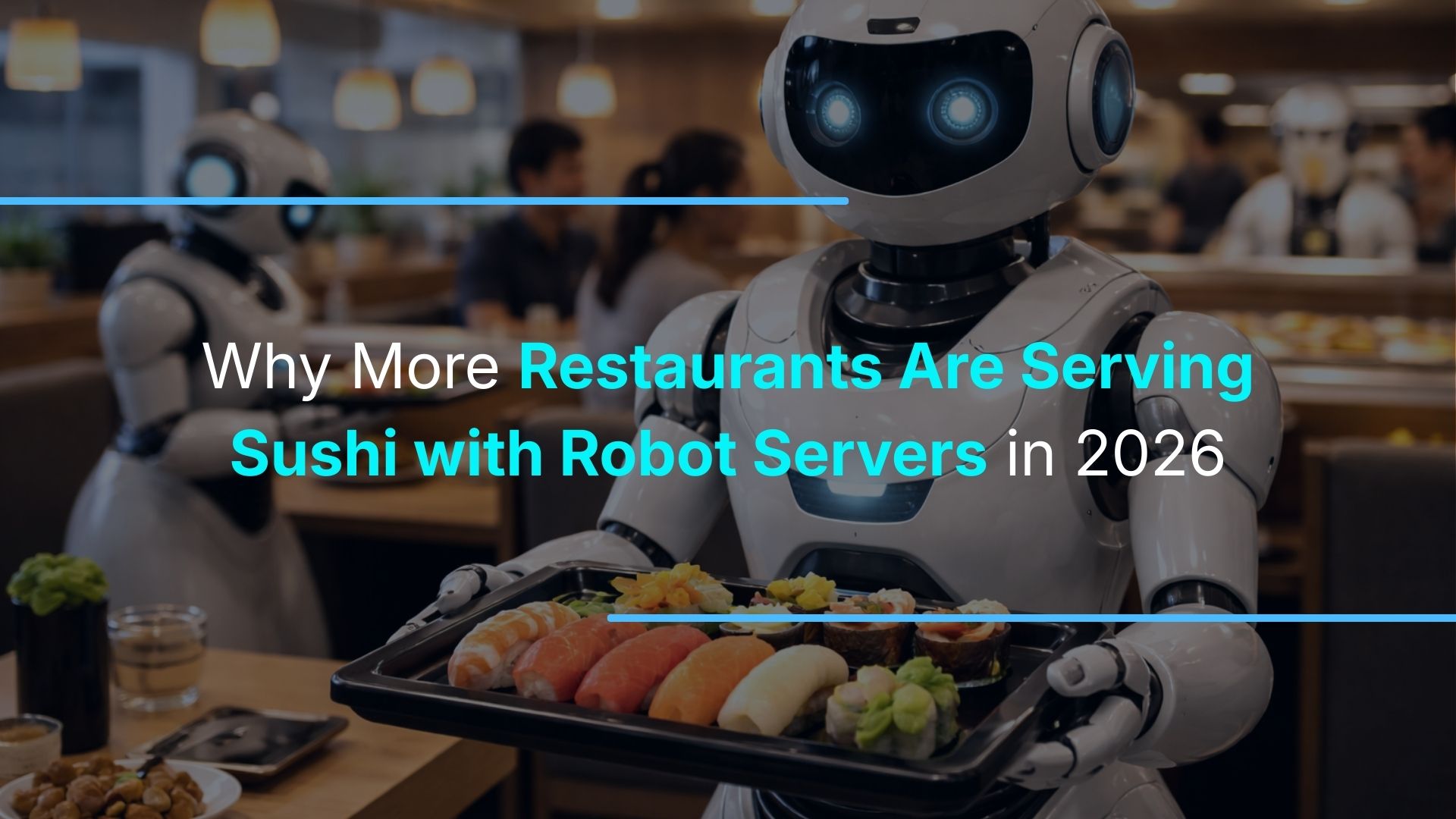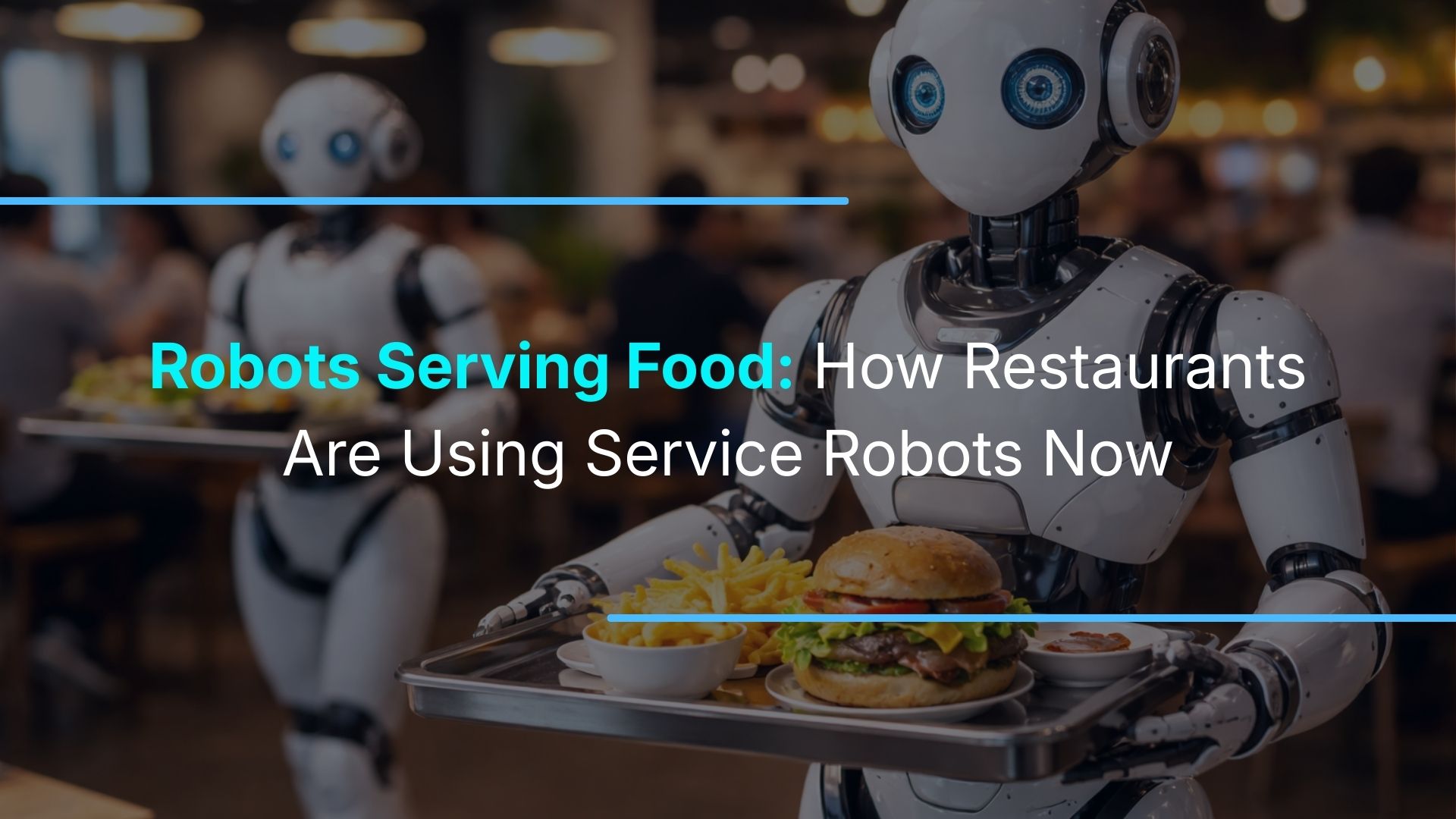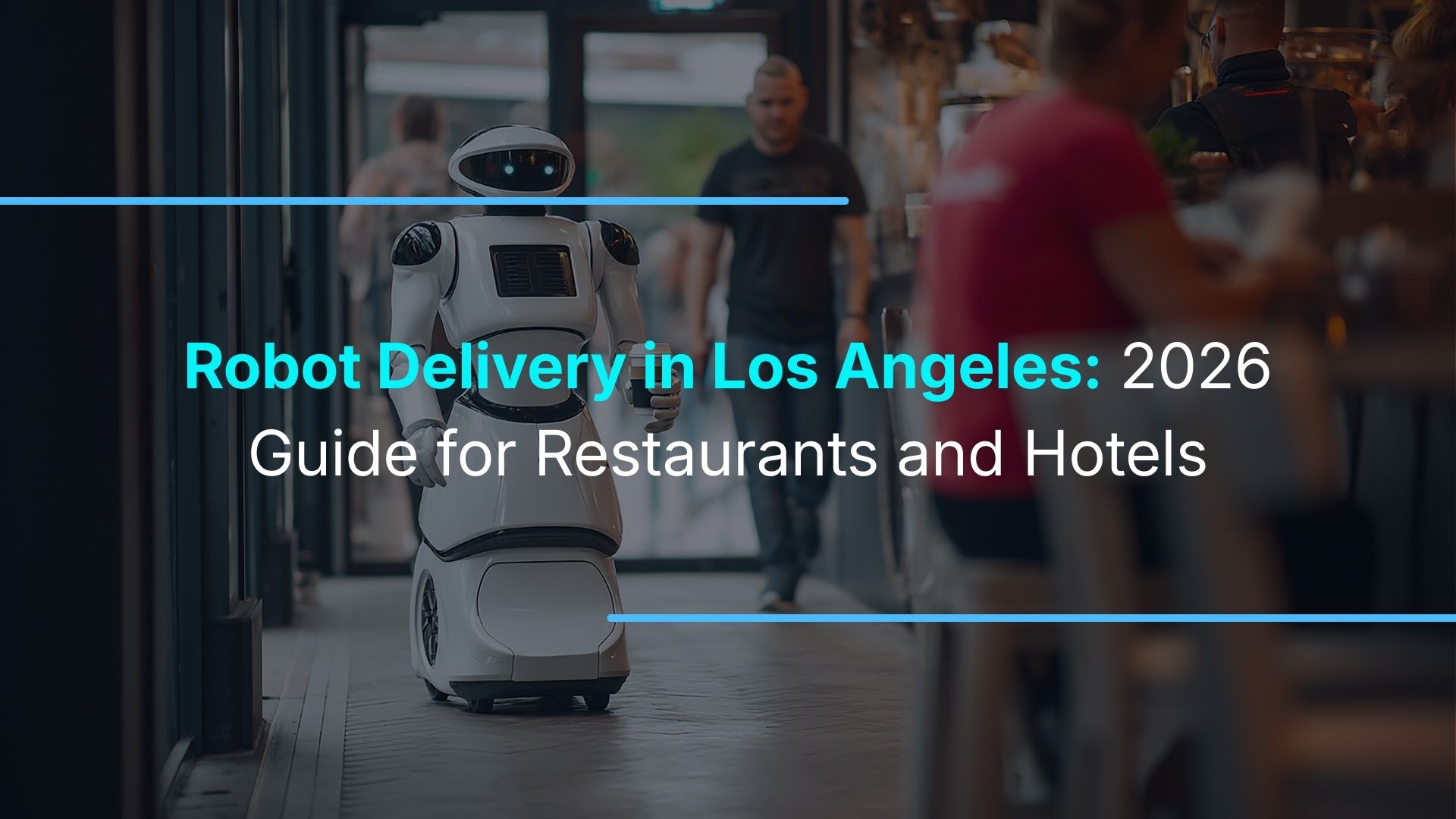
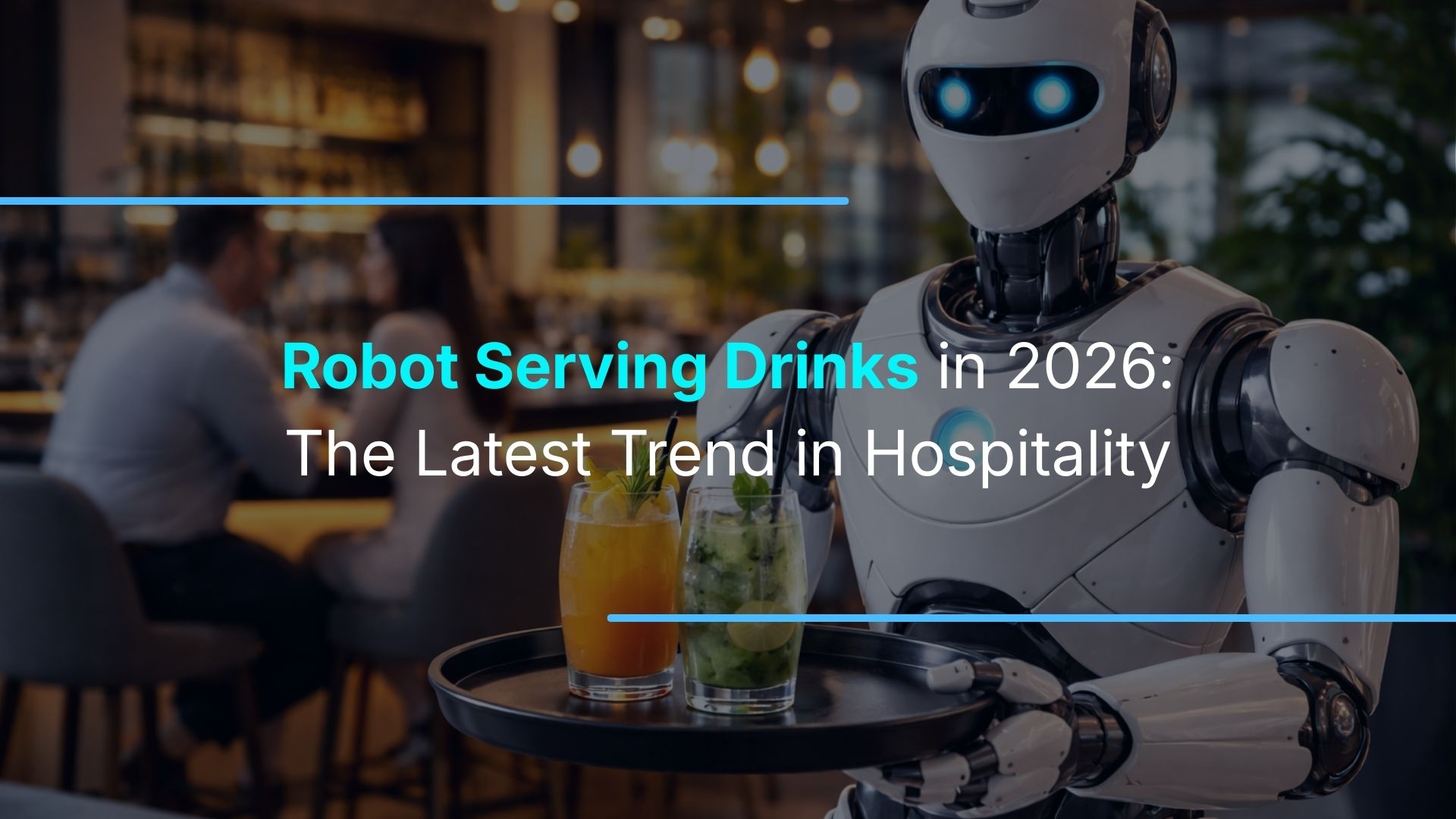
Robots serving drinks are already being used in restaurants, bars, and hotels to support beverage service in high-traffic environments. These deployments include indoor service robots that deliver prepared drinks to tables, as well as robot bartender systems used in controlled bar and event settings.
Adoption is being driven less by novelty and more by ongoing labor shortages, rising wage pressure, and growing customer expectations for faster, consistent service.
This guide explains how robots are currently used for drink service, where they are most effective, how the technology works in daily operations, and the practical benefits and limitations businesses should understand before considering implementation.
Key Takeaways
Robots serving drinks are already in use across restaurants, bars, hotels, and cafés to support beverage delivery and preparation workflows.
Most deployments focus on drink transport, helping reduce server walking time and improve delivery consistency during peak service periods.
Robot bartenders and drink-delivery robots serve different purposes, with each suited to specific layouts and operational needs.
Labor shortages and rising wage pressure are key drivers behind beverage-service automation adoption.
Successful implementation depends on layout assessment and workflow alignment, ensuring robots function as support tools rather than disruptive additions.
Robots Serving Drinks: What You Need to Know in 2026
Robots serving drinks are hospitality service systems designed to support beverage delivery or preparation, not to replace human staff. They are already used in controlled indoor environments where consistency, speed, and repetitive movement are operational challenges.
In practice, these robots fall into two main categories. They include:
Drink delivery robots that transport prepared beverages from bars or service stations to tables, rooms, or event areas.
Robot bartender systems that can pour, mix, or dispense drinks in fixed bar setups, typically under staff supervision.
These robots operate indoors and are designed to work alongside people, following predefined service workflows.
It is equally important to clarify what these systems do not do. They are not:
Humanoid servers capable of full guest interaction or decision-making
Autonomous replacements for bartenders or servers
Unsupervised systems operating without staff oversight
Human teams remain responsible for order taking, age verification, guest interaction, quality control, and overall service management.
When deployed correctly, robots serving drinks function as operational support tools, handling repetitive delivery or dispensing tasks while hospitality staff focus on customer service, supervision, and experience quality.
Where Robots Are Serving Drinks Today
Robots serving drinks are already in use across several hospitality environments where beverage service involves frequent movement, high volumes, or controlled preparation workflows.
These deployments are typically focused on support roles rather than full automation.
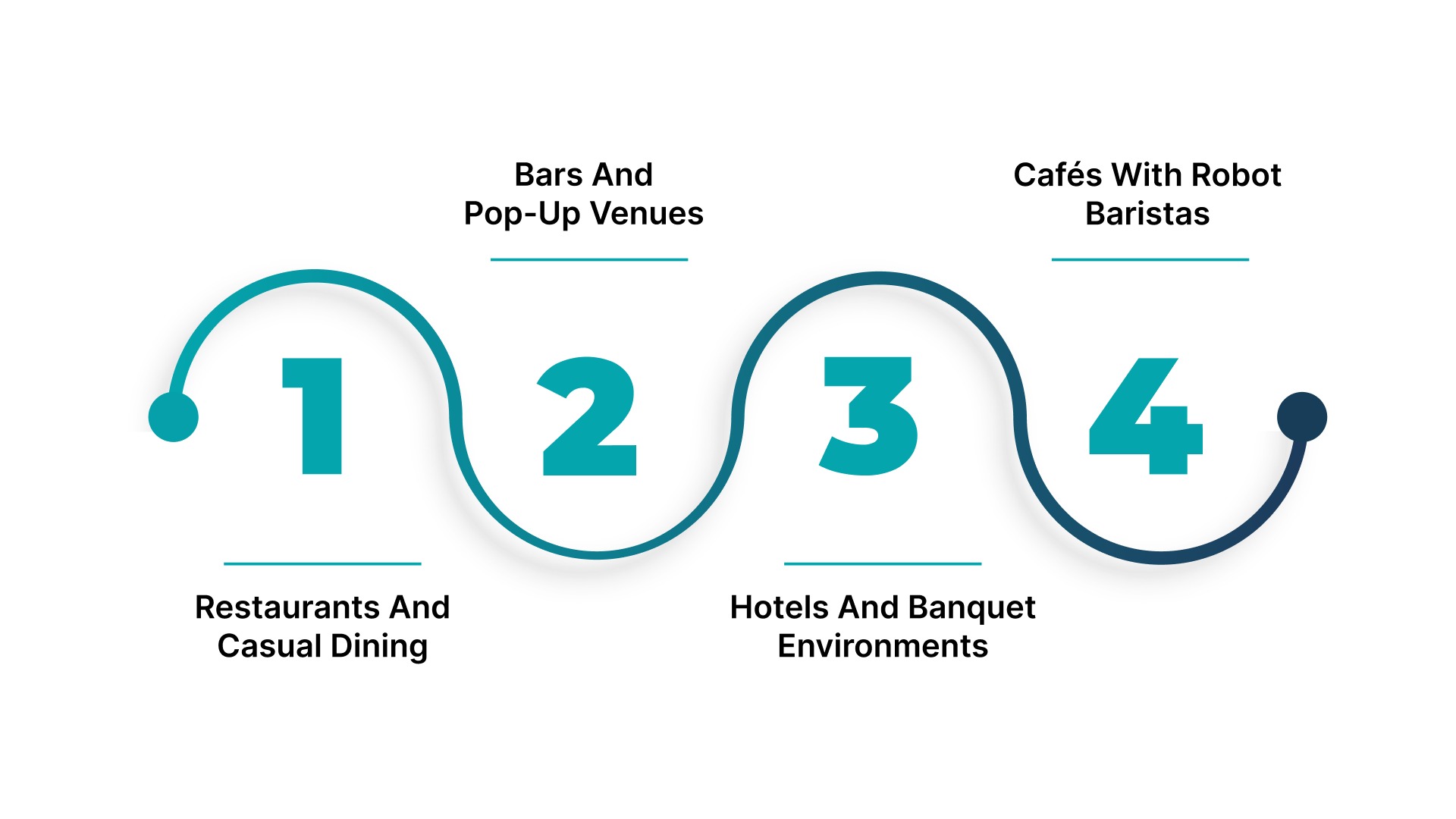
Restaurants And Casual Dining
In many casual and full-service restaurants, indoor service robots are used to deliver prepared drinks from the bar or service station to tables.
Operational context includes:
Reducing server walking time during peak hours
Supporting understaffed shifts
Delivering multiple beverages in a single trip
These robots function similarly to food runners, with drinks placed on trays or enclosed compartments and delivered tableside.
Bars And Pop-Up Venues
Some bars and temporary venues use robot bartender systems capable of pouring or mixing predefined beverages.
Typical characteristics include:
Fixed bar installations with limited drink menus
Human staff supervising operation and guest interaction
Use in promotional events, cruise ships, or high-volume venues
These systems focus on consistency and throughput rather than replacing bartenders.
Hotels And Banquet Environments
Hotels use drink-serving robots primarily for room service support and event operations.
Common use cases include:
Delivering beverages to guest rooms
Supporting banquet halls and conference areas
Reducing staffing pressure during large events
Long corridors and predictable routes make these environments well suited for robotic delivery.
Cafés With Robot Baristas
Robot barista systems are now operating in real café settings. A notable example is Artly Coffee, a U.S.-based café chain that uses robotic arms to prepare espresso-based drinks under controlled conditions.
In these environments:
Robots handle drink preparation
Staff manage orders, quality checks, and customer interaction
Operations run within fixed workstations
This model improves consistency while maintaining human oversight.
Across these settings, robots serving drinks are used to support beverage service flow, improve consistency, and reduce physical workload, not to replace hospitality staff or automate the entire customer experience.
For restaurants looking to modernize beverage service with robot servers, ToDo Robotics works with operators to assess dining layouts, service flow, and staffing pressure, helping identify where robots can provide practical operational support and selecting solutions suited to each environment.
How Robots Are Serving Drinks in Restaurants: Step-By-Step Process
Robots serving drinks follow a structured workflow designed to integrate into existing hospitality operations.
They are typically used after drinks are prepared, supporting delivery and throughput rather than replacing bartenders or service staff.
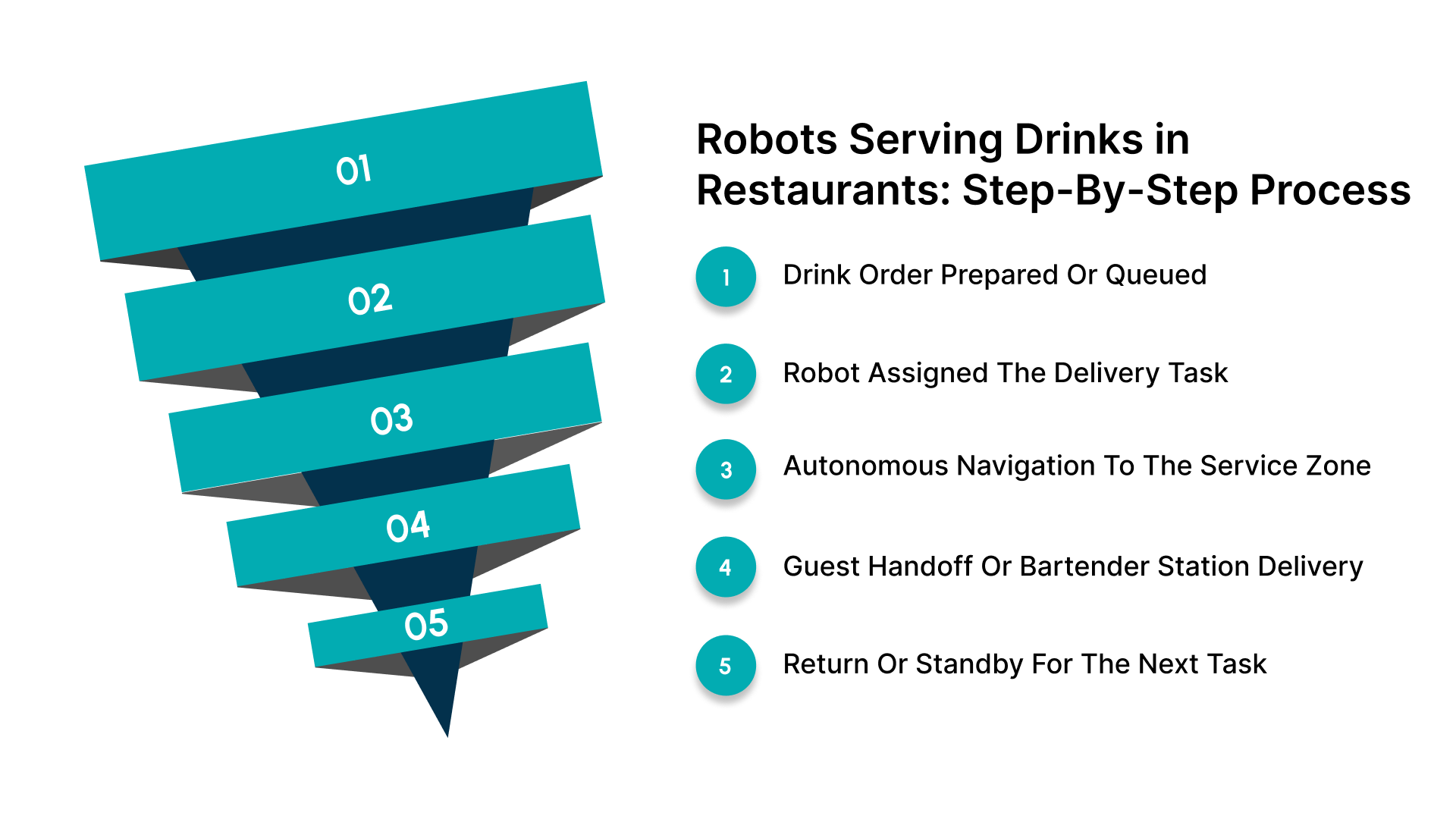
Step 1: Drink Order Prepared Or Queued
Beverages are prepared by bartenders, baristas, or service staff as usual. Once ready, drinks are placed on the robot’s tray or inside an enclosed compartment.
In robot bartender setups, drinks are queued within a predefined menu system before dispensing.
Step 2: Robot Assigned The Delivery Task
The robot is assigned a delivery task through a touchscreen, tablet, or service interface. Staff select the destination table, room number, or service zone.
Task assignment confirms the route and initiates the delivery.
Step 3: Autonomous Navigation To The Service Zone
Using indoor mapping and sensors, the robot navigates through dining or event areas. During travel, it:
Avoids guests and staff in real time
Adjusts speed in high-traffic zones
Reroutes if pathways are temporarily blocked
Movement is designed to remain predictable and controlled.
Step 4: Guest Handoff Or Bartender Station Delivery
At the destination, the robot stops at the assigned location and provides a visual or audio prompt. Guests or staff retrieve drinks directly from the robot.
In bar environments, the robot may deliver beverages back to a service station for final handoff.
Step 5: Return Or Standby For The Next Task
After completing the delivery, the robot either:
Returns to the bar or kitchen area
Waits in a standby zone
Navigates to a charging dock when needed
This allows continuous operation throughout service hours with minimal staff involvement.
By following this process, robots serving drinks support consistent delivery flow while allowing hospitality teams to maintain control over preparation, quality, and guest interaction.
Delivery Vs Drink Preparation Using Robots
Robots serving drinks are used in two distinct ways within hospitality environments. Understanding the difference is important, as each use case supports different operational needs and requires different levels of supervision and setup.
Delivery Robots: Delivery robots are used to transport drinks that have already been prepared by staff. Their role is limited to movement, not preparation. Typical characteristics include:
Carrying beverages from bar or service stations to tables or event areas
Operating on predefined indoor routes
Supporting high-traffic service periods where walking time slows delivery
These robots are commonly used in restaurants, hotels, and banquet spaces where drink volume is high and service distances are long.
Their value lies in speed, consistency, and reduced staff travel, not beverage preparation.
Robot Bartenders And Mixers: Robot bartenders are fixed systems designed to pour or mix beverages from predefined recipes. Real operational examples include:
Robot bartender installations at the AWS Startups bar in San Francisco, where robotic arms prepare selected drinks under staff supervision.
These systems typically:
Operate behind the bar or within enclosed stations
Offer limited drink menus
Require staff oversight for restocking, quality checks, and guest interaction
Robot bartenders are best suited for controlled environments such as pop-ups, event venues, cruise ships, or promotional installations.
Choosing The Right Approach: Most hospitality operators adopt delivery robots first, as they integrate more easily into existing workflows and require fewer operational changes.
Drink-preparation robots are more specialized and work best where menus, volume, and environment are tightly controlled.
Both approaches support beverage service, but they solve very different operational problems.
Operational Benefits Of Robots Serving Drinks
Robots serving drinks are primarily adopted to address everyday operational challenges rather than to introduce new service concepts. Their value comes from improving consistency and reducing physical workload during busy service periods.
Key operational benefits include:
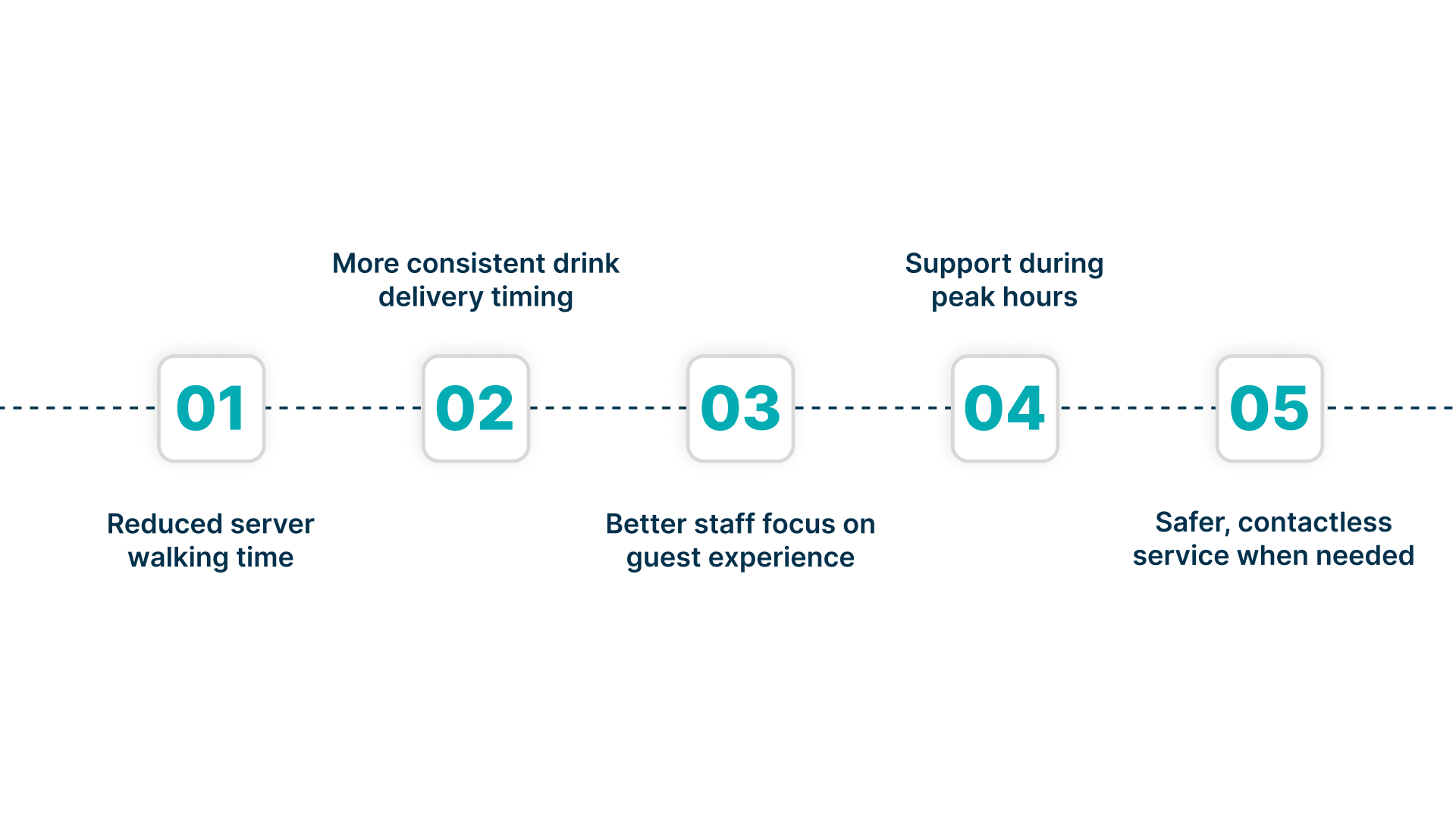
Reduced server walking time: In large dining rooms or venues with long service routes, robots handle repetitive beverage runs, allowing staff to remain closer to guests.
More consistent drink delivery timing: Drinks are delivered as soon as they are ready, reducing delays caused by staff availability during peak periods.
Better staff focus on guest experience: With delivery tasks supported by robots, servers can spend more time on order accuracy, table engagement, and upselling.
Support during peak hours: Robots help stabilize service flow during rush periods when beverage volume increases and staffing is stretched.
Safer, contactless service when needed: In environments requiring reduced physical contact, robots provide an additional layer of separation without changing service quality.
By addressing these practical challenges, robots serving drinks help hospitality teams maintain service standards while operating under ongoing staffing and cost pressures.
Limitations And Considerations for Robots Serving Drinks
While robots serving drinks can support beverage service in many environments, they are not suitable for every venue or layout. Understanding their limitations is essential for setting realistic expectations and ensuring successful deployment.
Key considerations include:
Not suitable for all layouts: Extremely tight dining spaces, uneven flooring, or constantly shifting furniture layouts may limit safe navigation.
Doesn’t replace bartenders or mixologists: Robots do not handle recipe creation, quality judgment, guest interaction, or age verification. Skilled staff remain central to beverage service.
Charging and maintenance requirements: Robots require scheduled charging, routine maintenance, and occasional software updates to maintain reliable operation.
Navigation challenges in crowded bar areas: Dense standing crowds, unpredictable foot traffic, and low lighting can affect efficiency in high-congestion bar environments.
For these reasons, successful deployments depend on proper layout assessment, workflow planning, and realistic role definition. When robots are introduced as operational support rather than full automation, they deliver more consistent results and better staff acceptance.
Why Businesses Are Using Robots Serving Drinks in 2026
The adoption of robots serving drinks is being driven by operational pressure rather than experimentation. Hospitality businesses are responding to persistent staffing and service challenges that directly affect daily performance.
Key drivers include:
Labor shortages: Restaurants and bars across the U.S. continue to face difficulty filling front-of-house roles, particularly during evenings and weekends. Beverage service is often one of the first areas affected when staffing is limited.
Rising wage pressures: Higher hourly wages have increased the cost of repetitive service tasks such as drink running. Automating movement-based work helps control labor spend without reducing service coverage.
Demand for consistent service speed: During peak hours, drink delivery delays can slow table turnover and impact guest satisfaction. Robots help maintain predictable delivery timing regardless of staffing variability.
Guest expectations for contactless experiences: In hotels, events, and high-traffic dining spaces, some guests continue to prefer limited physical interaction for beverage delivery when available.
Industry workforce reports have consistently highlighted ongoing hiring challenges in food and beverage roles, especially in high-turnover positions.
In response, many operators are using robots serving drinks as operational support tools, stabilizing service flow while allowing staff to focus on hospitality, supervision, and guest engagement.
How ToDo Robotics Implements Robots for Serving Drinks
As restaurants, bars, and hospitality venues across the US respond to ongoing labor shortages and increasing service volume, robots serving drinks have become a practical way to support beverage delivery and maintain consistent service flow.
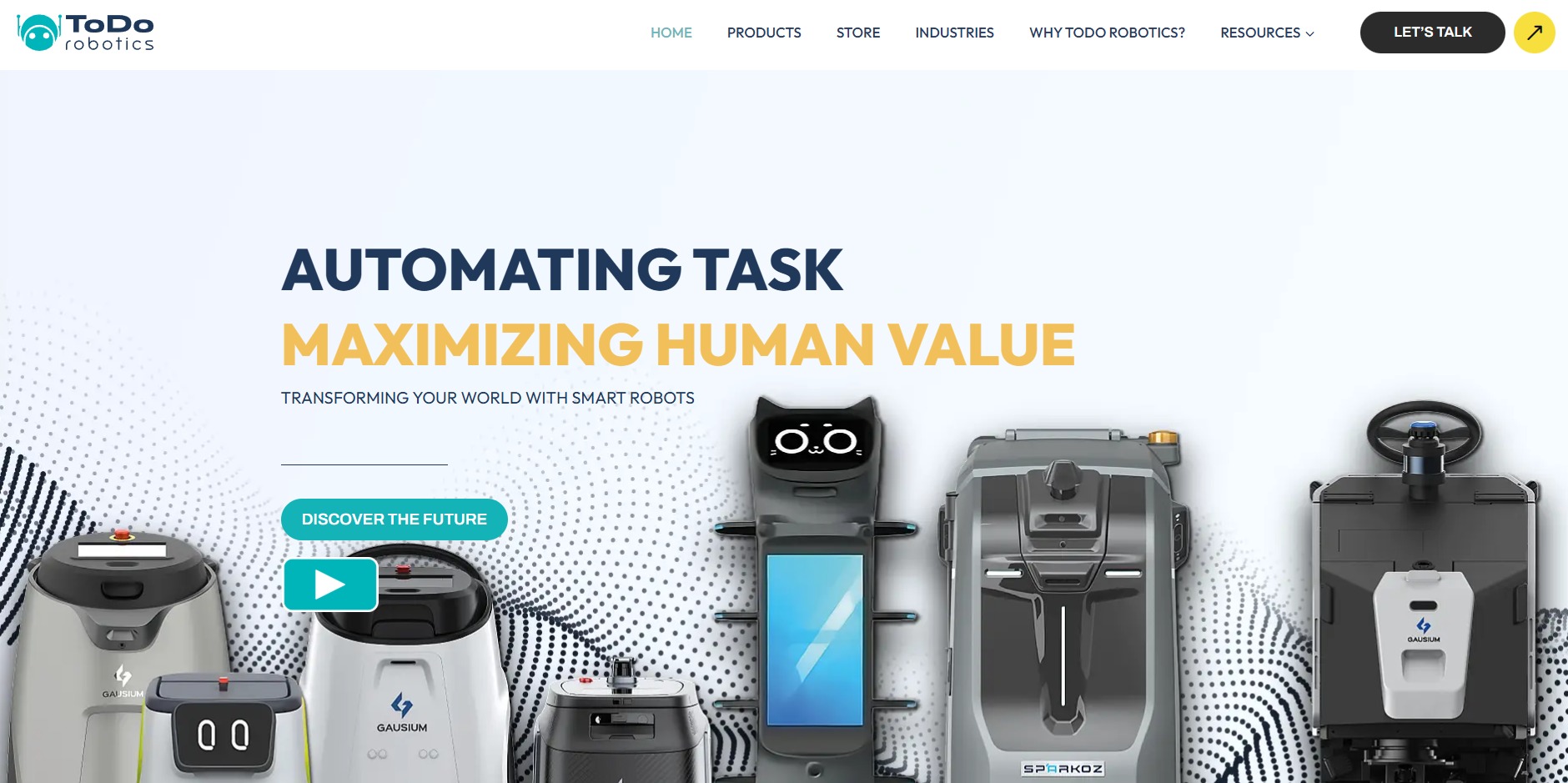
ToDo Robotics works with hospitality operators to deploy robot solutions designed specifically for indoor beverage service environments.
Rather than offering standardized technology packages, ToDo Robotics follows an application-specific approach based on venue layout, bar placement, service style, operating hours, and guest traffic patterns.
Depending on operational requirements, ToDo Robotics provides:
Indoor service robots designed to transport prepared drinks from bars or service stations to tables, rooms, or event areas.
Multi-tray and enclosed delivery robots suited for high-volume beverage service and extended dining or banquet layouts.
Autonomous navigation systems using LiDAR and vision-based mapping for safe movement in guest-facing environments.
Fleet management software that supports task dispatch, delivery tracking, and coordination across multiple robots.
Robot configurations are selected based on how beverage service operates in practice, including walking distances, drink volume, peak-hour demand, and staffing availability.
To support reliable daily operation, deployments may include:
Integration aligned with existing service workflows
Configurable speed zones for bar areas, dining spaces, and back-of-house corridors
Automated charging to support continuous service periods
This approach ensures robots serving drinks function as an operational support layer rather than a separate or disruptive technology.
Beyond beverage delivery automation, ToDo Robotics offers a broader range of solutions to support consistency, cleanliness, and uptime across hospitality environments.
These include:
Autonomous cleaning robots for dining rooms, bars, corridors, and high-traffic public areas.
Robotics consultation and site assessments to evaluate layout feasibility, workflow alignment, and expected ROI.
Installation and commissioning services, including mapping, testing, and on-site configuration.
Staff training programs, delivered in person or remotely to ensure safe and confident operation.
Ongoing maintenance and technical support, including preventive servicing, software updates, and parts availability.
By combining drink-delivery robots, cleaning automation, deployment expertise, and long-term support under a single framework, ToDo Robotics helps hospitality businesses implement robotics in a structured, operationally grounded way.
Conclusion
Robots serving drinks involve different operational considerations depending on venue layout, beverage volume, staffing levels, and daily service workflows. Deploying the wrong solution, or introducing robotics without proper planning, can limit efficiency gains and disrupt beverage service flow.
ToDo Robotics supports restaurants, bars, and hospitality operators through application-specific drink-service robots, workflow-aligned deployment planning, and full-lifecycle support designed for real beverage service environments.
Speak with ToDo Robotics to discuss how robots serving drinks can support your operations and long-term automation strategy.
Frequently Asked Questions (FAQs)
1. Can robots serve alcoholic beverages?
Robots can deliver alcoholic drinks, but age verification and final handoff remain the responsibility of trained staff in compliance with local regulations.
2. Are robots serving drinks safe around guests?
Yes. Service robots are designed with obstacle detection, controlled speeds, and emergency stop features for use in guest-facing environments.
3. Can one robot serve both food and drinks?
In many cases, yes. Some service robots can be scheduled to deliver both food and beverages depending on tray configuration and workflow setup.
4. Do robots require changes to existing bar layouts?
Most deployments do not require structural changes, though clear pathways and defined service zones improve reliability.
5. What types of venues benefit most from drink-serving robots?
Venues with long walking distances, high beverage volume, or frequent peak periods, such as large restaurants, hotels, and event spaces, see the greatest benefit.