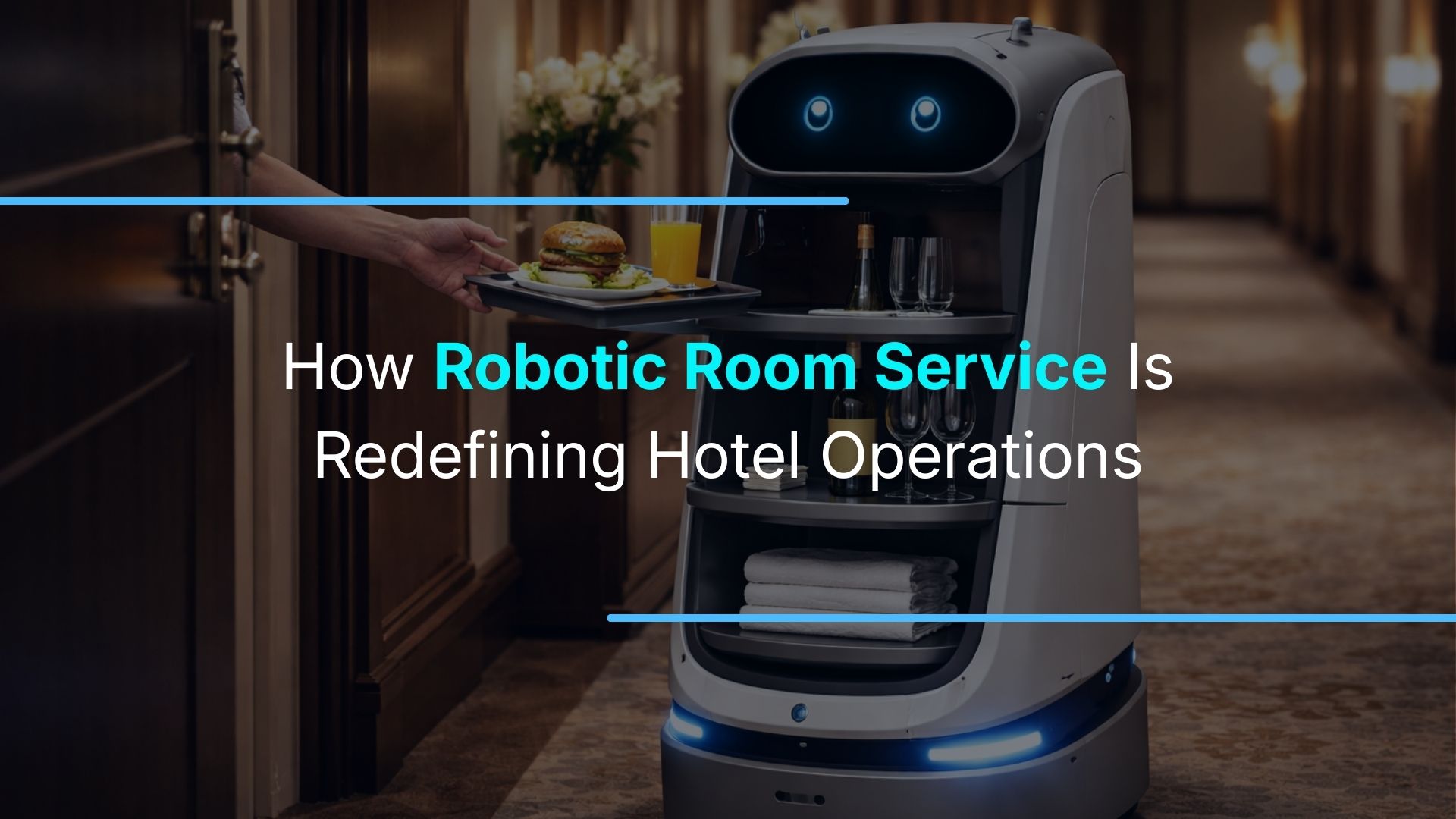
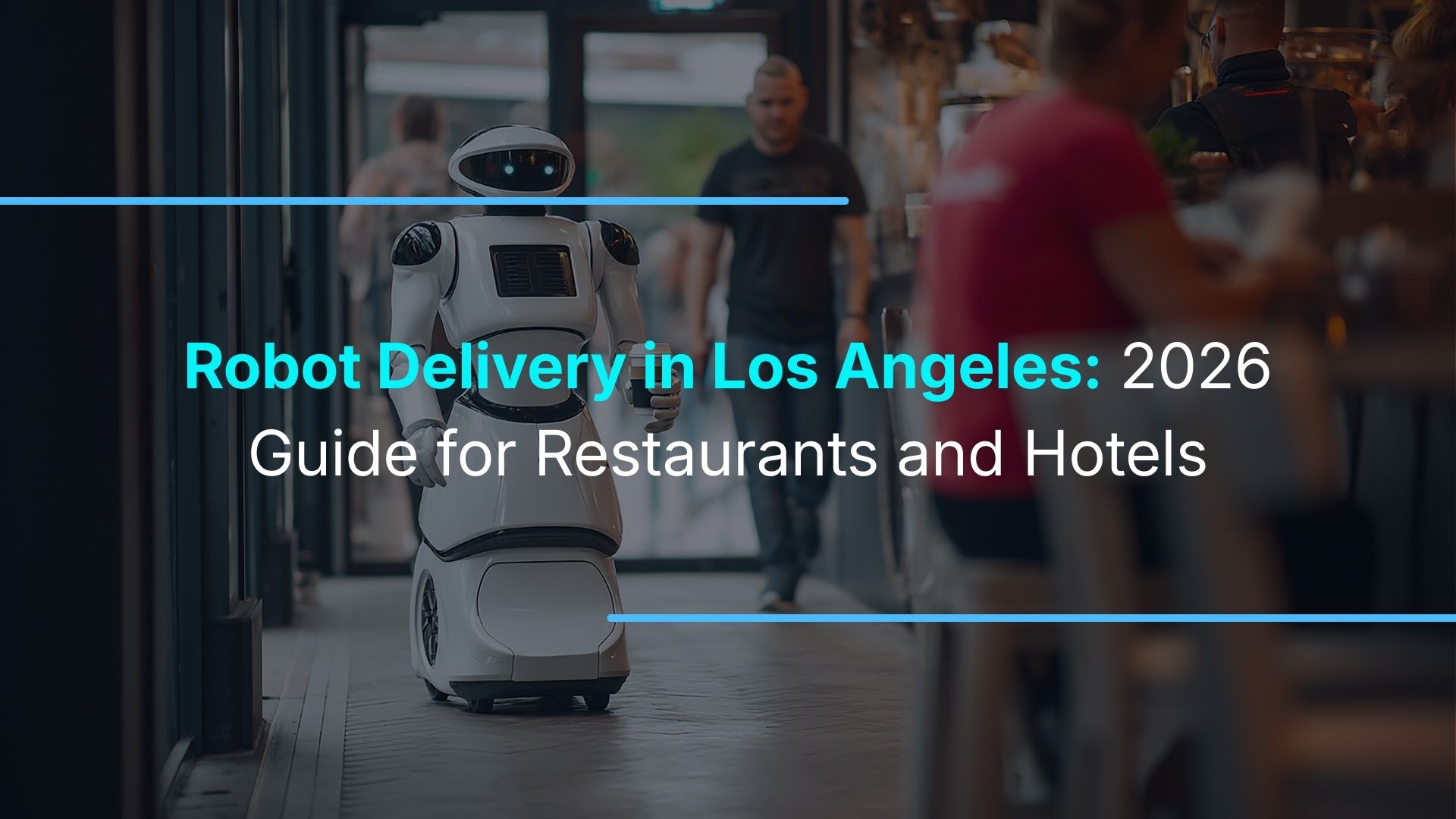
Robot delivery is no longer experimental in Los Angeles. It’s rapidly becoming a real operational solution for businesses. Across restaurant districts, mixed-use developments, hotels, and healthcare campuses, autonomous delivery robots are already moving food, supplies, and materials reliably through busy environments.
For businesses facing labor shortages, rising wages, and inconsistent service during peak hours, robot delivery has shifted from a futuristic concept to a practical operational tool that helps maintain service quality while relieving pressure on human staff.
In this guide, you’ll learn how robot delivery works in Los Angeles today, where it’s being deployed, which technologies power these systems, and how local businesses can evaluate whether robotic delivery makes sense for their operations.
Key Takeaways
Indoor robot delivery is actively used across Los Angeles in restaurants, hotels, healthcare facilities, and large commercial buildings to support daily operations.
Delivery robots automate repetitive transport tasks, helping businesses reduce walking time, stabilize service quality, and operate effectively.
Most deployments operate within controlled indoor environments, avoiding the regulatory complexity associated with public sidewalk delivery robots.
Operational value depends on layout, service volume, and workflow design, making site assessments critical for accurate ROI evaluation.
When deployed correctly, robot delivery improves efficiency, cost control, and employee satisfaction while maintaining safety and accessibility standards.
Why Los Angeles Is a Major Hub for Robot Delivery
Los Angeles presents a unique combination of operational and economic conditions that make indoor robot delivery highly effective at scale. These robots are designed to transport food, supplies, and materials across indoor or private-property environments, not for public sidewalk or street delivery.
Many businesses operate within large, complex properties where repetitive transport tasks consume significant staff time and contribute to service delays. This is where delivery robots present a great solution.
Unlike last-mile sidewalk delivery, indoor delivery robots operate in controlled environments where navigation is predictable, safety risks are lower, and integration with daily operations is significantly easier.
Key factors driving indoor robot delivery adoption in Los Angeles include:
Persistent labor shortages in service industries: Hospitality, food service, and healthcare facilities across LA face ongoing staffing challenges and high turnover. Indoor delivery robots help maintain service continuity by handling repetitive transport tasks during understaffed shifts.
Large building footprints and long travel distances: Hotels, hospitals, food courts, and mixed-use developments in Los Angeles often span multiple floors or connected buildings. Staff may walk several miles per shift, making autonomous delivery far more efficient for routine point-to-point movement.
Higher wage and labor cost pressure: California’s wage structure and regional labor competition significantly increase operating expenses. Automating internal delivery tasks helps businesses control labor costs without reducing service levels or increasing headcount.
High expectations for service speed and consistency: Customers and guests expect timely service regardless of staffing levels. Indoor delivery robots provide consistent performance during peak hours, events, and high-occupancy periods.
Strong adoption of building automation technologies: Southern California businesses are accustomed to mobile ordering systems, smart facility tools, and automation platforms, making the transition to service robots more seamless.
Controlled environments ideal for autonomous navigation: Indoor and private-property settings allow robots to operate safely using sensors and mapping technology without exposure to traffic, weather, or public sidewalk regulations.
Because Los Angeles combines staffing pressure, large commercial properties, and high service expectations, it has become one of the most active U.S. markets for indoor commercial robot delivery.
Where Robot Delivery Operates in Los Angeles
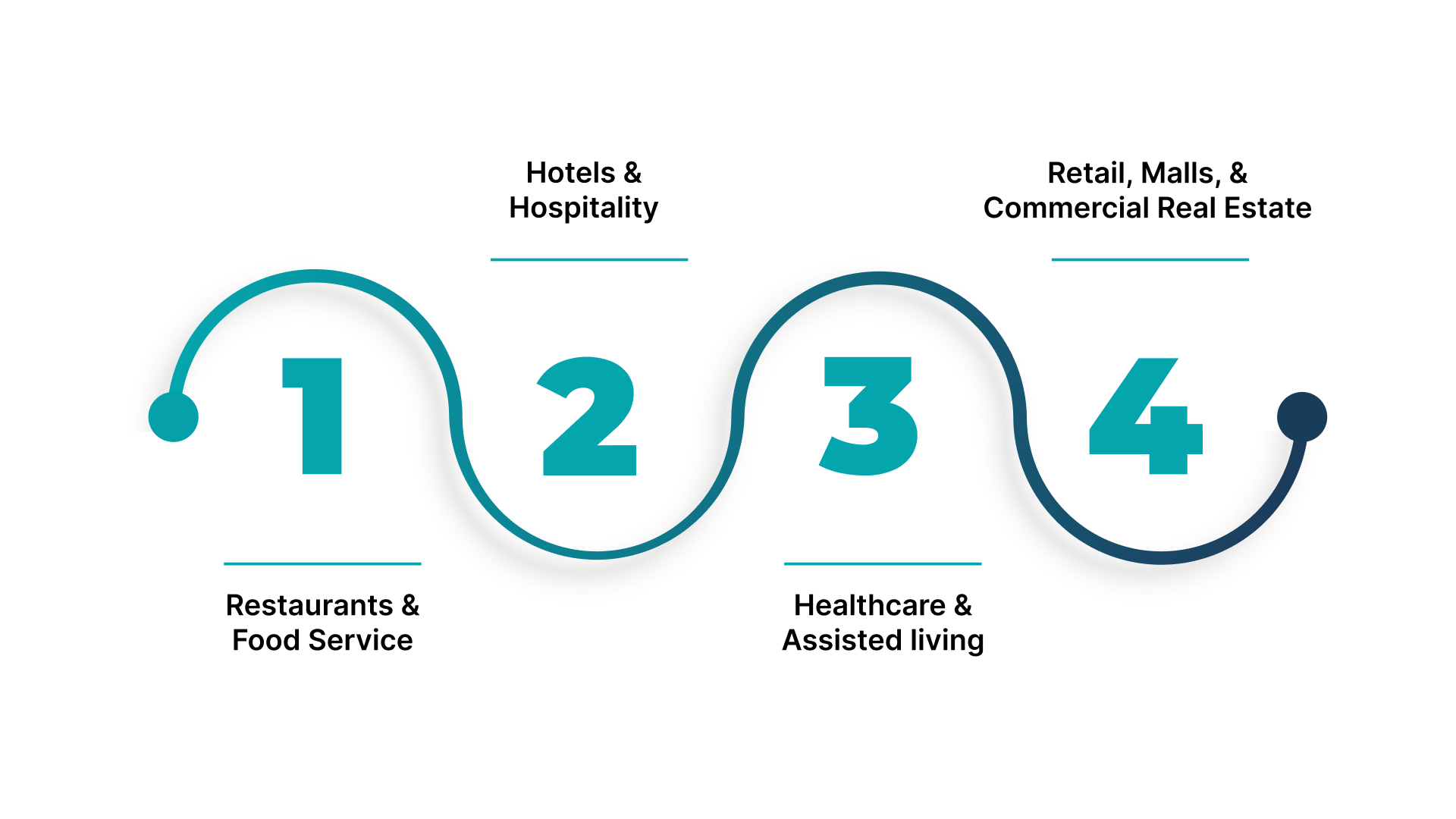
Indoor robot delivery is most commonly deployed in commercial environments with high foot traffic, long walking distances, and repetitive transport needs.
In Los Angeles, adoption is concentrated in facilities where staff spend significant time moving items rather than serving customers.
Below are the primary environments where delivery robots are actively used:
Restaurants and Food Service
Robot delivery is widely adopted across restaurant and dining operations, particularly in locations with large floor plans or high order volumes.
Common environments include:
Full-service restaurants
Quick-service and fast-casual brands
Food courts and ghost kitchen hubs
Multi-tenant dining halls and entertainment venues
Typical use cases include:
Running food from the kitchen to dining tables
Transporting multiple orders simultaneously during rush periods
Delivering meals across long dining areas or split layouts
Clearing dishes and returning trays to service stations
Supporting understaffed shifts without slowing table turnover
For many Los Angeles restaurants, delivery robots function as dedicated food runners, allowing servers to focus on guest interaction, order accuracy, and upselling rather than walking repetitive routes.
Hotels and Hospitality
Hospitality environments are one of the strongest use cases for indoor robot delivery due to multi-floor layouts and continuous guest service demands.
Robots are commonly deployed in:
Hotels and boutique properties
Resorts and casino-style venues
Conference and convention centers
Large banquet and event facilities
Robots are used to:
Deliver room service orders and guest amenities
Transport towels, toiletries, and replacement items
Support banquet operations during events
Move linens and supplies between service areas
Reduce delays during high occupancy periods
In many Los Angeles hotels, robots operate throughout the day and night, helping maintain service responsiveness even when staffing is limited during late hours.
Healthcare and Assisted living
Healthcare facilities represent one of the most operationally critical environments for robot delivery.
Common deployment locations include:
Hospitals and trauma centers
Medical office buildings
Multi-wing healthcare campuses
Assisted living and senior care facilities
Typical applications include:
Meal delivery to patient rooms
Transport of linens and medical supplies
Movement of non-clinical materials between departments
Scheduled internal logistics routes throughout the facility
Because hospitals operate 24/7, delivery robots help reduce staff fatigue, minimize unnecessary walking, and maintain predictable service routines without interfering with patient care.
Retail, Malls, and Commercial Real Estate
Large commercial properties across Los Angeles increasingly use delivery robots to support internal logistics and tenant services.
Common environments include:
Shopping malls and lifestyle centers
Office campuses and corporate buildings
Airports and transportation hubs
Mixed-use developments combining retail, dining, and offices
In these environments, robots support:
Internal food and beverage delivery between tenants
Transport of packages and supplies across long corridors
Cleaning and sanitation workflows in public areas
After-hours or off-peak transport tasks
For property operators, robot delivery improves service consistency while reducing reliance on overnight or swing-shift labor.
Because Los Angeles businesses frequently operate in large, multi-functional spaces, indoor delivery robots provide the greatest value in environments where walking distances are long, service demand is constant, and staffing levels fluctuate throughout the day.
For businesses exploring indoor robot delivery, a site assessment can help identify the right use cases and expected operational impact. Solution providers like ToDo Robotics are always ready to support businesses across LA with tailored delivery automation and full-service support.
Real-World Restaurant Use Cases in Los Angeles
Indoor robot delivery is already being used inside restaurant dining rooms across Los Angeles. These deployments are not experimental pilots or technology demonstrations, but live service environments where robots support food and beverage transport during daily operations.
Hanu Korean BBQ: Robot Servers in Dining Rooms
Hanu Korean BBQ operates in Los Angeles’ Koreatown, a high-traffic dining district known for large-format restaurants, long service hours, and frequent table-side food delivery.
The restaurant introduced indoor service robots to assist with transporting dishes, banchan, and trays from the kitchen to dining tables. The robots operate within the dining room during active service while staff manage ordering, grilling assistance, and guest interaction.
Why This Example Matters: Barbeque restaurants require constant food movement and frequent refills. This deployment shows how robots can reduce repetitive walking and support high-volume table service without changing the guest experience.
Pho 21: Robot Servers Supporting Late-Night Service
Pho 21 is a Vietnamese restaurant in San Jose known for its late-night hours, operating until 2:00 a.m., a time when staffing availability and service fatigue are common challenges.
What Happened: Pho 21 introduced robot servers to assist with delivering pho bowls, drink trays, side dishes, and appetizers throughout the dining room. The robots carry items such as milk tea, boba drinks, and full meal trays, allowing human servers to focus on guest interaction and order coordination.
The robots operate alongside staff rather than replacing them, supporting efficiency during high-traffic late-night shifts.
Why This Example Matters: This case illustrates how robot servers can provide practical value beyond novelty, particularly in restaurants with extended operating hours and sustained late-night demand. The deployment demonstrates how robots help maintain service consistency while reducing staff fatigue during long shifts.
Japanese And Korean Restaurants: Robot Food Runners
Across Los Angeles, particularly in Koreatown, Torrance, and West LA, several Japanese and Korean restaurants operate with dense seating layouts and high table turnover.
What Happened: Restaurants in these areas have introduced indoor robot food runners to deliver plates, drinks, and shared dishes from kitchens to tables. Robots navigate the dining floor while servers focus on hospitality, order management, and guest communication.
Why This Example Matters: This reflects a broader trend across LA’s dining scene where restaurants with repetitive delivery routes and long walking distances use robots to stabilize service speed during peak hours.
These real-world restaurant examples demonstrate that indoor robot delivery is already playing an operational role across California dining environments.
How Robot Delivery Works?
Although the technology behind delivery robots is advanced, their day-to-day operation follows a simple and predictable workflow.
Once deployed, robots integrate into existing service routines and handle repetitive transport tasks with minimal staff involvement.
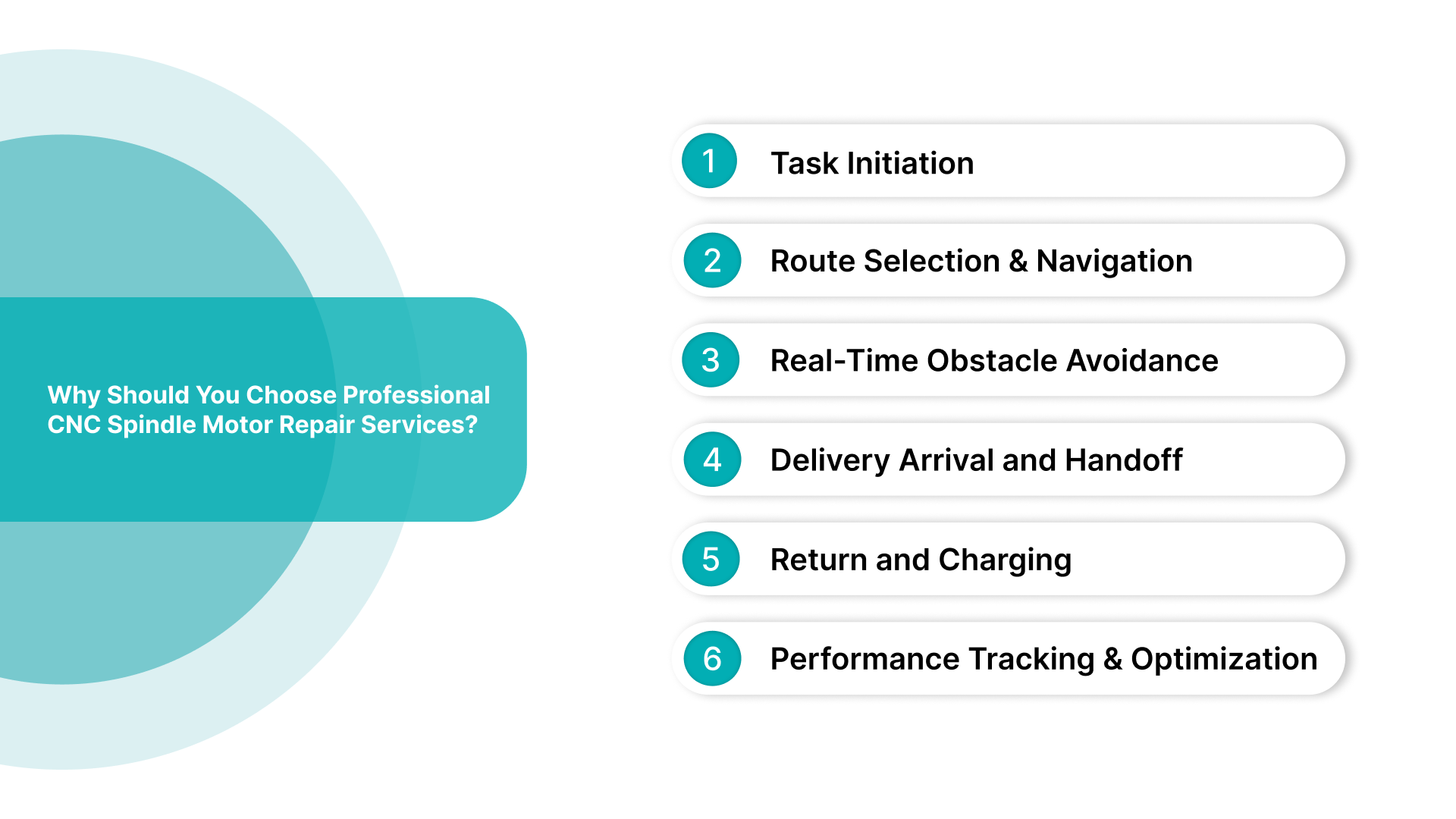
Step 1: Task Initiation
A delivery begins when a task is created by staff or triggered through an integrated system. This may occur through a point-of-sale system, a tablet interface, a mobile application, or manual dispatch.
In restaurants, tasks are often initiated when an order is ready for pickup, while in hotels and healthcare facilities deliveries may be scheduled or sent on demand.
Step 2: Route Selection and Navigation
After the destination is confirmed, the robot calculates the most efficient route using pre-mapped building layouts.
Navigation relies on a combination of LiDAR, cameras, and onboard sensors that allow the robot to understand its surroundings in real time. These systems enable safe movement through hallways, dining areas, and service corridors.
Step 3: Real-Time Obstacle Avoidance
As the robot travels, it continuously detects people, carts, furniture, and temporary obstructions.
When obstacles appear, the robot slows down, reroutes, or pauses automatically. This allows it to operate safely in busy environments without disrupting guests or staff.
Step 4: Delivery Arrival and Handoff
Upon reaching the destination, the robot notifies staff or guests through screen prompts, lights, or voice alerts.
Compartments or trays unlock for item retrieval, allowing for quick, contact-free handoff. Once the delivery is completed, the robot confirms task completion within the system.
Step 5: Return and Charging
After delivery, the robot automatically returns to its designated charging station. It recharges between tasks and remains on standby until the next assignment.
Modern delivery robots are designed to operate continuously across long service hours, including lunch rushes, dinner service, and overnight shifts.
Step 6: Performance Tracking and Optimization
Throughout operation, delivery data is collected through fleet management software. Businesses can monitor usage, delivery frequency, peak hours, and efficiency metrics.
Over time, robots optimize routes and task sequencing, improving performance without requiring changes to staff workflows.
By following this structured process, indoor delivery robots function as reliable service assistants, reducing unnecessary walking, improving consistency, and helping businesses maintain smooth operations even during peak demand or staffing shortages.
Common Robot Delivery Technologies Used In Los Angeles
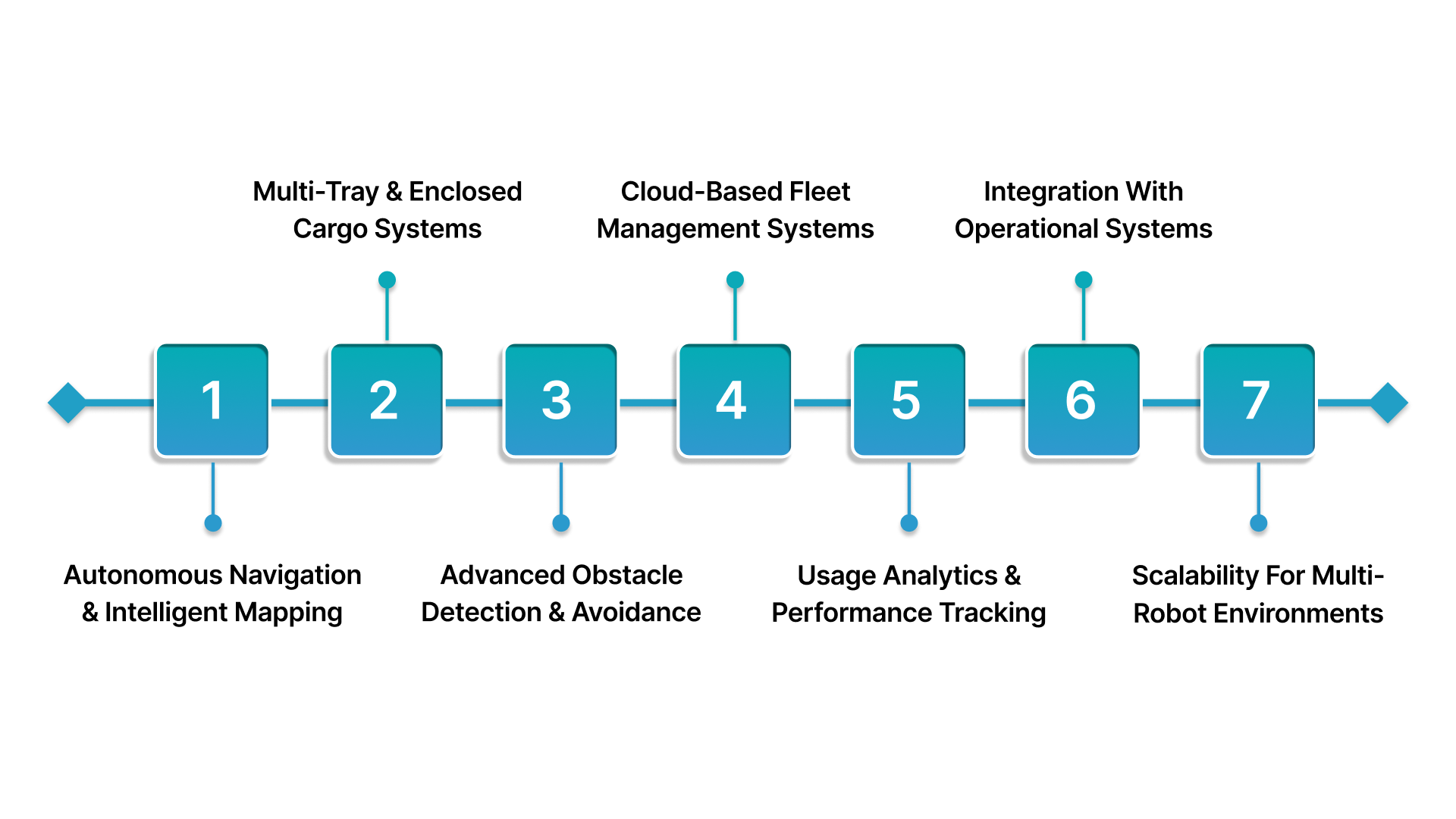
Most robot delivery deployments in Los Angeles rely on commercial-grade service robots engineered for continuous, high-traffic operation. These systems are designed to function safely and reliably across long service hours in restaurants, hotels, healthcare facilities, and large commercial properties.
Rather than consumer-grade machines, businesses use industrial service robots built specifically for indoor and private-property environments.
The most common technologies powering robot delivery systems in LA include the following:
Autonomous Navigation And Intelligent Mapping
Delivery robots use LiDAR sensors, depth cameras, and simultaneous localization and mapping (SLAM) technology to create accurate digital maps of indoor spaces. This allows robots to understand corridors, doorways, elevators, and service areas while continuously updating their position in real time.
Navigation systems enable consistent movement even in dynamic environments where layouts and foot traffic change throughout the day.
Multi-Tray And Enclosed Cargo Systems
Robots are equipped with multiple serving trays or enclosed compartments depending on the application.
Open tray designs are common in restaurants and food courts for table delivery, while enclosed compartments are preferred in hotels and healthcare facilities for privacy, temperature retention, and secure transport of items.
Advanced Obstacle Detection And Avoidance
Using a combination of ultrasonic sensors, cameras, and LiDAR, robots can detect people, carts, furniture, and unexpected obstructions.
These systems allow robots to slow down, reroute, or pause automatically, ensuring safe interaction with guests and staff in crowded environments.
Cloud-Based Fleet Management Systems
Most deployments are supported by centralized fleet management platforms. These systems allow managers to monitor robot locations, task status, battery levels, and system health from a dashboard.
Fleet software also enables remote diagnostics, software updates, and performance optimization without disrupting daily operations.
Usage Analytics And Performance Tracking
Delivery robots generate detailed operational data, including delivery counts, distance traveled, peak usage hours, and idle time.
These insights help businesses evaluate efficiency gains, identify workflow bottlenecks, and optimize staffing decisions based on real usage patterns.
Integration With Operational Systems
Modern robot platforms can integrate with point-of-sale systems, service management software, elevators, and access controls.
These integrations allow robots to function seamlessly within existing workflows rather than operating as standalone machines.
Scalability For Multi-Robot Environments
In larger facilities, multiple robots operate simultaneously using coordinated fleet logic. This prevents congestion, balances task loads, and allows businesses to scale automation as demand increases.
In many Los Angeles facilities, delivery robots are paired with autonomous cleaning robots to create a broader automation ecosystem. While delivery robots handle transport tasks, cleaning robots maintain floors and public spaces during off-peak hours, enabling facilities to improve efficiency across both service and sanitation operations.
Together, these technologies allow robot delivery systems to function as reliable operational tools, capable of supporting high-volume environments while maintaining safety, consistency, and measurable performance outcomes.
Business Benefits of Robot Delivery in Los Angeles
Robot delivery provides measurable operational value for businesses operating in high-traffic environments. By automating repetitive transport tasks, organizations can improve efficiency, stabilize service quality, and reduce dependence on fluctuating labor availability.
Below are the primary business benefits driving adoption across Los Angeles.
Reduced Labor Pressure
Delivery robots handle walking-intensive and repetitive tasks that consume a significant portion of staff time. By automating internal transport, employees are able to focus on responsibilities that directly impact customer satisfaction and revenue generation.
This allows staff to prioritize:
Guest engagement and table service
Order accuracy and quality checks
Higher-value service interactions
For many businesses, robots act as dedicated support staff, helping teams remain productive even during staffing shortages.
Consistent Service During Peak Hours
Unlike human staff, delivery robots maintain the same performance level throughout the day. They do not fatigue or slow down during periods of high demand.
Robots continue operating reliably during:
Lunch and dinner rushes
Event surges and group bookings
Short-staffed or call-out shifts
This consistency helps maintain service flow, reduces wait times, and protects customer experience during the busiest operating hours.
Lower Operating Costs
While robot delivery systems require an upfront or subscription-based investment, many businesses achieve meaningful cost savings over time.
Common cost benefits include:
Reduced overtime hours
Lower dependence on temporary or agency labor
Fewer service delays and order errors
In high-volume environments, these savings often allow businesses to reach breakeven within months, depending on usage intensity and operating hours.
Improved Employee Satisfaction And Retention
Physically demanding roles with excessive walking contribute heavily to employee burnout. By removing repetitive transport duties, robots help reduce physical strain and create more balanced workloads.
This leads to:
Improved job satisfaction
Lower turnover rates
Better morale during peak shifts
For Los Angeles service businesses facing persistent staffing challenges, this workforce impact is often as valuable as the financial return.
Return on investment varies by operation and is typically influenced by:
Facility layout and walking distance
Daily service volume
Number of deliveries per shift
Operating hours and staffing patterns
A site-specific assessment is the most accurate way to determine expected savings and performance impact.
Safety, Compliance, And Public Considerations in 2026
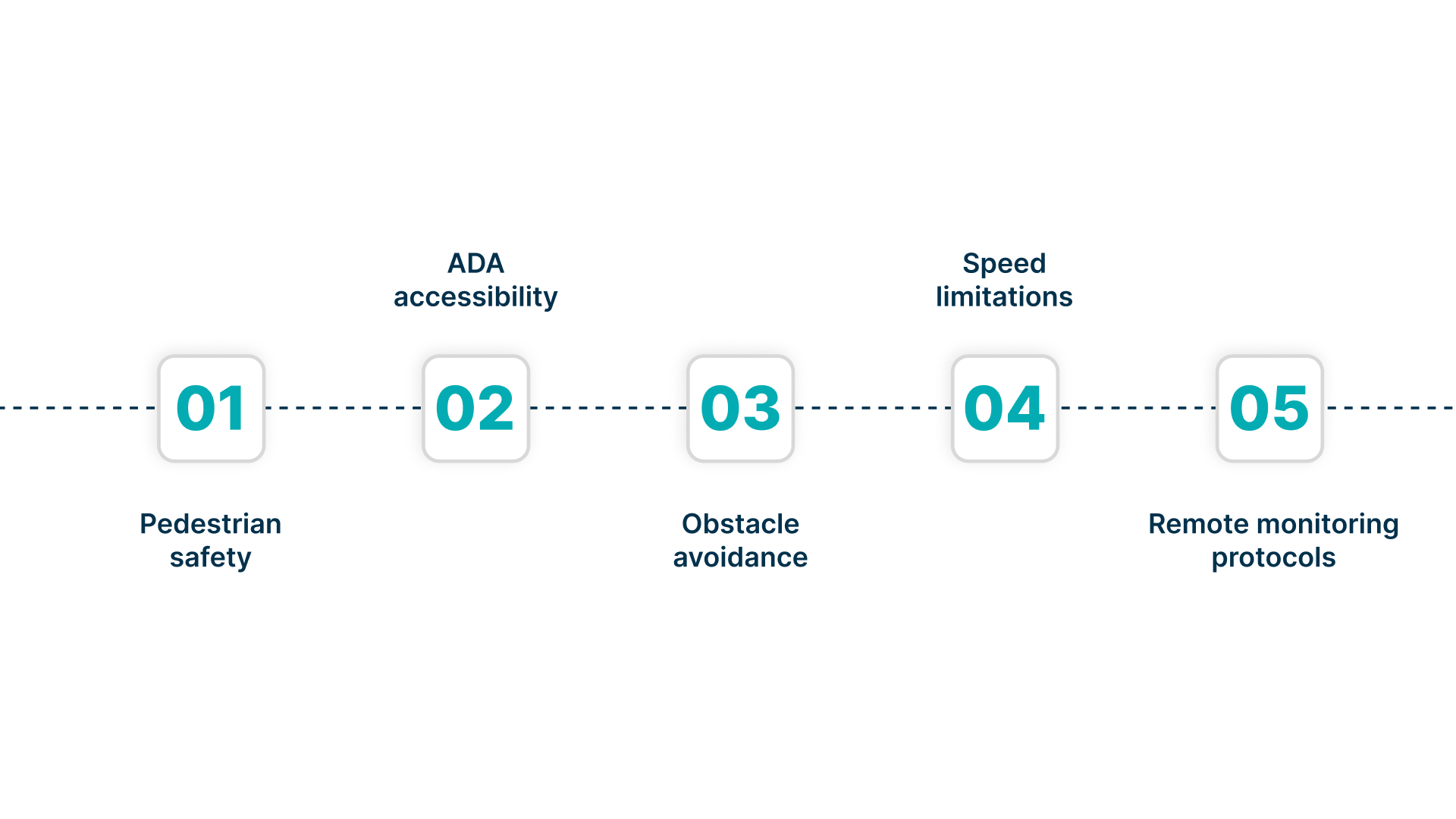
Safety and compliance are critical to successful robot delivery deployments, particularly in high-traffic environments such as restaurants, hotels, healthcare facilities, and commercial buildings across Los Angeles.
While indoor delivery robots operate in controlled settings, proper planning ensures they function safely alongside staff and guests.
Robot delivery systems must account for several core considerations:
Pedestrian safety: Robots operate at controlled indoor speeds, automatically slow down near people, and stop when obstacles are detected.
ADA accessibility: Deployments must maintain clear pathways, accessible routes, and unobstructed exits to ensure compliance with accessibility requirements.
Obstacle avoidance: LiDAR, cameras, and sensors allow robots to detect people, carts, furniture, and temporary obstructions in real time.
Speed limitations: Movement speed can be configured by zone, with slower operation in dining areas and faster travel in service corridors.
Remote monitoring protocols: Fleet platforms allow real-time tracking, alerts, and manual intervention if assistance is required.
Commercial robots used indoors or on private property generally face fewer regulatory constraints than public sidewalk delivery systems.
Because they operate within managed environments, deployment is typically governed by property and facility policies rather than municipal transportation rules.
To ensure smooth operation, successful deployments include:
Pre-deployment site assessments
Defined robot travel paths
Clear signage or visual cues where needed
Staff training on interaction and basic troubleshooting
With proper planning and ongoing support, robot delivery systems can operate safely, predictably, and in full alignment with accessibility and workplace safety expectations.
Delivery Robot Implementation Checklist For Businesses
Successful robot delivery deployment depends on careful planning before installation. While the technology itself is straightforward, results vary significantly based on facility layout, service workflows, and operational expectations.
Before moving forward, Los Angeles businesses should evaluate the following factors:
1. Floor layout and walking distances: Large dining areas, long corridors, multiple service zones, and multi-floor environments typically deliver the strongest return on automation.
2. Peak-hour bottlenecks: Identifying where service slows during lunch, dinner, or high-occupancy periods helps determine where robots can provide immediate relief.
3. Charging station placement: Robots require strategically located charging points that avoid guest areas while remaining easily accessible between tasks.
4. Integration with POS or service workflows: Delivery triggers should align naturally with existing systems, whether through POS integration, tablets, or manual dispatch.
5. Staff training requirements: Teams must understand how to dispatch robots, interact safely, and respond to basic alerts during daily operations.
6. Maintenance and support availability: Ongoing performance depends on preventive maintenance, software updates, and timely technical support.
7. Service uptime expectations: Businesses should define how many hours per day robots are expected to operate and plan fleet size accordingly.
Because every facility operates differently, a site-specific assessment is typically the first and most important step.
Evaluating layout, workflow, and service volume in advance helps ensure robot delivery is deployed in a way that delivers measurable operational value from day one.
Why Work With ToDo Robotics For Indoor Robot Delivery
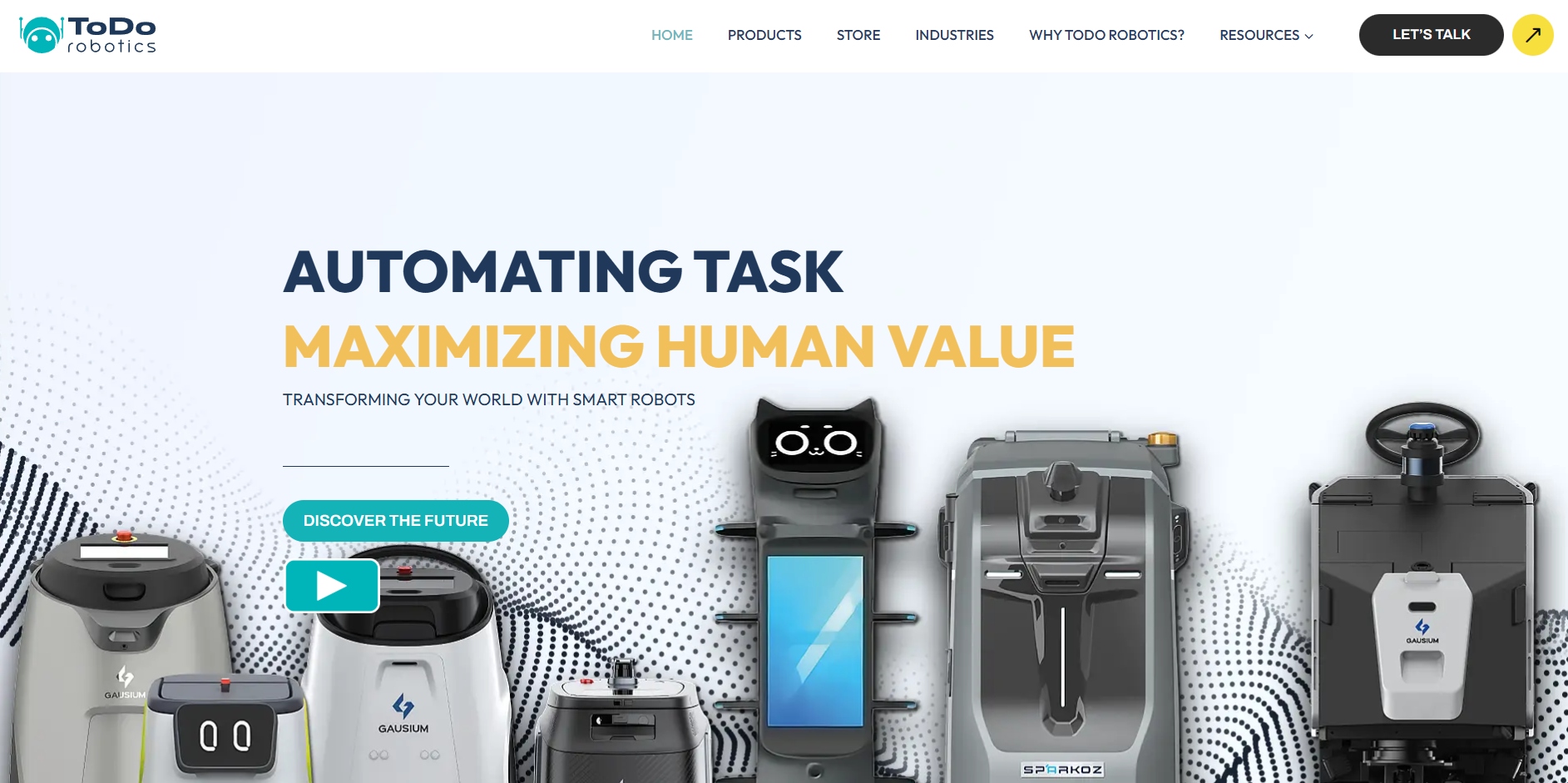
ToDo Robotics supports businesses seeking indoor robot delivery solutions by providing application-specific automation systems designed for commercial environments.
Rather than offering one-size-fits-all technology, deployments are tailored based on facility layout, service workflow, operating hours, and traffic conditions.
Depending on the operational requirements, ToDo Robotics provides:
Indoor delivery robots designed for food and material transport, suitable for restaurants, hotels, healthcare facilities, and large commercial properties.
Multi-tray and enclosed delivery robots optimized for table service, room service, supply movement, and internal logistics workflows.
Autonomous navigation systems capable of operating safely in high-traffic indoor environments using LiDAR and vision-based mapping.
Fleet management software that enables real-time task dispatch, performance monitoring, and multi-robot coordination.
Robot delivery solutions are selected based on the complete operating environment rather than hardware alone. ToDo Robotics works with clients to align robot configuration with walking distances, delivery frequency, peak-hour demand, and service expectations.
To support reliable day-to-day operation, delivery systems can be deployed with:
Integration options aligned with existing service workflows
Configurable speed zones for guest-facing and back-of-house areas
Automated charging and continuous-shift operation capabilities
This approach ensures robot delivery functions as an extension of daily operations rather than a standalone technology layer.
In addition to indoor robot delivery systems, ToDo Robotics provides a comprehensive portfolio of commercial automation solutions designed to support efficiency, consistency, and labor optimization across large facilities.
Primary offerings include:
Autonomous cleaning robots for floor scrubbing, sweeping, and sanitation in retail, healthcare, hospitality, and commercial real estate environments.
Robotics consultation and site assessments to evaluate layout feasibility, workflow optimization, and ROI potential prior to deployment.
Installation and commissioning services, including mapping, testing, and on-site configuration.
Staff training programs delivered in person or remotely to ensure smooth adoption and safe operation.
Ongoing maintenance and support plans, including preventive servicing, software updates, and technical assistance.
Manufacturer-certified robotics partnerships, providing access to globally proven service and cleaning robot platforms.
By delivering delivery robots, cleaning automation, deployment services, and long-term support under a single framework, ToDo Robotics enables businesses to scale automation confidently while maintaining operational continuity across multiple locations.
Conclusion
Robot delivery presents different operational challenges depending on facility layout, service volume, staffing levels, and daily workflow requirements. Deploying the wrong solution, or implementing automation without proper planning, can lead to inefficiencies, safety concerns, and limited return on investment.
ToDo Robotics supports these requirements through application-specific indoor delivery robots, workflow-aligned deployment planning, and full-lifecycle support designed for commercial environments across Los Angeles.
Speak with ToDo Robotics to discuss your indoor robot delivery requirements.
Frequently Asked Questions (FAQs)
1. How Long Do Indoor Delivery Robots Typically Last?
Commercial-grade delivery robots are designed for multi-year operation in high-traffic environments. With regular maintenance and software updates, most systems operate reliably for several years, even under daily multi-shift usage. Actual lifespan depends on operating hours, floor conditions, and adherence to preventive maintenance schedules.
2. Can Robot Delivery Systems Be Scaled Across Multiple Locations?
Yes. Many businesses begin with a single-location deployment and expand across additional sites once workflows are validated. Fleet management platforms allow standardized configurations, performance tracking, and consistent service levels across multiple facilities, making robot delivery well suited for multi-location restaurant groups and property portfolios.
3. What Happens If a Robot Encounters an Unexpected Issue?
If a robot encounters an obstruction or system alert it cannot resolve autonomously, it will safely pause and notify staff or support teams through the management interface. Remote monitoring tools allow quick diagnostics, and most issues can be resolved without interrupting service or requiring technical expertise on-site.
4. Do Delivery Robots Require Network Connectivity To Operate?
Robots can continue basic navigation and task execution without constant connectivity, but stable Wi-Fi significantly enhances performance. Network access enables real-time monitoring, analytics reporting, software updates, and remote support, making connectivity an important part of long-term operational reliability.
5. How Do Customers And Guests Typically Respond To Delivery Robots?
In most commercial environments, customer response is positive. Delivery robots often improve perceived service speed and create a modern, organized atmosphere. When introduced with simple signage or brief staff explanation, guests adapt quickly and interaction-related concerns are minimal.