A busy dining room quickly shows where your restaurant starts to struggle. That pressure is even harder to manage when 54% of restaurant operators report difficulty filling open positions, making consistent staffing a real challenge.
Every extra step adds friction to service. Servers spend time running food instead of talking to guests, staff rush to clear tables, and managers step in to cover gaps. The result is slower table turns, frustrated guests, and teams stretched too thin.
Restaurants using robot servers help relieve this strain by taking over routine tasks such as food delivery and table clearing. This gives your team more time to focus on guests and service, even during peak hours.
In this blog, you’ll learn what robot server restaurants are, the key features that make them effective, and real examples that show how they improve operations and customer satisfaction.
Key Takeaways:
Robots handle routine tasks: They deliver food and clear tables, freeing your team from walking back and forth.
Consistent service during rush hours: Robots keep service moving smoothly without extra staff.
Staff focuses on guests: Robots handle delivery and cleanup, letting your team engage with customers.
Labor shortages drive adoption: With rising wages and turnover, robots help fill staffing gaps.
Real results in daily operations: Restaurants see smoother service, time savings, and less physical strain.
What are Restaurant Robot Servers?
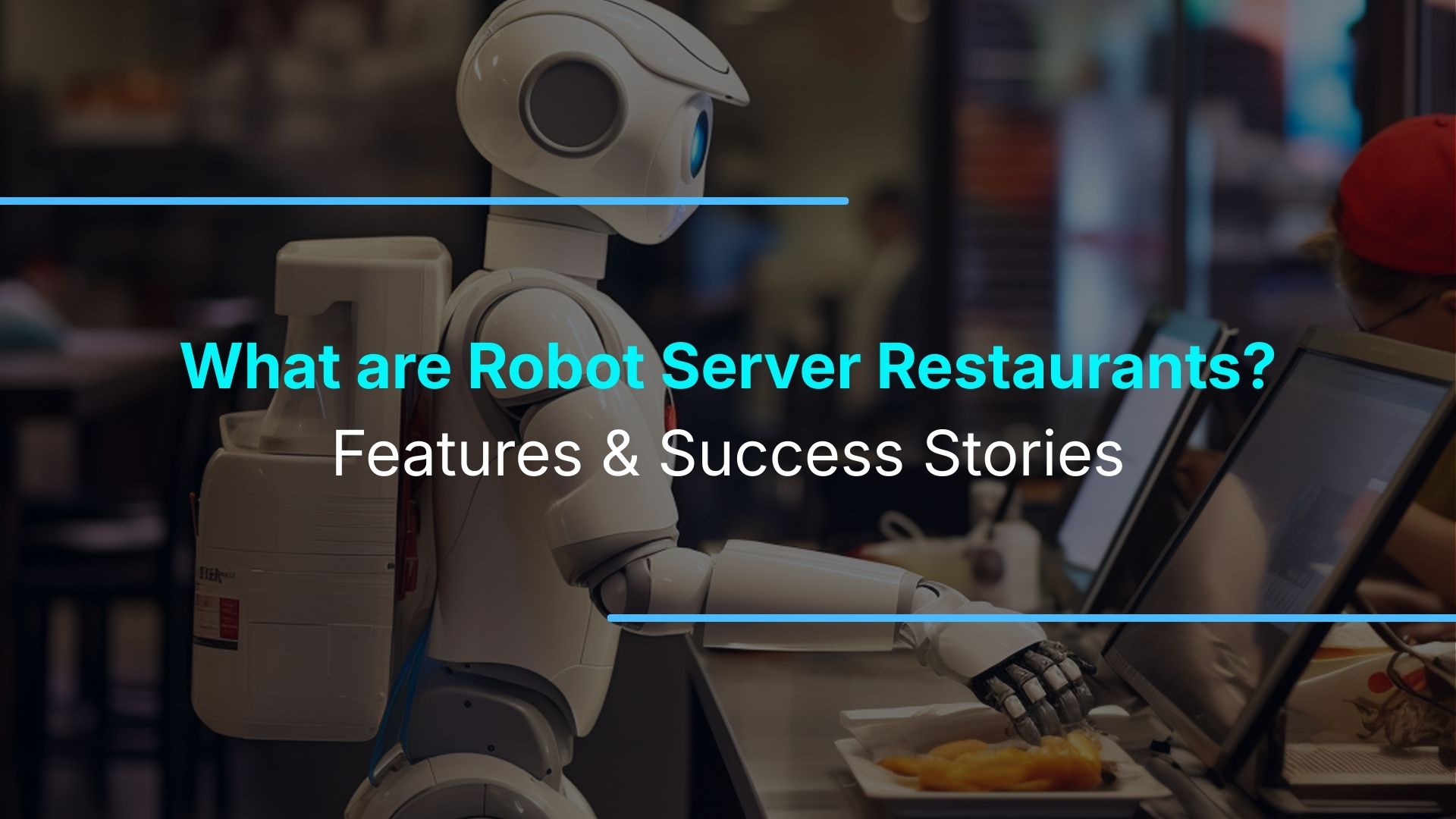
Restaurant robot servers are autonomous service robots that handle repeatable, non-guest-facing movement inside your restaurant. You use them to carry food from the kitchen to tables, return empty dishes, and move items across dining areas without pulling staff away from service.
These robots follow set routes, move safely around guests and staff, and work steadily across long shifts. You place them in high-traffic areas where walking time and carrying loads slow your team down.
They fit into your existing floor layout and workflows without changing how orders are taken or how service is delivered.
Knowing what restaurant robot servers are makes it easier to see the key features that make them effective on the floor.
Key Features of Restaurant Robot Servers
Restaurant robot servers are designed with practical features that support how service actually runs day to day. Each feature aims to remove friction and keep busy shifts moving smoothly. Below are the key features of restaurant robot servers.
Multi-Tray Payload Design
Robot servers carry multiple dishes, drinks, or returns on a single trip. This reduces the need for repeated trips to the kitchen and keeps food moving during peak service. You clear tickets faster without adding more foot traffic on the floor.
Safe Navigation in Crowded Dining Areas
Robot servers use sensors to spot guests, staff, and obstacles as they move. They slow down or adjust their path in tight or busy areas. This lets them operate safely during live service without getting in the way of guests.
Consistent Route Execution
Robot servers follow set routes between the kitchen and service areas. They do not rush, skip stops, or change delivery patterns from one shift to the next. This consistency helps keep service timing predictable even when staffing levels change.
Simple Interaction and Alerts
Screens, voice cues, or light signals clearly show when a robot arrives or needs to be unloaded. Staff do not require special training to work with them. The interaction feels straightforward, so the service flow stays smooth.
Automatic Charging and Shift Readiness
Robot servers return to their charging stations when their battery levels run low. This avoids mid-shift downtime and removes the need for manual checks. You get reliable coverage through long service windows without constant oversight.
Knowing their key features provides a clear foundation for understanding the technology that makes restaurant robot servers work.
The Technology Behind Restaurant Robot Servers
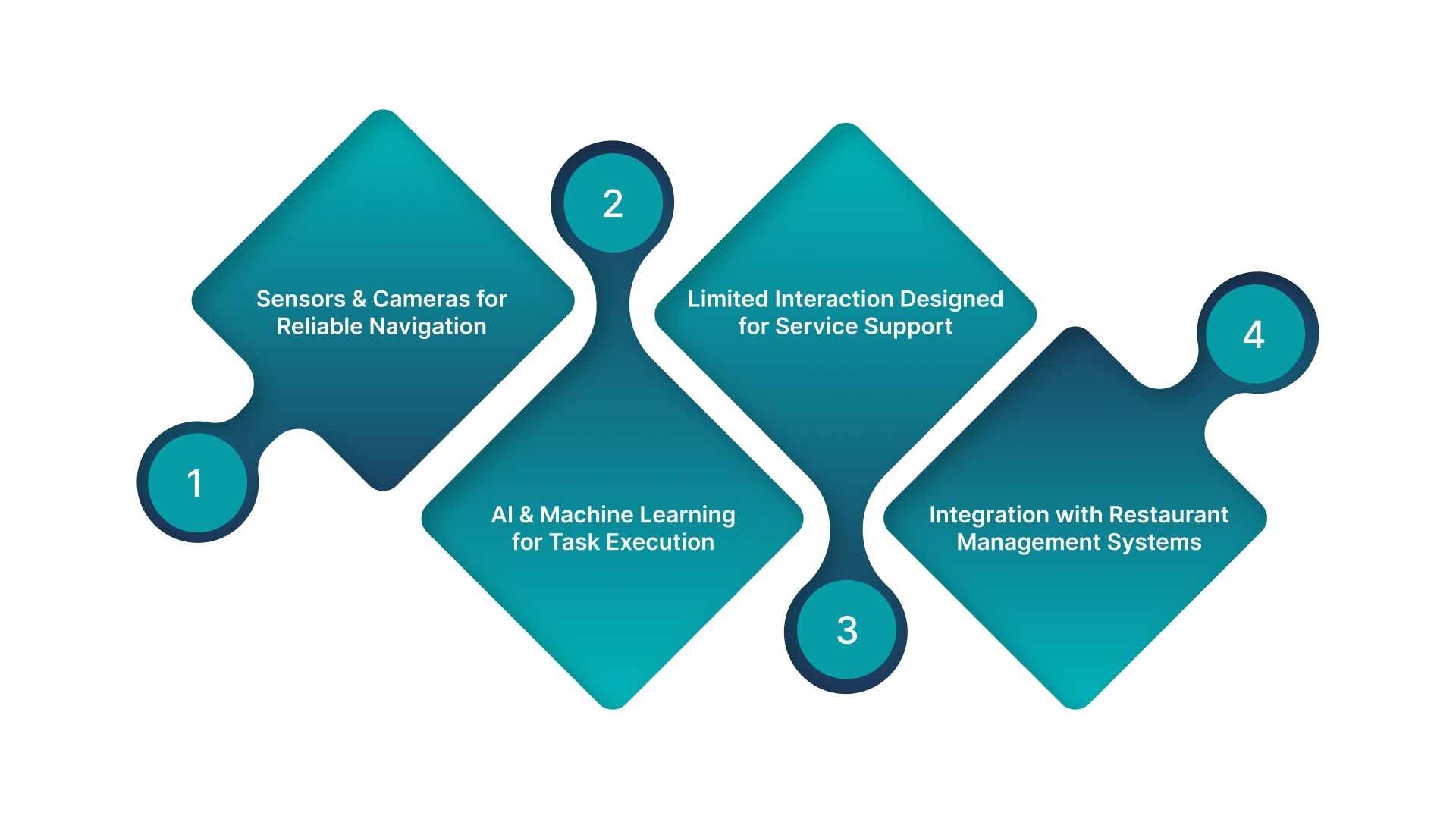
Restaurant robot servers rely on a focused set of technologies that let them work safely and predictably during live service. These systems work together so you can add automation without slowing your team down or changing how your floor operates.
Sensors and Cameras for Reliable Navigation
Robot servers use a mix of sensors to understand their surroundings in real time. LiDAR creates a 3D map of your dining area, enabling the robot to navigate accurately through aisles and service paths.
Ultrasonic sensors and cameras detect guests, staff, furniture, and unexpected obstacles, allowing the robot to adjust its movement and avoid contact during busy shifts.
AI and Machine Learning for Task Execution
AI acts as the decision layer that turns movement into useful work. Robot servers follow clear instructions, such as delivery destinations and return routes.
Over time, machine learning helps them refine route timing and efficiency based on how your floor actually moves during service.
Limited Interaction Designed for Service Support
Robot servers keep interaction simple so staff can stay focused on guests. Visual cues or voice prompts signal arrivals, pickups, or task completion. This keeps communication clear without adding steps that slow service.
Integration with Restaurant Management Systems
Robot servers connect with your existing systems to stay in sync with kitchen and floor operations. They receive delivery assignments, track order status, and follow table or zone rules without manual coordination. This reduces handoffs and keeps service moving smoothly.
Once you understand the technology behind robot servers, it's helpful to highlight how restaurants are achieving real results with them.
Real Success Stories from Restaurants Using Robot Servers
Restaurants that see the most success with robot servers treat them as a normal part of daily operations. The best results come from places where movement is heavy, and consistency matters more than novelty.
Skylark Group BellaBot Deployment
Skylark Group, a large family restaurant chain in Japan, has rolled out thousands of BellaBot robots across more than 2,000 locations. These robots deliver multiple dishes on a single trip, cut down service time during busy lunch and dinner hours, and reduce physical strain on waiting staff.
Guest surveys showed strong satisfaction and smoother operations, allowing teams to spend more time focused on customer care.
Denny’s in Canada
At select Denny’s locations in Canada, BellaBot robots support teams by carrying meals to tables and helping with service movement. Staff feedback shows that robot servers ease physical workload and free up time to interact with guests, especially during high-traffic shifts.
Pizza Hut in Poland
Pizza Hut in Poland tested a BellaBot robot as part of its front-of-house setup. Managers noted that the robot helps waitstaff by delivering orders and adds to the overall guest experience. Many guests respond positively to the robot, further strengthening brand appeal.
Traditional Restaurant Support at Nevins Newfield Inn
At the Nevins Newfield Inn in Ireland, a robot server was introduced to meet service demand without hiring extra runners. The robot supports daily operations by handling food delivery and returns during peak dining hours. This helps staff keep service flowing smoothly without adding labor.
While success stories show the potential of robot servers, it’s equally important to consider the challenges restaurants often encounter when using them.
Common Challenges Faced While Using Robot Servers
Robot servers help close real operational gaps, but they still need thoughtful planning to work well on a live restaurant floor. Most challenges arise early in deployment or when expectations do not align with how the technology is intended to be used.
Below are the common challenges faced while using robot servers, along with effective solutions.
Challenge | What This Looks Like on Your Floor | Practical Solution |
Floor layout constraints | Narrow aisles or shifting tables slow robot movement during service | Define fixed travel paths and keep them clear during service. |
Slow staff adoption | Staff avoid using robots during busy periods | Train robots into standard service routines from day one. |
Misaligned expectations | Robots are asked to handle guest decisions or exceptions | Limit robots to transport tasks and set clear usage rules. |
Inefficient initial setup | Robots take long routes or pause unexpectedly | Map routes carefully and test them during live hours. |
Downtime during peak hours | Robots stop mid shift due to low battery | Schedule charging around service peaks and monitor availability. |
Given the challenges of using robot servers, the next step is to evaluate whether they are a worthwhile investment for your restaurant.
Are Robot Servers Actually Worth Your Investment?
Robot servers are worth investing in when they address everyday operational strain, not when they’re used as a novelty. The key is whether your restaurant experiences high turnover, tight staffing, and peak-hour pressure.
Evaluation Area | What to Look at in Your Operation | How Robot Servers Deliver Value |
Service volume | Frequent trips between the kitchen and tables during every shift | Robots handle repeatable transport without slowing down or tiring. |
Labor efficiency | Staff spending time walking instead of serving guests | Robots absorb movement tasks so staff can focus on tables and service quality. |
Peak hour stability | Service slows when demand spikes or runners are stretched | Robots keep food moving at a steady pace during rush periods. |
Overtime and burnout | Rising overtime and physical fatigue among staff | Robots reduce physical load and limit the need for extra coverage. |
Cost predictability | Difficulty controlling labor spend month to month | Robots provide consistent capacity without variable labor costs. |
Scalability | Trouble maintaining service standards as volume grows | Robots scale support without adding management or training complexity. |
How does ToDo Robotics Support Robot Server Restaurants?
ToDo Robotics supports restaurant operations by placing robots where they make the greatest impact. This includes food delivery, table clearing, and internal movement. These tasks often slow teams down and add physical strain, especially during peak hours when staffing levels change.
As a distributor and integration partner, ToDo Robotics works with commercial-ready robots built for daily use in live restaurant settings. These robots focus on safety, reliability, and consistent performance, which matters for restaurants that want to improve operations without disrupting service.
For robot server restaurants, ToDo Robotics offers:
BellaBot Pro: A customer-friendly delivery robot designed for restaurants and hospitality spaces. It carries multiple items at once and includes interactive features that improve the guest experience while reducing server workload.
PuduBot 2: A multi-tray delivery robot built for busy service environments. It helps move food quickly during peak hours and reduces physical strain on staff.
KettyBot Pro: A versatile robot that supports food delivery, navigation, and on-screen messaging. It works well in customer-facing areas where guided movement and visibility matter.
CC1 & Vacuum 40: Autonomous cleaning robots that help maintain consistent cleanliness with minimal hands-on effort.
ToDo Robotics helps you identify where automation fits best, shows the robots in action through demos, and supports deployment based on your floor layout and service flow.
Final Thoughts
Robot servers are changing how restaurants operate, but their real value goes beyond handling routine tasks. As guest expectations continue to rise, automation becomes a practical way to prepare for long-term service demands.
By taking over repetitive work, robots improve efficiency and give your team more time to focus on guests. This shift allows staff to spend their energy on building real connections, something technology cannot replace. As automation becomes more common across the industry, adopting robots now helps your restaurant stay ready for what comes next.
ToDo Robotics helps put this approach into action by deploying autonomous robots for delivery, cleaning, and internal transport in real service environments. With proven robots, flexible deployment options, and hands-on support, restaurant teams can smoothly integrate automation into daily operations without disruption.
Partner with ToDo Robotics today to start your path to automation and create a robot server restaurant that's more stable, efficient, and cost-effective.
FAQs
Q1. How do robot servers adapt to different restaurant layouts?
A1. Robot servers use advanced navigation tools, such as LiDAR and ultrasonic sensors, to adapt to different layouts. You can program them to follow specific paths that match your floor plan, so operations stay smooth even if tables or stations are moved around.
Q2. Can robot servers handle both food delivery and clearing tasks?
A2. Yes, many robots, like BellaBot Pro, handle both food delivery and table clearing. Their multi-tray design lets them bring dishes to tables and return with empty plates, easing staff workload during peak hours.
Q3. What happens if a robot server encounters an obstacle or a guest?
A3. Robots detect obstacles, including guests, chairs, or furniture, using cameras and ultrasonic sensors. They slow down, reroute, or stop to avoid contact, keeping movement safe while maintaining efficiency.
Q4. Do robot servers require constant monitoring?
A4. No, robot servers operate autonomously. They return to charging stations when batteries run low and resume tasks on their own. Initial setup and occasional system checks are recommended to keep them performing at their best.
Q5. Are robot servers customizable to fit specific restaurant needs?
A5. Yes, you can customize robot servers to match your restaurant’s workflow, adjust delivery routes, set speed limits, or integrate with your POS system. This ensures they fit smoothly into operations without disruption.