Healthcare facilities never sleep. Every surface, every corridor, every patient room demands constant attention to prevent infections and maintain safety standards.
Environmental services teams operate under intense pressure. Staffing shortages, high turnover, and expanding facility footprints make consistent cleaning harder to sustain shift after shift. Gaps in coverage often occur during nights, weekends, and peak patient inflow periods.
Cleaning robots are stepping in to meet this relentless need with precision that human teams alone cannot sustain around the clock.
The U.S. healthcare service robotics sector reached a valuation of USD 1.27 billion in 2024 and is projected to grow to approximately USD 2.56 billion by 2034. This growth reflects a broader transformation happening across industries.
For healthcare decision-makers seeking solutions that enhance both safety and efficiency, robotic cleaning technology offers tangible returns. This article examines why these systems have become fundamental infrastructure for contemporary medical facilities.
Key Takeaways
Market momentum is real – The U.S. healthcare robotics sector doubled from $1.27 billion in 2024 to a projected $2.56 billion by 2034, signaling widespread adoption.
Robots complement, not replace – These systems handle repetitive cleaning tasks while freeing human staff for patient interaction and complex situations requiring judgment.
Consistency beats fatigue – Robotic cleaners follow identical protocols during every shift, eliminating the performance gaps that occur during understaffed overnight hours.
Faster turnarounds improve capacity – Predictable cleaning times allow facilities to schedule more procedures without expanding physical space or compromising sanitation standards.
Implementation needs a strategy – Success requires assessing current workflows, defining clear objectives, piloting in limited areas, and maintaining hybrid cleaning protocols for best results.
What Are Cleaning Robots?
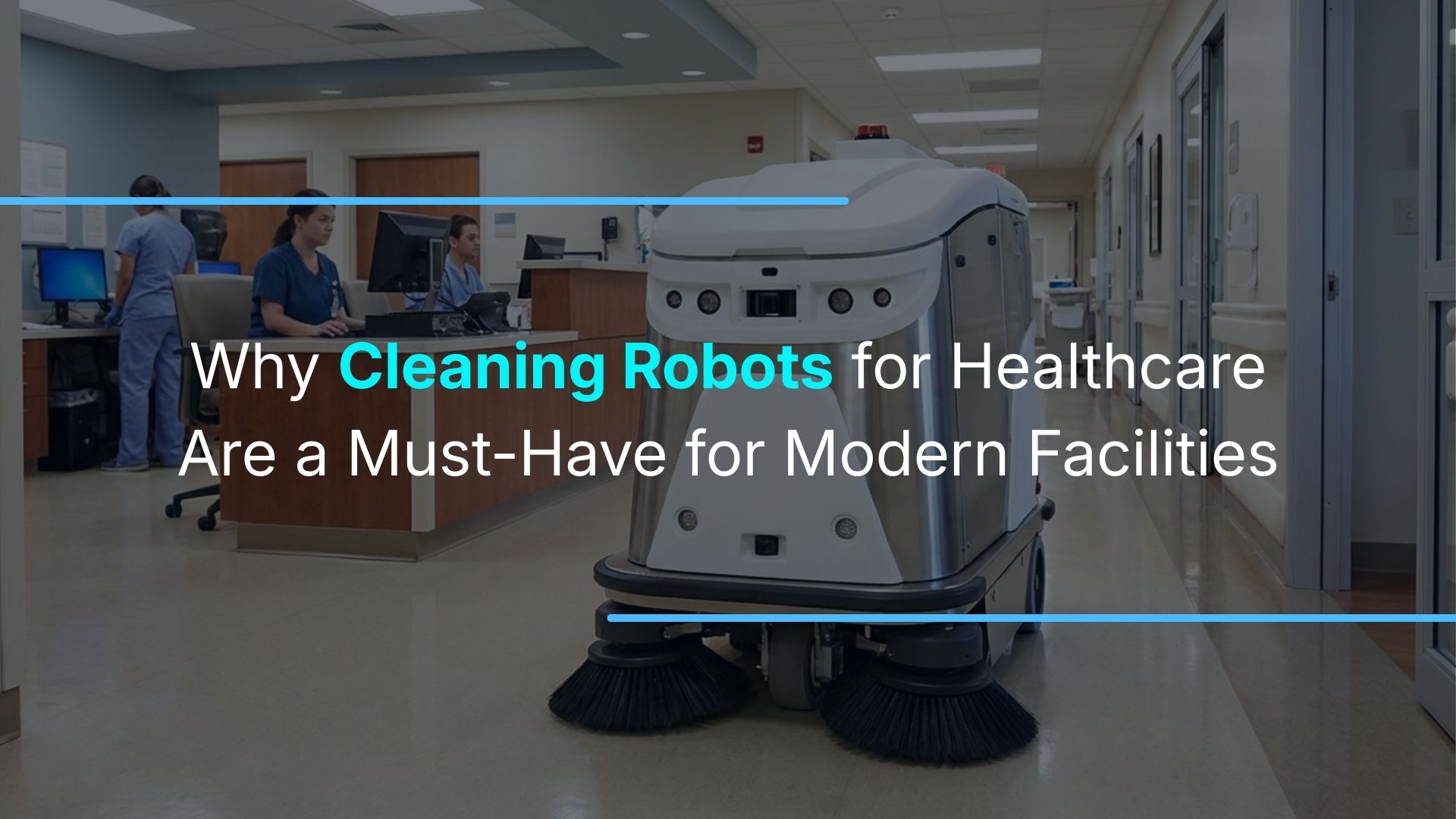
Cleaning robots are autonomous machines designed to perform cleaning tasks in healthcare settings. They use advanced sensors and AI to navigate spaces, detect dirt, and sanitize surfaces efficiently and consistently.
These robots work alongside human staff to ensure high hygiene standards are met without the need for constant human intervention.
The Impact of Robotic Cleaning on Healthcare Facilities
Robotic cleaning changes how healthcare facilities think about consistency, coverage, and accountability. Instead of reacting to staffing gaps or peak-hour pressures, facilities gain a system that delivers the same outcome every time.
This shift moves cleaning from a labor constraint to a predictable operational process, one that supports safety goals without adding daily management overhead.
Autonomous Operation: Operates independently, requiring minimal supervision and allowing staff to focus on other critical tasks in the facility.
Precision Cleaning: Equipped with advanced sensors and AI to detect and clean high-touch surfaces with high accuracy, ensuring thorough sanitation.
24/7 Operation: Capable of continuous cleaning without the need for breaks, ensuring consistent hygiene throughout day and night shifts.
Efficiency Boost: Cleans faster than manual methods, reducing downtime and enabling facilities to maintain high cleanliness standards without disrupting workflow.
Reduced Infection Risks: Effectively helps lower the risk of common infections found on the hospital ground by maintaining high sanitation levels consistently across all areas.
Environmentally Friendly: Designed with energy-efficient features and often uses eco-friendly cleaning solutions to reduce the environmental footprint of operations.
How Healthcare Facilities Benefit from Implementing Cleaning Robots
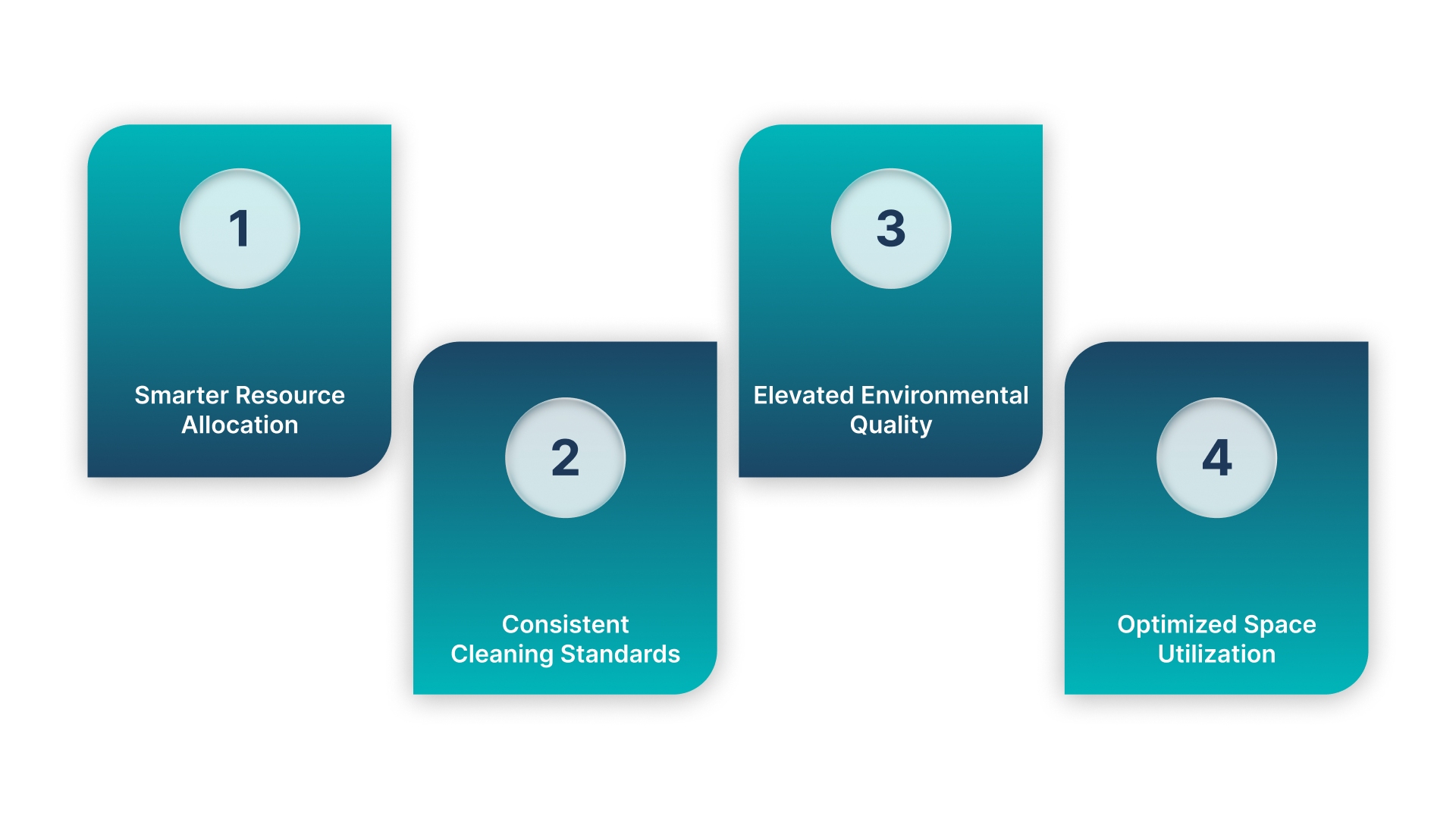
Healthcare administrators face mounting pressure to maintain pristine environments while managing tight budgets and staffing constraints. Cleaning robots address these challenges head-on, delivering measurable improvements across multiple operational areas.
Smarter Resource Allocation
Robotic cleaning systems free up human staff for specialized tasks requiring personal judgment and patient interaction. Facilities can deploy their workforce where human touch matters most.
Robots handle repetitive floor cleaning and disinfection protocols with programmed precision. This redistribution maximizes the value of every team member.
Consistent Cleaning Standards
Human fatigue and variability disappear when robots follow identical cleaning paths every shift. These machines execute thorough protocols whether operating at 2 PM or 2 AM.
Manual cleaning sometimes produces inconsistencies during understaffed overnight hours. Robots eliminate these gaps entirely.
Elevated Environmental Quality
Patients and staff immediately notice cleaner hallways, waiting areas, and common spaces. Robotic systems maintain visible cleanliness that builds confidence among visitors.
They reduce anxiety for patients already concerned about healthcare-associated infections. The psychological impact of pristine environments creates measurable benefits.
Optimized Space Utilization
Faster room turnovers mean facilities can accommodate more procedures without adding square footage. Robots clean operating rooms and patient rooms in predictable timeframes.
Schedulers can plan with greater accuracy. This reduces costly gaps between uses that manual cleaning variability creates.
At ToDo Robotics, we deliver state-of-the-art robotic solutions designed to simplify and enhance your daily operations. We offer top-of-the-line systems such as Phantas+Docking, Vacuum 40+Docking, Pudu CC1 + Docking, and SH1, each tailored for diverse healthcare needs.
Explore our autonomous hospital cleaning robots to improve your facility's cleaning efficiency today!
How to Adopt Robotic Cleaning Technology at Healthcare Facilities: Quick Checklist
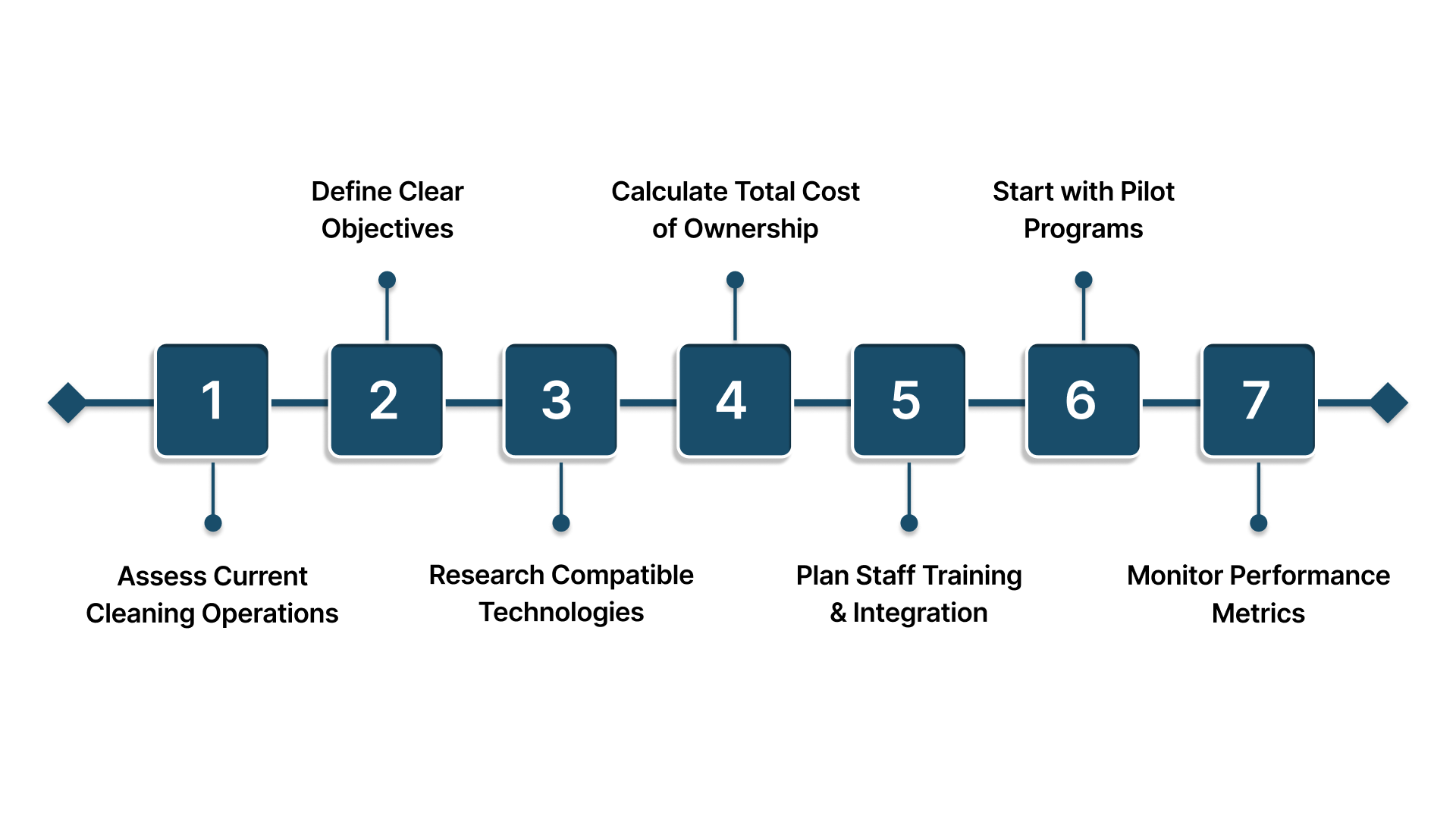
Implementing cleaning robots requires thoughtful planning rather than hasty purchases. The following checklist helps facilities navigate the adoption process smoothly and avoid common pitfalls.
Assess Current Cleaning Operations: Document existing cleaning workflows, pain points, and staff capacity. Identify high-traffic areas where robotic cleaning would deliver immediate impact. Measure baseline metrics like turnaround times and labor hours.
Define Clear Objectives: Establish specific goals such as reducing infection rates or improving room turnover speed. Set measurable targets that align with broader facility operations. Clear objectives guide vendor selection and implementation strategies.
Research Compatible Technologies: Evaluate robots designed specifically for healthcare environments with appropriate disinfection capabilities.
Compare navigation systems, battery life, and integration with existing facility management software. Request demonstrations in similar healthcare settings.
Calculate Total Cost of Ownership: Factor in purchase price, maintenance contracts, training expenses, and software updates.
Compare these costs against current labor expenses and projected efficiency gains. Include potential savings from reduced infection rates.
Plan Staff Training and Integration: Develop training programs that help existing cleaning staff work alongside robots.
Emphasize how robots enhance rather than replace human workers. Address concerns transparently and involve staff in implementation planning.
Start with Pilot Programs: Deploy robots in limited areas first to test performance and refine workflows. Gather feedback from staff and monitor cleaning outcomes closely. Use pilot results to inform broader rollout strategies.
Monitor Performance Metrics: Track key indicators like cleaning completion rates, infection statistics, and staff satisfaction. Compare post-implementation data against baseline measurements. Adjust protocols based on real-world performance data.
Limitations of Hospital Cleaning Robots and Troubleshooting Tips
Despite their impressive capabilities, cleaning robots are prone to operational challenges that facilities should anticipate. Understanding these limitations upfront helps administrators prepare realistic expectations and response strategies. Most issues have straightforward solutions that minimize downtime and maintain cleaning schedules effectively.
Limitation | Troubleshooting Tip |
|---|---|
Cannot clean tight spaces or under furniture | Assign human staff to handle confined areas during scheduled deep cleaning sessions |
Struggle with unexpected obstacles like moved equipment | Establish clear floor protocols and designated robot pathways before each cleaning cycle |
Require regular maintenance and software updates | Create maintenance calendars with vendor support and train in-house technical staff |
Limited ability to clean vertical surfaces and high-touch areas | Integrate robots into hybrid cleaning protocols where humans focus on walls and fixtures |
Navigation issues in poorly lit or highly reflective environments | Install adequate lighting and use non-reflective floor finishes in robot cleaning zones |
Battery limitations restrict continuous operation time | Schedule charging cycles during low-traffic periods and maintain backup units for coverage |
Cannot assess cleaning quality or adapt to unique spills | Implement quality checks by human supervisors and maintain rapid-response cleaning teams |
High initial investment costs may strain budgets | Explore leasing options, phased rollouts, or shared equipment arrangements with partner facilities |
Partner with ToDo Robotics for Healthcare Cleaning Solutions
ToDo Robotics brings healthcare facilities the technology and support needed to implement robotic cleaning successfully.
We provide robots from leading manufacturers like Gausium and Gaussian Robotics, complete with ongoing maintenance and readily available replacement parts.
Founded in 2022 and WBENC Certified, we combine automation expertise with comprehensive lifecycle support that ensures your investment delivers results. Connect with us today to explore how robotic cleaning can transform your facility operations.
Why Choose ToDo Robotics as Your Implementation Partner?
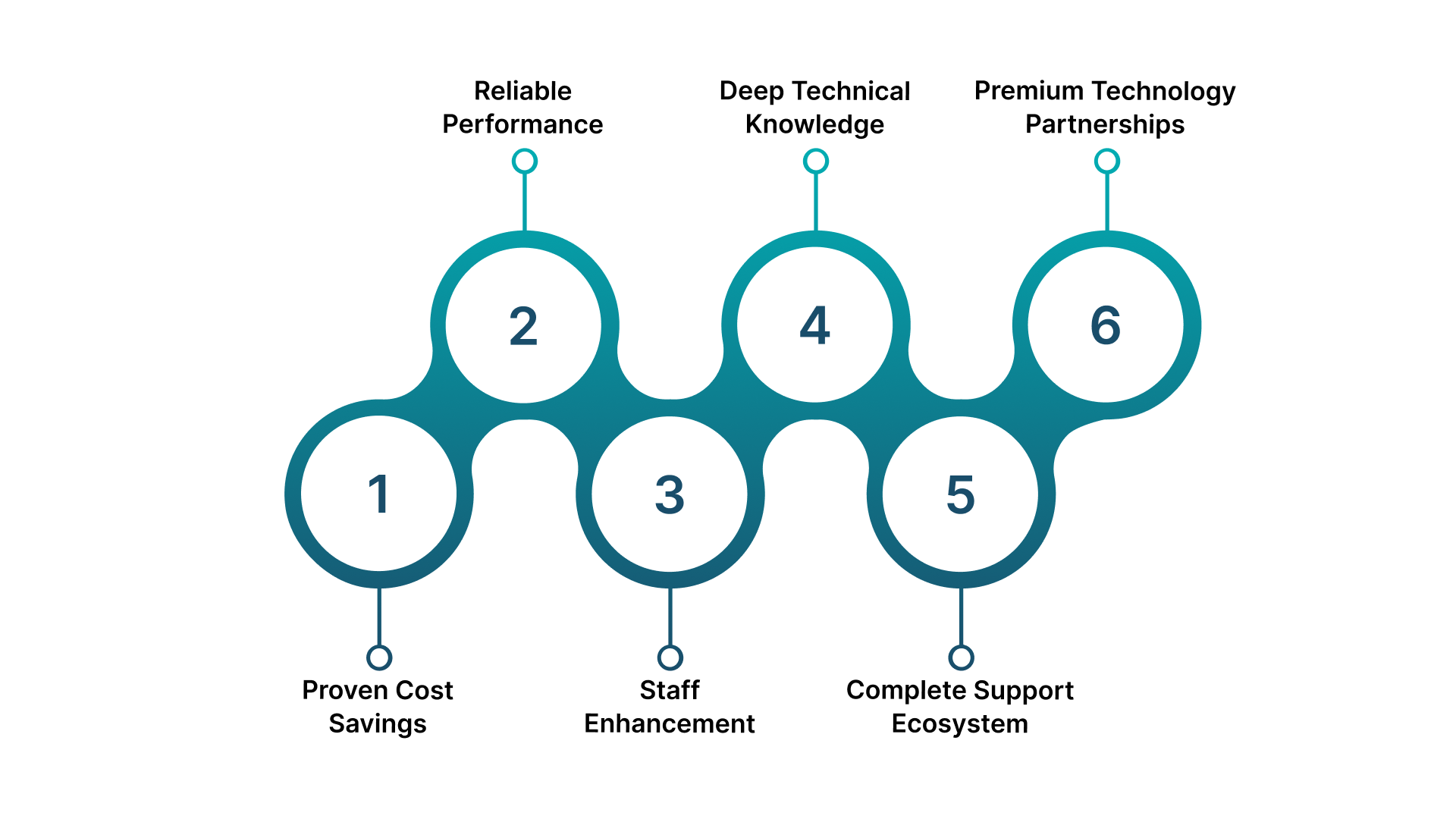
Implementing robotic cleaning is not just a technology decision. It is an operational commitment that requires the right partner to guide deployment, support performance, and protect long-term value.
ToDo Robotics supports healthcare teams beyond installation, helping systems perform reliably in real-world clinical environments from day one. The result?
Proven Cost Savings:
Solutions designed to reduce labor expenses and boost efficiency, with many facilities reaching breakeven within months of deployment
Reliable Performance: Consistent cleaning standards that enhance patient confidence and protect your facility's reputation for excellence
Staff Enhancement: Free your team from repetitive tasks so they can focus on patient-facing responsibilities and specialized cleaning needs
Deep Technical Knowledge: Over 10 years of combined deployment experience with manufacturer-trained technicians who understand healthcare environments
Complete Support Ecosystem: From initial consultation and site assessment through installation, training, proactive maintenance, 24/7 technical support, and parts availability
Premium Technology Partnerships: Access to industry-leading cleaning robots from Gausium, Gaussian Robotics, and other trusted manufacturers
Connect with us today to schedule a consultation and discover the right robotic solution for your healthcare environment.
Frequently Asked Questions
What are cleaning robots for healthcare facilities?
Cleaning robots are autonomous machines that use AI and sensors to navigate hospital spaces and sanitize surfaces. They operate independently, performing repetitive cleaning tasks with consistent precision while working alongside human staff.
How do cleaning robots reduce healthcare-associated infections?
These robots maintain high sanitation levels consistently across all areas through programmed disinfection protocols. They eliminate human variability and fatigue, ensuring thorough cleaning of high-touch surfaces during every shift without exception.
Can cleaning robots replace human cleaning staff in hospitals?
No, cleaning robots are designed to complement human staff rather than replace them. Robots handle repetitive floor cleaning while humans focus on tight spaces, vertical surfaces, patient interaction, and situations requiring judgment.
What is the typical cost and ROI for healthcare cleaning robots?
Initial costs include purchase price, maintenance contracts, training, and software updates. Many facilities reach breakeven within months through reduced labor expenses, improved efficiency, and potential savings from lower infection rates.
What challenges should facilities expect when implementing cleaning robots?
Common challenges include navigation issues with obstacles, inability to clean tight spaces or vertical surfaces, battery limitations, and maintenance requirements. Most issues are resolved through hybrid cleaning protocols and clear operational procedures