As facility standards rise in 2026, autonomous cleaning robots are reshaping operations across hotels, hospitals, retail centers, and airports by delivering consistent hygiene with minimal labor. High-traffic commercial environments face chronic staffing shortages, high labor costs, and inconsistent service quality. Autonomous solutions address these challenges while maintaining operational efficiency and sanitation standards.
The cleaning robot market is projected to reach USD 96.8 billion by 2035, driven by rising labor costs, automation demand, and advancements in AI navigation and sensor-based control. Autonomous commercial cleaning robot reviews highlight innovations in AI navigation, sensor fusion, and multi-surface cleaning capabilities. These systems free staff for higher-value tasks while optimizing facility cleanliness.
This article explores the leading commercial cleaning robot types, their functionalities, and the best robot vacuums for 2026, helping managers make informed implementation decisions.
Key Takeaways
Hybrid robots combine vacuuming and mopping, reducing the need for multiple machines and labor in commercial environments.
Intelligent LiDAR mapping ensures full coverage, efficient navigation, and precise cleaning path optimization.
Self-cleaning mops and automatic dustbin emptying minimize manual maintenance and cross-contamination risks.
Adaptive suction and brush systems handle multiple floor types, from carpet to hard surfaces.
Integration with apps and building systems enhances scheduling, monitoring, and real-time operational control.
4 Types of Commercial Cleaning Robots
Commercial cleaning robots in 2026 vary by function, autonomy, and operational environment, enabling mid-to-large facilities to optimize labor, hygiene, and workflow efficiency.
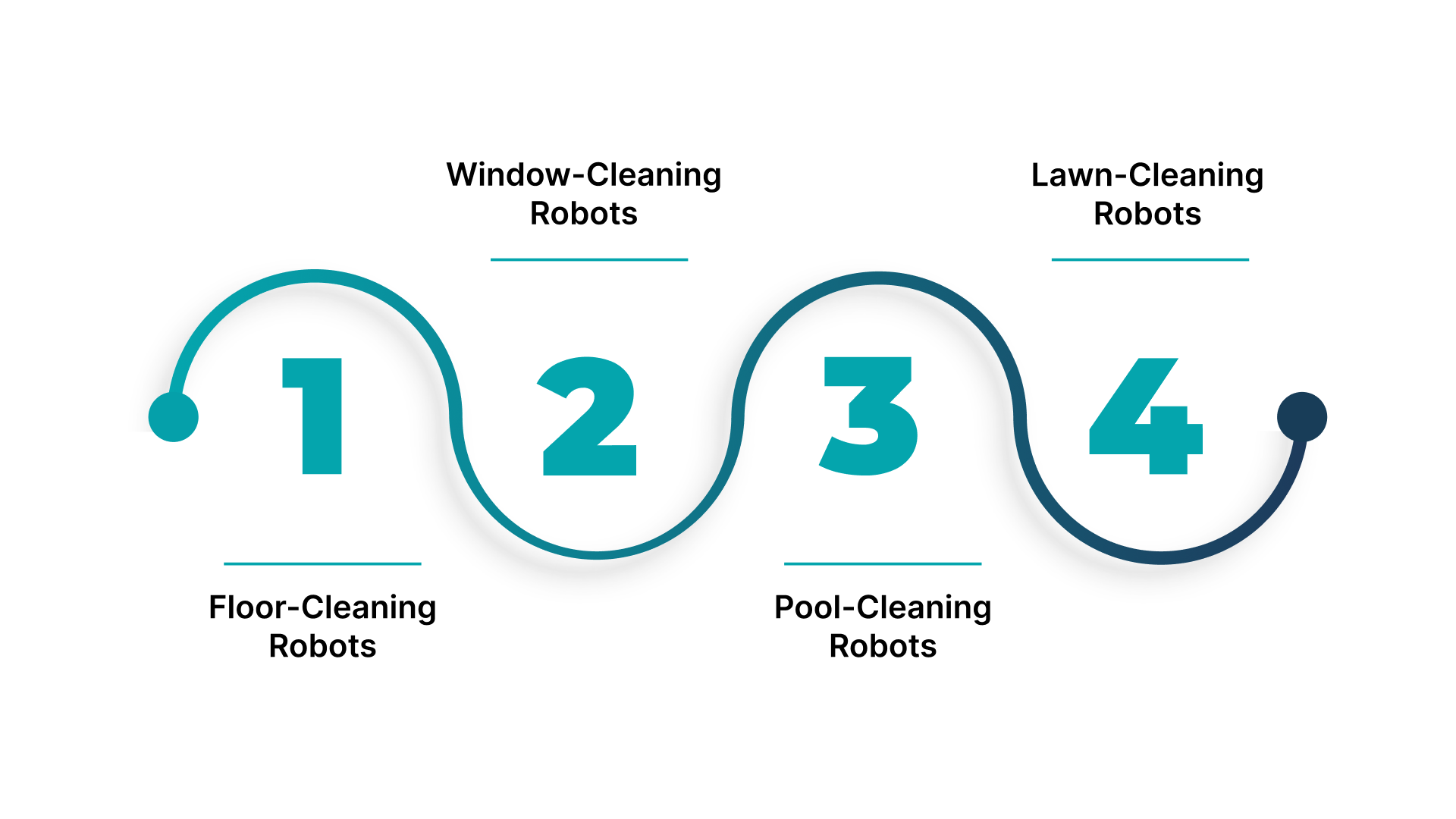
Floor-Cleaning Robots
These robots handle sweeping, scrubbing, and mopping across tiles, hardwood, laminate, and low-pile carpets. Advanced LiDAR and AI path planning maximize coverage in crowded spaces.
Adaptive Suction & Mop Control: Automatically adjusts for different floor types and soil levels.
High-Capacity Tanks & Brushes: Reduce refill and maintenance frequency in large facilities.
Real-Time Obstacle Detection: Sensors prevent collisions with furniture, carts, or equipment in uncertain environments.
Use Case:
Used in hospitals, hotels, airports, and retail centers to autonomously scrub, vacuum, and mop mixed floor types. They deliver consistent, contact-free cleaning across high-traffic areas with minimal staff intervention.
Window-Cleaning Robots
Designed for vertical surfaces, these robots use suction pads, oscillating brushes, and onboard cameras to navigate glass facades in offices, airports, and commercial buildings.
AI-Assisted Path Optimization: Ensures efficient coverage of large or irregular window panels.
Safety Redundancy Systems: Suction failure alerts and fall-prevention mechanisms protect staff and property.
Surface-Sensitive Cleaning Pads: Avoid scratches while removing dust, streaks, and grime.
Use Case:
Used in high-rise buildings, malls, and glass-heavy commercial facades where manual access is risky. These robots ensure uniform cleaning, improve safety compliance, and reduce downtime for exterior maintenance.
Pool-Cleaning Robots
These autonomous units operate in commercial pools at hotels, wellness centers, and sports facilities, combining suction, scrubbing, and chemical detection sensors for precise sanitation.
Multi-Stage Filtration: Captures debris from large and fine particulate matter.
Chemical Level Monitoring: Sensors detect pH and chlorine, ensuring safe water conditions.
Automated Coverage Planning: Routes adapt to pool dimensions, depth, and obstacles like ladders.
Use Case:
Common in hotels, resorts, and sports facilities to maintain hygiene in swimming pools. They autonomously remove debris, scrub surfaces, and circulate water, reducing chemical imbalance and manual labor.
Lawn-Cleaning Robots
Robotic mowers maintain outdoor landscaping for hotels, office campuses, and retail centers, utilizing GPS, geofencing, and slope detection to optimize efficiency and safety.
Slope & Terrain Adaptation: Adjusts blade height and speed for uneven surfaces.
Battery and Charging Optimization: Autonomous docking ensures continuous operation in expansive areas.
Weather Detection: Sensors prevent operation during rain or wet conditions, reducing equipment damage.
Use Case:
Applied in corporate campuses, healthcare facilities, and large residential complexes for autonomous debris collection and grass maintenance. They support scheduled, low-noise outdoor upkeep while minimizing labor costs.
These types reflect the most common applications in commercial facilities, helping organizations automate repetitive cleaning tasks, maintain consistent hygiene, and optimize labor allocation.
Next, we’ll examine the best autonomous solutions for 2026.
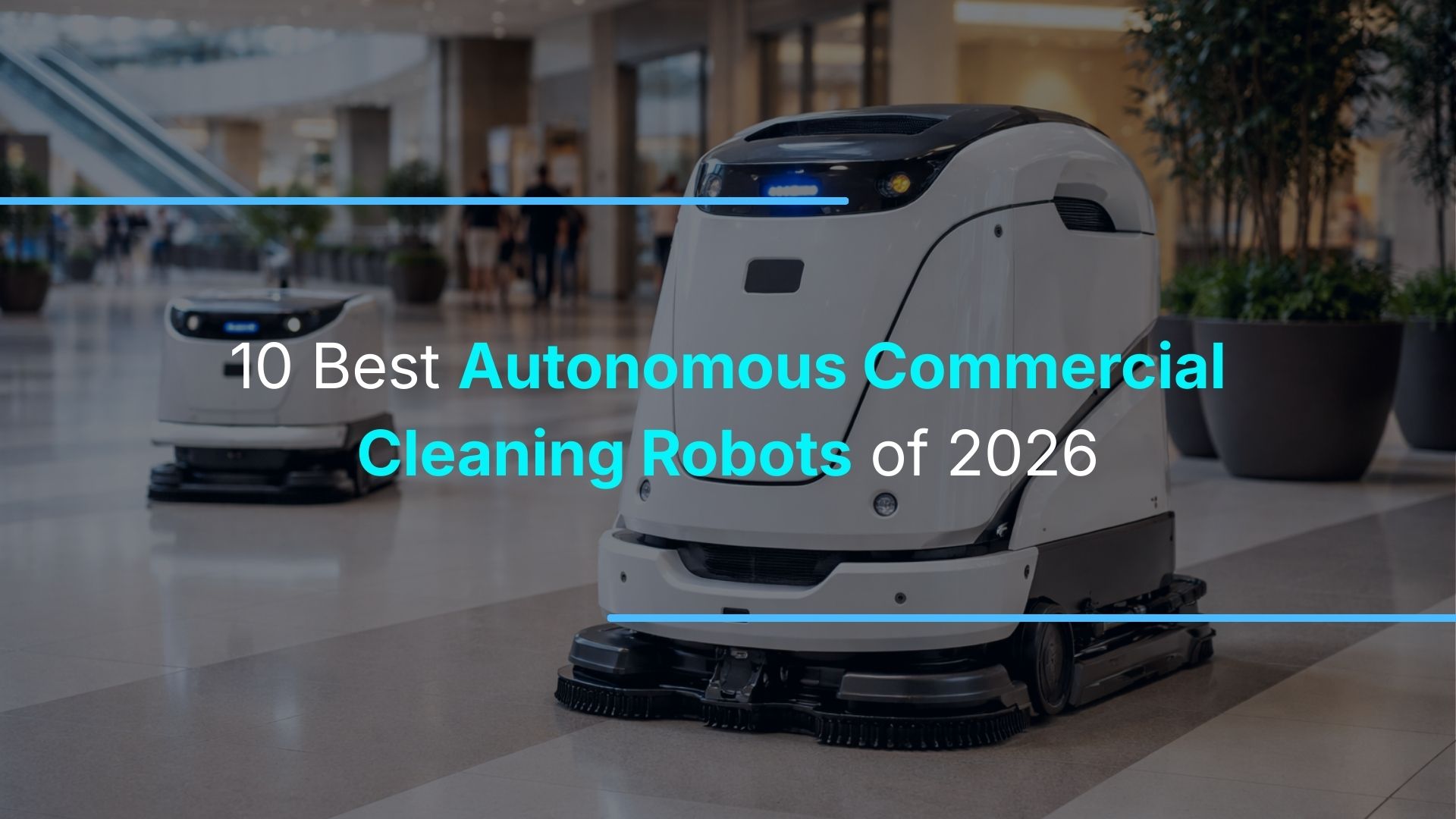
10 Best Autonomous Commercial Cleaning Robots of 2026
Autonomous commercial cleaning robots in 2026 are improving facility maintenance, from high-traffic hotels and hospitals to busy office spaces. Here are the top-performing robots that combine AI-driven navigation, multi-surface cleaning, and 24/7 efficiency to keep your spaces spotless with minimal human effort.
PUDU MT1
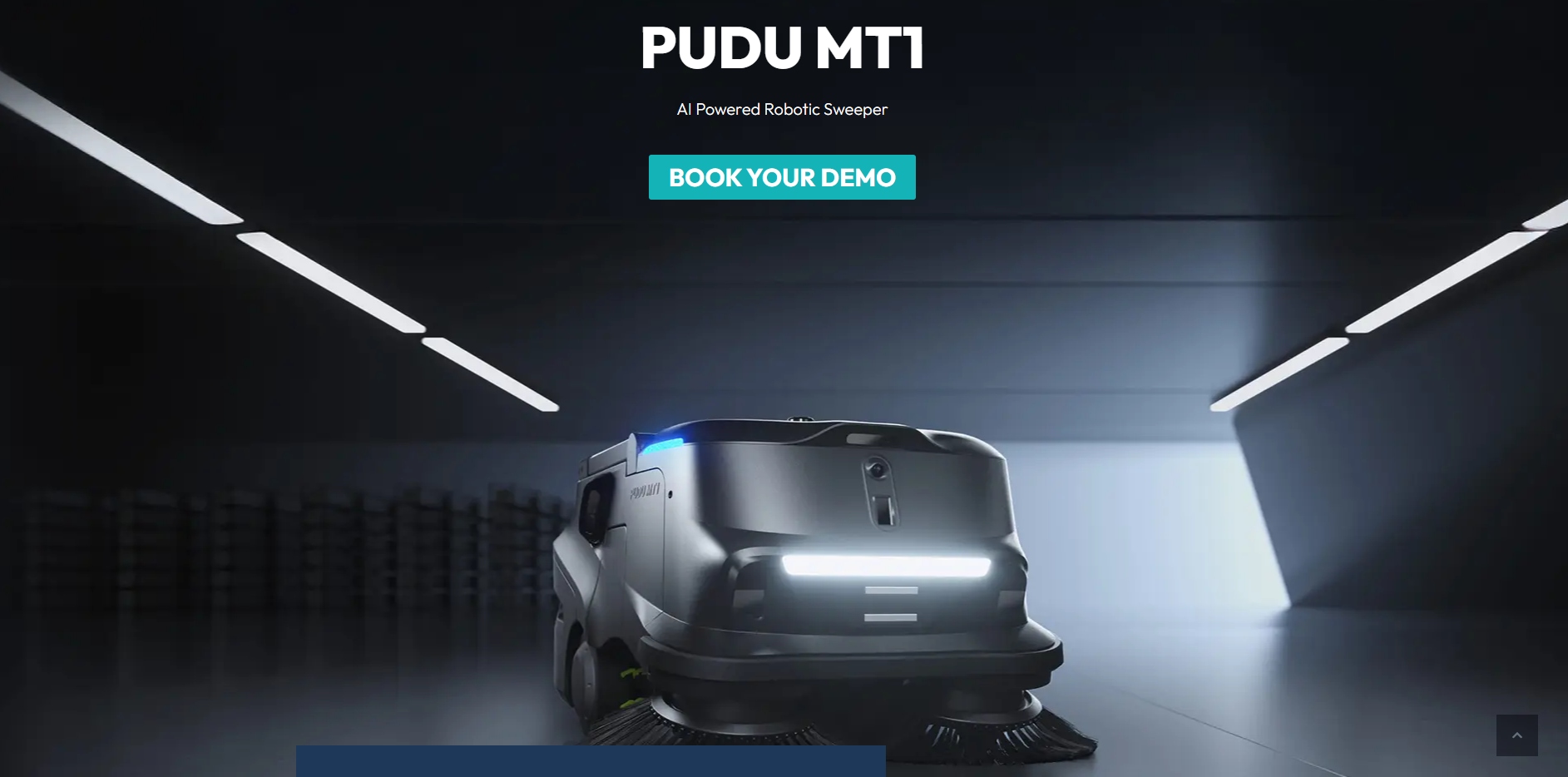
The PUDU MT1 is the world’s first AI-powered sweeping robot designed for large-scale environments, delivering exceptional performance and comprehensive cleaning capabilities. With results rivaling ride-on sweepers, it provides an efficient and seamless cleaning experience. ToDo Robotics supports the selection and implementation of the MT1 for facilities that require uninterrupted sweeping across high-traffic spaces. Equipped with an industry-leading multi-sensor fusion AI visual recognition system, MT1 enables 24/7 autonomous operation, setting a new standard in commercial cleaning. No debris is too big or small for this powerhouse, making it ideal for hotels, hospitals, and large facilities.
Pros:
Comprehensive Cleaning: Dual-disc brushes and a 35L trash bin handle everything from fine dust to large debris like leaves and bottles.
AI-Powered Navigation: Multi-sensor fusion, VSLAM+Marker+Lidar SLAM ensures precise path planning and obstacle avoidance.
High Coverage & Speed: Cleans up to 1800㎡/h in standard mode, 6000㎡/h in spot mode.
Autonomous Operation: Supports 24/7 cleaning with adjustable cruise speed (0.2–1.2 m/s).
Flexible Application: Minimum path clearance of 75cm allows navigation in most large-scale indoor environments.
Cons:
Premium Investment: Advanced AI technology and performance come at a higher price point.
Size & Weight: At 840 × 600 × 490mm and 65 kg, it may require ample space for maneuvering.
Who It’s For:
Large Facilities: Hotels, hospitals, and commercial complexes needing continuous, efficient cleaning.
High-Traffic Areas: Handles heavy footfall and varied debris effortlessly.
Efficiency-Focused Managers: Reduce labor while maintaining hygienic standards.
Specs & Configurations:
Robot Dimensions (L×W×H): 840 × 600 × 490 mm (31.5 × 23.6 × 19.3 in)
Robot Weight: 65 kg (143 lbs)
Cleaning Performance: Max. 1800㎡/h (Standard Mode), Max. 6000㎡/h (Spot Mode) / 19,375.04 ft²/h & 64,583.46 ft²/h respectively
Trash Bin Capacity: 35 L (1.2 ft³)
Battery Capacity: 45Ah
Run-Time: 4–8h (depending on cleaning level)
Cruise Speed: 0.2–1.2 m/s (0.66–3.94 ft/s), adjustable
Charging Time: <3h
Navigation Method: VSLAM+Marker+Lidar SLAM
Path Clearance: Minimum 75cm (29.53 in)
Cleaning Width: 70cm (27.56 in)
Why You Should Choose This:
AI-driven navigation ensures precise, full-coverage cleaning.
Dual-disc brushes and a large trash bin tackle debris of all sizes efficiently.
Autonomous, 24/7 operation reduces labor costs while maintaining top-tier hygiene.
Its combination of speed, precision, and versatility sets a new benchmark for commercial cleaning automation.
CC1
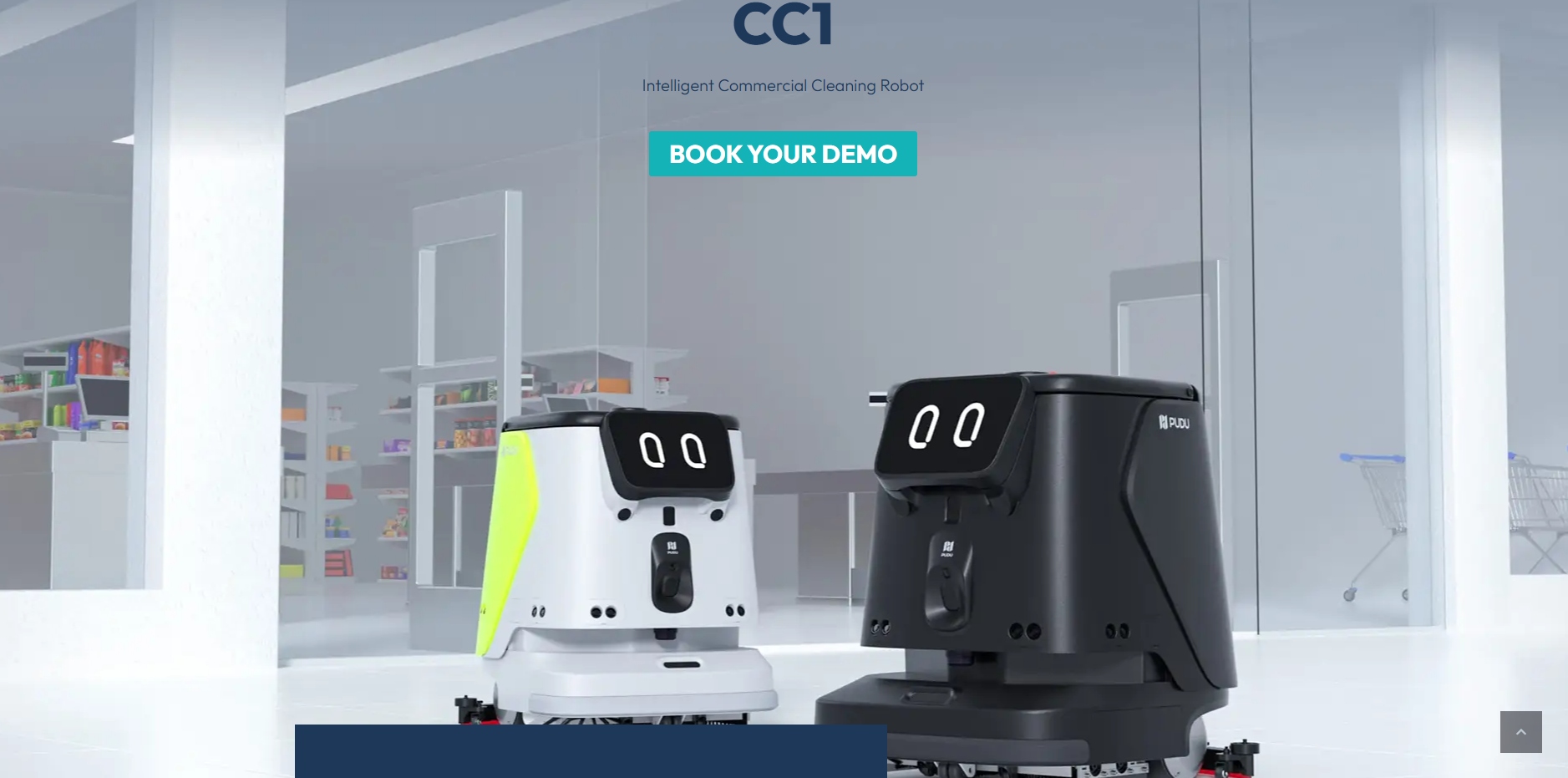
The CC1 is a versatile four-in-one cleaning robot, designed to handle sweeping, scrubbing, vacuuming, and mopping in a single machine. Perfect for commercial spaces like hotels, hospitals, restaurants, and high-traffic retail areas, it adapts to both hard and soft flooring types. Through its role as a distribution and deployment partner, ToDo Robotics helps facilities integrate the CC1 into daily cleaning operations without adding labor strain. With intelligent water management, multi-mode cleaning, and precise corner handling, the CC1 ensures efficient, professional-level cleaning with minimal human intervention.
Pros:
All-in-One Cleaning: Combines sweeping, scrubbing, vacuuming, and dust-mopping for comprehensive floor care.
Versatile Floor Compatibility: Works on hard surfaces like marble, terrazzo, epoxy, and soft, low-pile carpets.
High Cleaning Efficiency: Covers 700–1000 m²/h (7,535–10,764 ft²/h) with adjustable cruise speed.
Smart Features: Includes intelligent lift control, automatic water addition/drainage, anda 10.1-inch touch screen for easy operation.
Quiet Operation: Cleans at <70dB, ideal for occupied spaces.
Cons:
Weight & Size: At 75 kg (165 lbs) and 663 × 552 × 695 mm,it requires space for storage and maneuvering.
Premium Solution: Advanced features may represent a higher upfront investment.
Who It’s For:
High-Traffic Facilities: Hospitals, hotels, and restaurants needing continuous, multi-floor cleaning.
Mixed Flooring Properties: Efficiently transitions between carpets and hard floors.
Efficiency-Oriented Managers: Reduce labor hours while maintaining consistent cleanliness standards.
Specs & Configurations:
Machine Dimensions (L×W×H): 663 × 552 × 695 mm (24.76 × 21.73 × 27.36 in)
Machine Weight: 75 kg (165.35 lbs)
Cleaning Width (with side brush): 500 mm (19.69 in)
Water Tank Capacity: Clean 15L / Waste 15L (3.96 Gal each)
Charging Time: <3h
Run-Time: Max 8h
Cleaning Efficiency: 700–1000 m²/h (7,535–10,764 ft²/h)
Cruise Speed: 0.2–1.2 m/s (0.66–3.94 ft/s)
Cleaning Modes: Standard Sweeping, Scrubbing, Carpet Vacuuming, Silent Mopping
Local Interaction: 10.1-inch touch screen
Positioning Method: Visual + Lidar
Why You Should Choose This:
All-in-one functionality reduces the need for multiple machines, saving labor and improving hygiene.
Smart navigation and multi-mode cleaning ensure thorough coverage for all types of indoor floors.
Quiet, autonomous operation makes it suitable for high-traffic and occupied spaces, enhancing efficiency and consistency in commercial cleaning workflows.
Vacuum 40
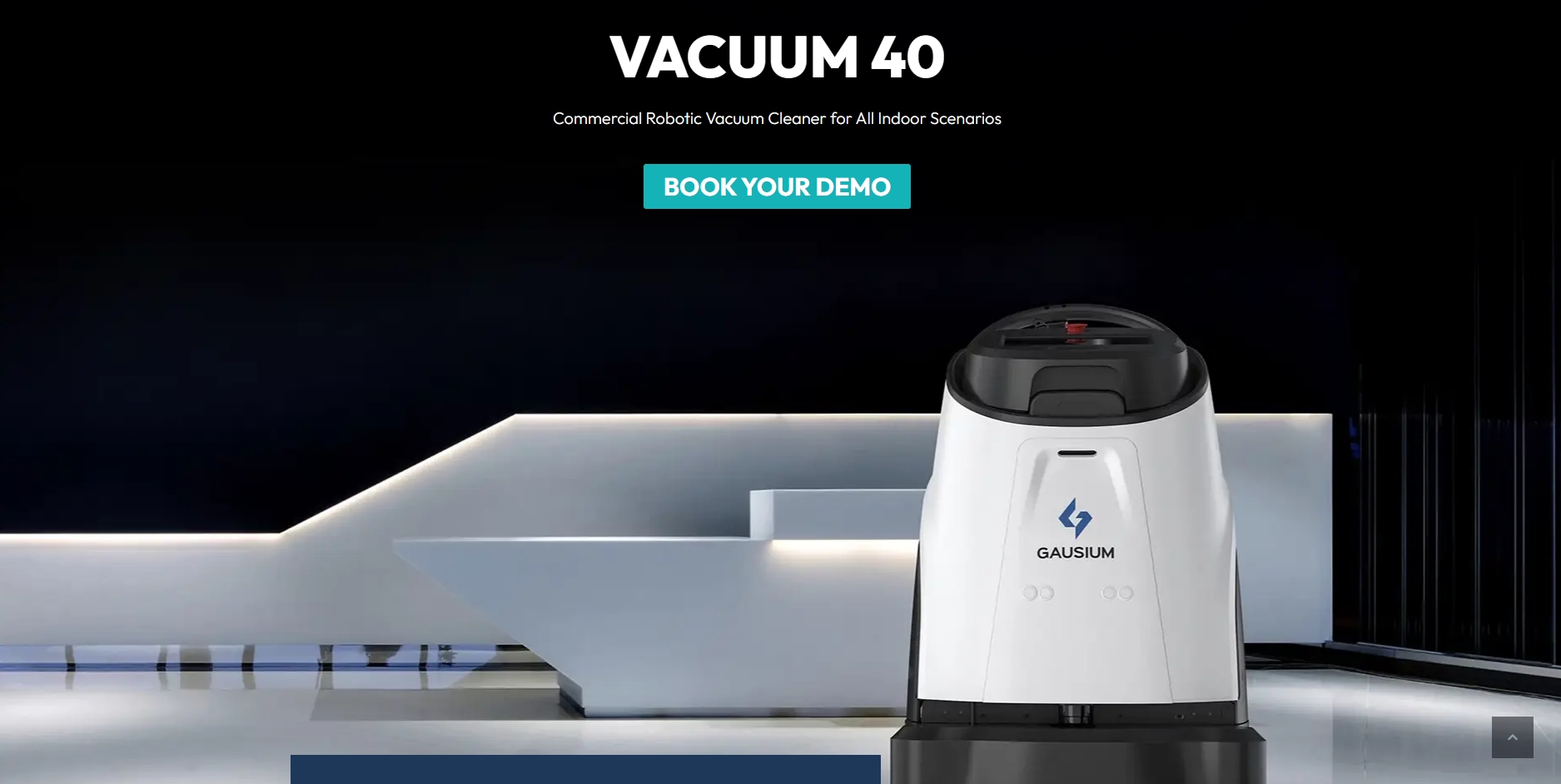
The Vacuum 40 is a compact, commercial-grade vacuum robot engineered for both soft and hard floor types. Ideal for hotels, hospitals, and facilities with narrow corridors and mixed flooring, it provides simultaneous vacuuming, sweeping, and mopping for thorough floor care. ToDo Robotics works with customers to evaluate, deploy, and scale the Vacuum 40 in hotels, healthcare facilities, and retail corridors where flexibility and minimal disruption are critical. With 3D camera-assisted navigation and high-precision sensors, Vacuum 40 automatically adapts to floor types, delivering a deep, edge-to-edge clean with minimal human intervention.
Pros:
3-in-1 Cleaning Solution: Integrates vacuuming, sweeping, and dust-mopping in one machine, reducing the need for multiple devices.
All-Pile Carpet Expertise: Three carpet cleaning modes, light, medium, and deep, ensure effective cleaning across different carpet heights.
Medical-Grade Air Quality: Equipped with H13 HEPA filter and multi-purpose diffuser kit for superior air purification.
Powerful Suction & Edge Cleaning: 24 KPA suction motor and zero-distance side brushes pick up fine dust and debris along edges effortlessly.
Autonomous Floor Adaptation: 3D depth camera, LiDAR, RGB camera, and anti-drop sensors adjust cleaning modes automatically.
Cons:
Run-Time Variance: Vacuuming lasts up to 3h, but mopping mode allows up to 18h operation.
Space Requirement: While compact, the minimum pass width of 800 mm may require planning in extremely tight layouts.
Who It’s For:
Hotels & Narrow Corridors: Ideal for spaces where traditional cleaning equipment struggles to maneuver.
Mixed Flooring Facilities: Seamlessly handles carpet-tile combinations with adjustable cleaning modes.
Efficiency-Driven Managers: Reduces labor and ensures consistent, thorough cleaning with minimal supervision.
Specs & Configurations:
Dimensions (L×W×H): 800 × 800 × 800 mm (31.5 × 31.5 × 31.5 in)
Unladen Weight: 80 kg
Cleaning Width: 800 mm (31.5 in)
Movement Gradeability: Auto Cleaning 4°, Auto Driving 8°
Max Speed: 0.9 m/s (2 mph)
Edge Cleaning Capability: 0–20 mm (0–0.7 in)
Min Pass Width / U-Turn Width: 800 mm / 1,100 mm (31.5 in / 43 in)
Sensors: LiDAR, 3D Depth Camera, RGB Camera, Anti-drop Sensor, Air Pressure Collision Sensor
Cleaning Efficiency: Theoretical 2,300 m²/h (24,757 ft²/h); Practical 400–800 m²/h (4,306–8,611 ft²/h)
Dust Bag / Trash Tray: 12 L / 2.5 L (3 gal / 0.6 gal)
Vacuum Pressure: 24 KPA
Battery Type / Capacity: Lithium Iron Phosphate, 60 Ah
Rated Voltage / Output: 24 VDC / 1,000 W (1.34 hp)
Charging Time: 3h
Max Runtime: Vacuuming 3h, Mopping 18h
Why You Should Choose This:
Handles both carpets and hard floors seamlessly.
Ensures hygienic environments with H13 HEPA air purification.
Ideal for narrow corridors and busy commercial spaces.
Automatically adjusts cleaning mode for different surfaces.
Cleans corners and edges with zero-distance precision.
Minimizes staff effort while maintaining professional-level cleanliness.
Ecovacs Deebot X8 Pro Omni
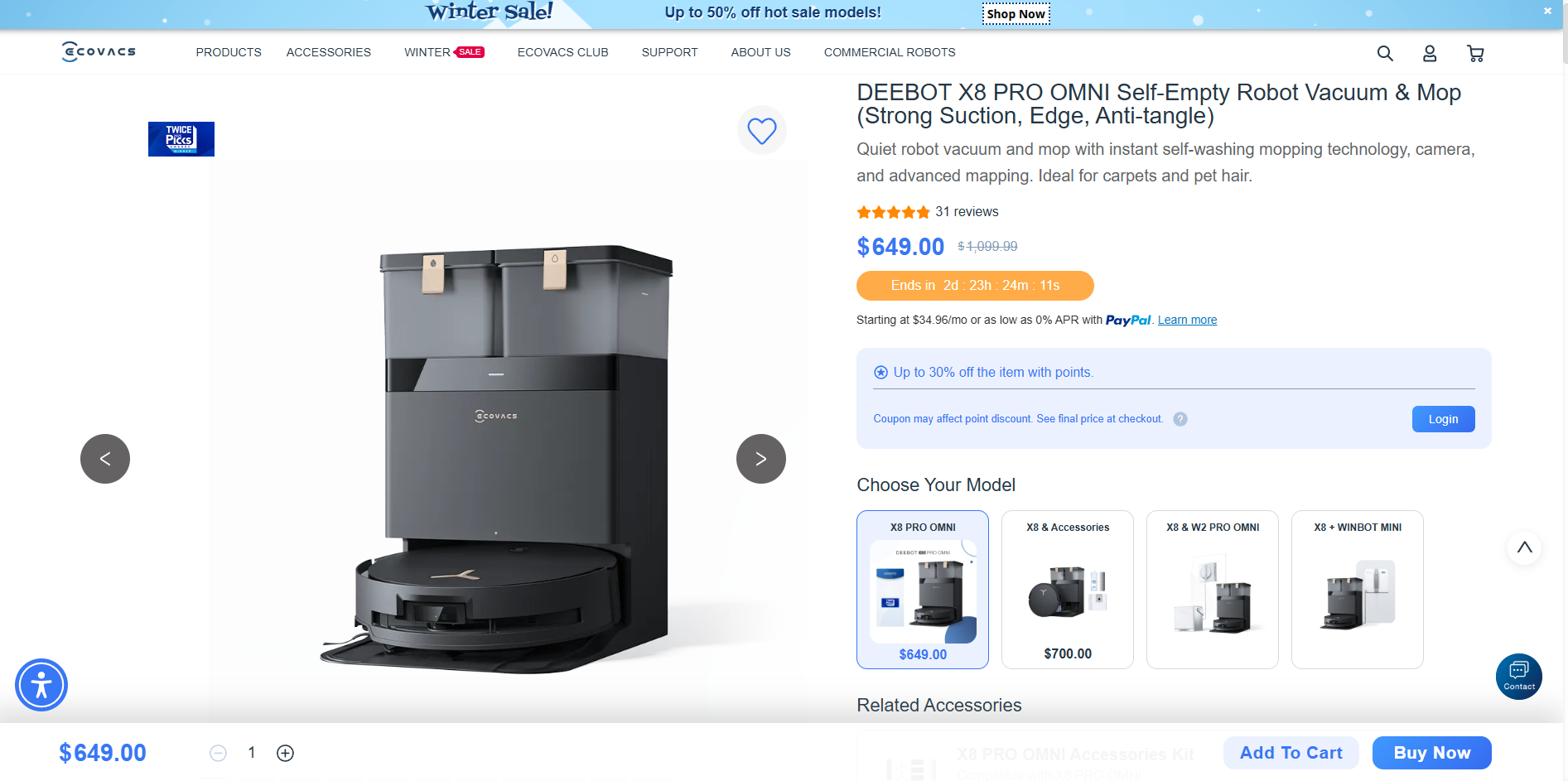
The Ecovacs Deebot X8 Pro Omni is a premium hybrid robot vacuum and mop designed for large, high-traffic spaces. It integrates LiDAR navigation, self-cleaning mops, and advanced obstacle handling. Ideal for multi-surface commercial environments, it ensures efficient coverage while reducing labor requirements.
Pros:
Effective Vacuuming & Mopping: Delivers strong suction and adaptive mopping for both carpet and hard floors.
Self-Cleaning Roller Mop: Limits cross-contamination by refreshing during operation.
Corner Reach: Side brushes and mop extend cleaning into corners and edges.
Automatic Detergent Dispensing: Adjusts water and cleaning solution for optimal results.
Obstacle Management: Lifts over small thresholds and objects.
Long Battery Life: Operates continuously for over two hours per charge.
Cons:
High Price Point: Premium cost may not suit all budgets.
Navigation Glitches: Occasionally loses location or requires manual map adjustments.
Auto Maps Need Edits: Generated maps may not be perfect for multi-level layouts.
Who It’s For:
Fastidious Cleaners: Ensures thorough cleaning and automatic mop maintenance, preventing dirt transfer across spaces.
Mixed Flooring Facilities: Handles both carpeted and hard floors efficiently.
Large Multi-Level Properties: Supports multiple maps and extended cleaning durations for expansive areas.
Specs & Configurations:
Dimensions: 13.9 × 13.8 × 3.9 inches
Battery Life: 134 minutes
Type: Mop/Vacuum Hybrid
Features: Scheduling, Virtual Walls, Remote & Phone Control
Why You Should Choose This:
Strong LiDAR-based navigation ensures precise floor coverage.
Self-cleaning roller mop limits cross-contamination between surfaces.
Base station automatically empties the dustbin, washes, and dries the mop using hot water and air.
Hybrid capabilities reduce the need for multiple machines, saving labor and improving hygiene.
iRobot Roomba j9+
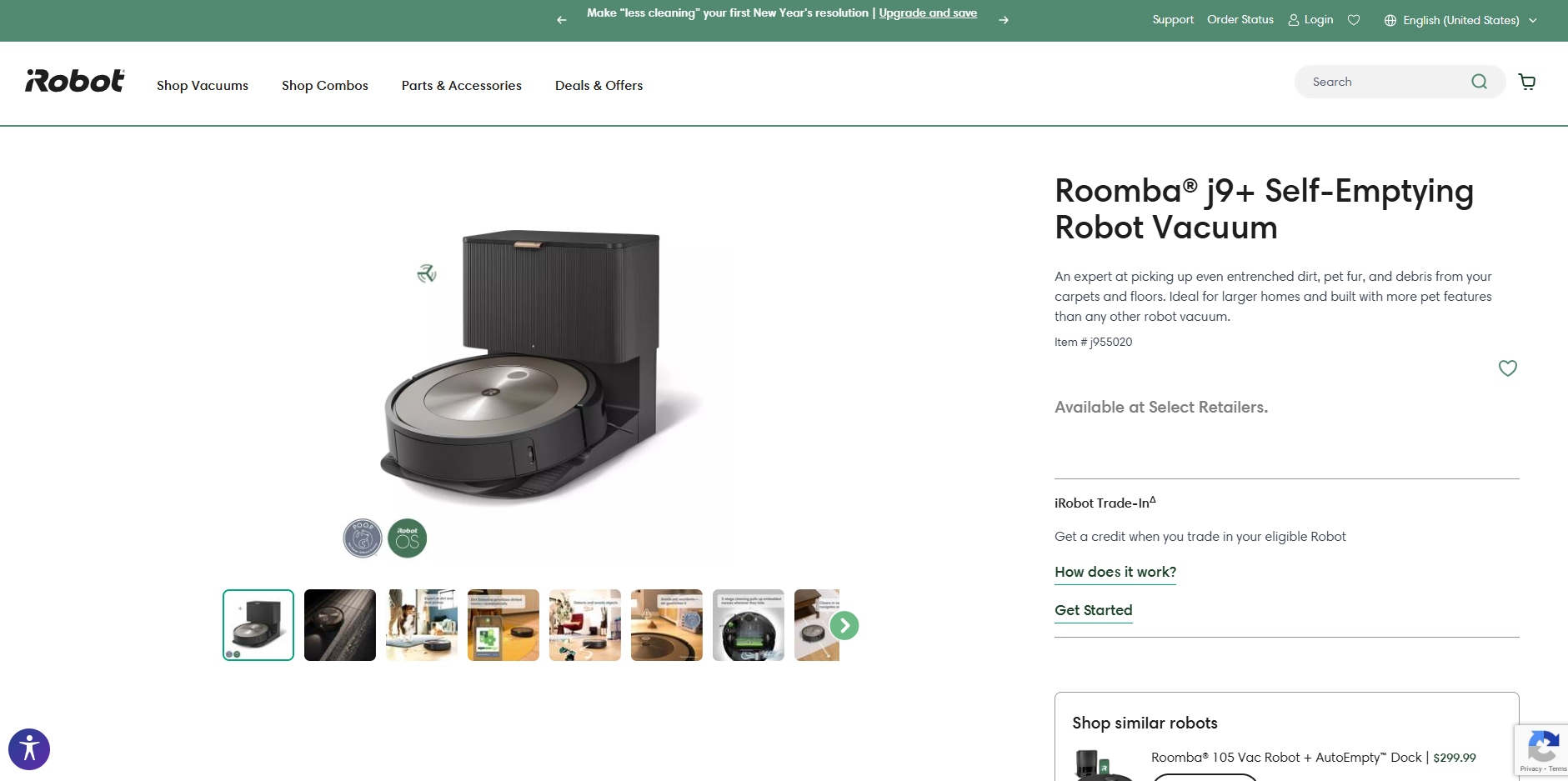
The iRobot Roomba j9+ is a premium autonomous robot vacuum designed for complex, high-traffic spaces. It uses camera-guided navigation and machine learning to optimize cleaning coverage while avoiding obstacles and reducing labor needs.
Pros:
Advanced Obstacle Avoidance: Expertly detects and navigates around small and large objects.
Improved Suction & Battery: Offers more cleaning power and longer runtime than previous models.
Home Learning: Adapts cleaning routines based on room usage and dirt patterns.
Feature-Rich App: Provides scheduling, mapping, and Keep Out Zone customization.
Cons:
High Price Point: Premium cost may limit accessibility for some facilities.
Who It’s For:
Pet Owners: Avoids pet waste and navigates toys or obstacles efficiently.
Messy Environments: Handles cluttered floors without requiring pre-clean preparation.
Specs & Configurations:
Dimensions: 13.7 × 13.7 × 3.4 inches
Battery Life: 113 minutes
Type: Mop/Vacuum Hybrid
Features: Scheduling, Virtual Walls, Remote & Phone Control
Why You Should Choose This:
Learns home layouts and prioritizes high-traffic or dirtier areas for more efficient cleaning.
Detects and avoids objects, including pet waste, toys, and cords.
Maintains strong cleaning performance across varied surfaces for extended periods.
Lets facilities define Keep Out Zones, schedule cleanings, and monitor progress remotely.
Minimizes manual intervention, reduces labor needs, and ensures consistent hygiene across high-traffic environments.
TP-Link Tapo RV30 Max Plus
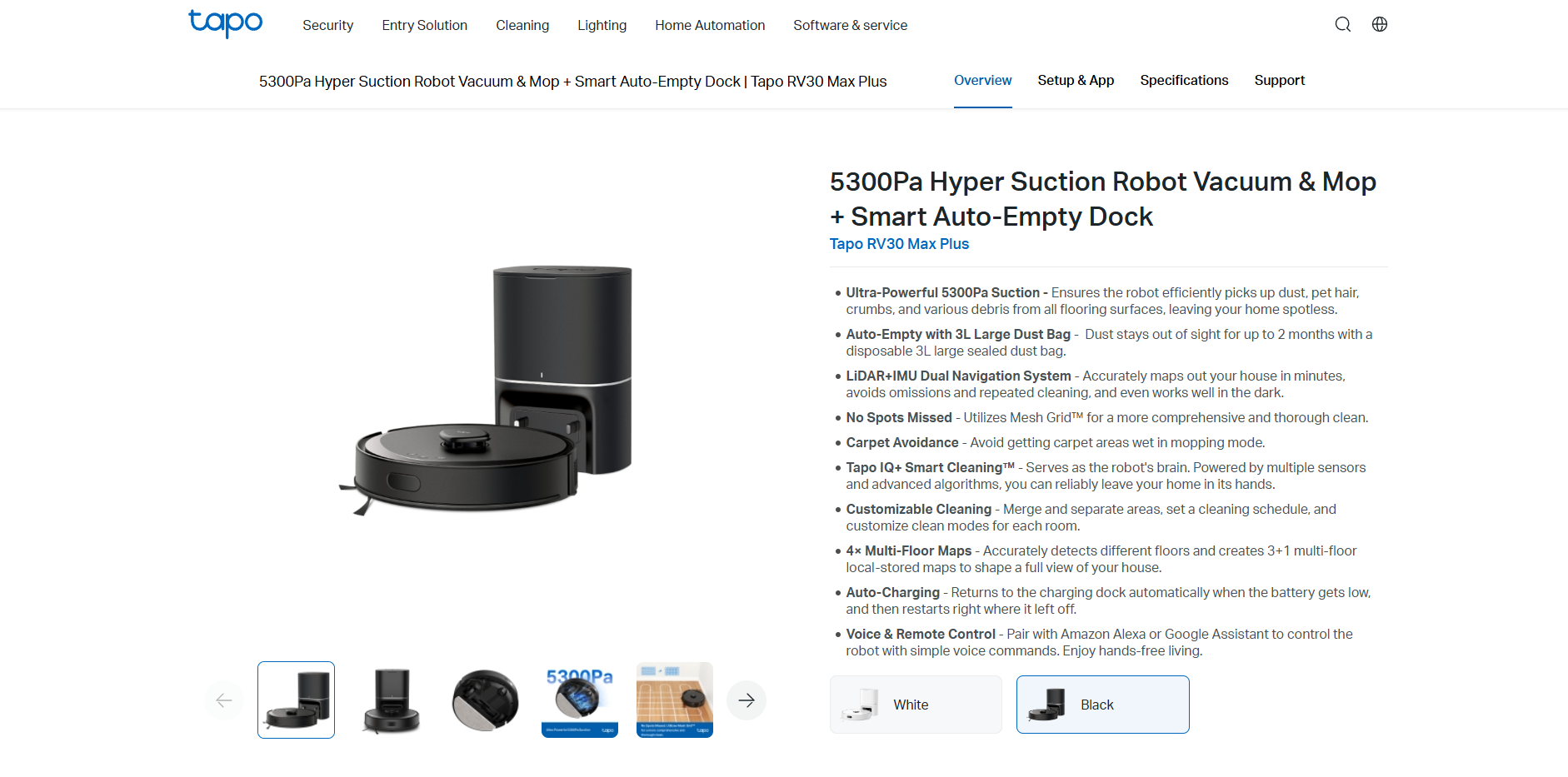
The TP-Link Tapo RV30 Max Plus is an efficient hybrid robot vacuum and mop designed for mid to large commercial and high-traffic spaces. It integrates LiDAR navigation, self-emptying dustbin functionality, and systematic cleaning patterns for multi-surface coverage.
Pros:
Effective Vacuuming & Mopping: Delivers strong suction and adequate mopping for both carpet and hard floors.
Systematic Navigation: Moves in orderly rows for thorough floor coverage.
Self-Emptying Dustbin: Reduces manual intervention and improves operational efficiency.
Smart Features: Supports virtual walls, scheduling, and voice control via Alexa or Google Assistant.
Large-Particle Pickup: Excels at capturing crumbs, pet hair, and other debris.
Cons:
Stubborn Debris: Struggles with deeply embedded dirt or heavy spills.
Alexa Controls: Voice integration can feel unintuitive or inconsistent at times.
Who It’s For:
Budget-Conscious Facilities: Offers premium cleaning features at an affordable cost for mid-sized commercial spaces.
Carpet-Heavy Environments: Excels on carpeted surfaces; mop performance is adequate for light cleaning.
Specs & Configurations:
Dimensions: 13.0 × 13.0 × 3.9 inches
Battery Life: 98 minutes
Type: Mop/Vacuum Hybrid
Features: Scheduling, Virtual Walls, Remote & Phone Control
Why You Should Choose This:
Combines vacuuming and mopping with systematic navigation for consistent coverage.
Automatically empties the dustbin to minimize staff intervention.
Offers high-value cleaning capabilities at a lower price than premium models.
Compatible with Alexa and Google Assistant for hands-free control.
Captures crumbs, pet hair, and other sizable particles efficiently.
Dreame X30 Ultra
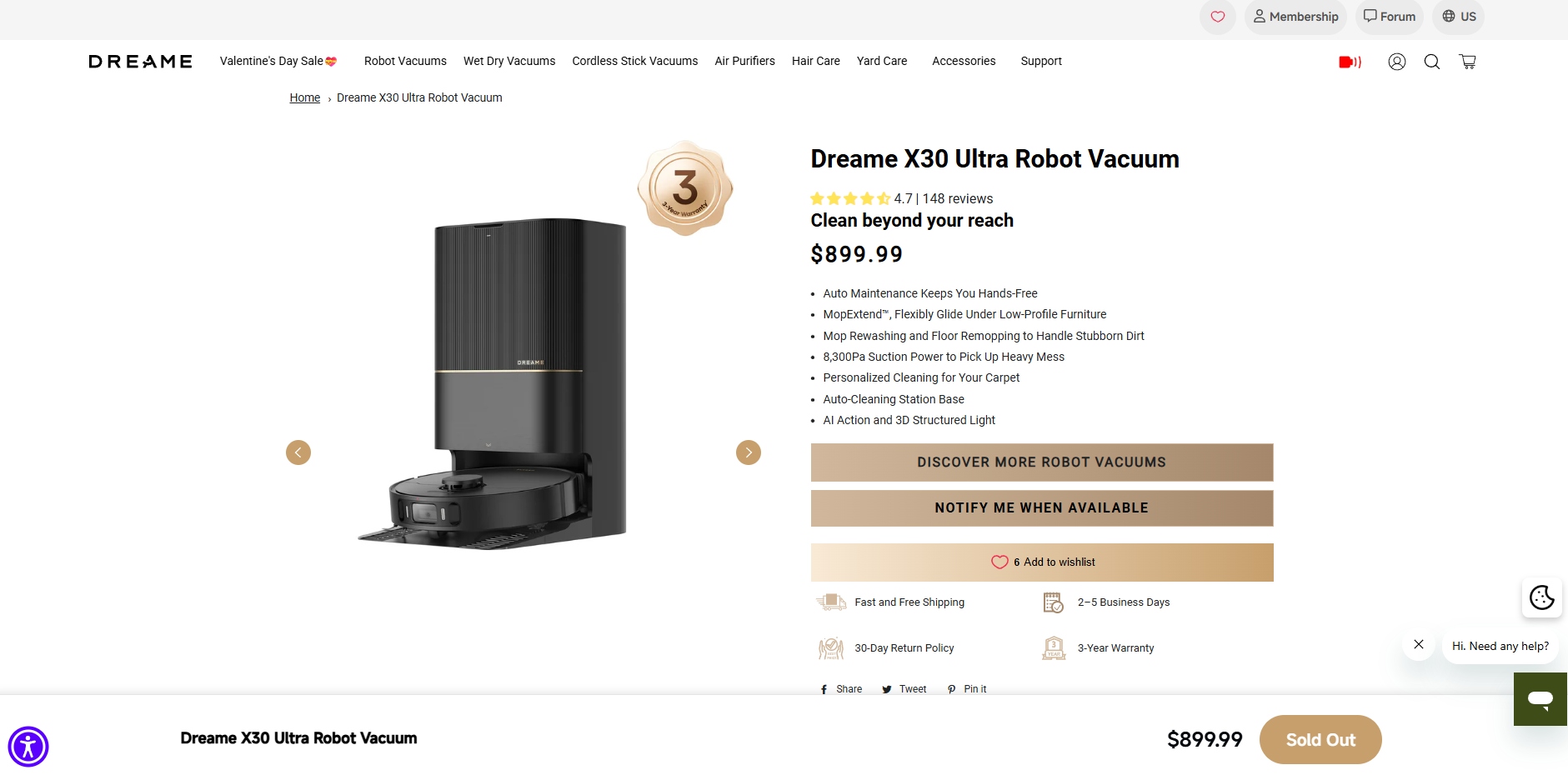
The Dreame X30 Ultra is a high-end hybrid robot vacuum and mop designed for large, high-traffic commercial spaces. It integrates self-cleaning mop pads, automated detergent dispensing, and intelligent LiDAR navigation for multi-surface coverage.
Pros:
Mop Management: Removes, installs, washes, and dries its own mop pads automatically.
Self-Cleaning Washboard: Cleans its washboard after each cycle, reducing manual maintenance.
Automatic Detergent Dispensing: Refills the internal tank with water and detergent for continuous cleaning.
Large-Particle Pickup: Efficiently vacuums crumbs, dust, and pet hair from multiple surfaces.
Efficient Mapping & Cleaning: Uses LiDAR to map spaces and optimize coverage across carpets and hard floors.
Cons:
Deep Cleaning: Falls slightly short compared to competitors on embedded dirt or stubborn stains.
Who It’s For:
Convenience-Focused Facilities: Reduces labor with self-cleaning mops, auto-detergent dispensing, and automated dustbin emptying.
Carpet-Sensitive Areas: Automatically removes mop pads for delicate rugs, preventing moisture damage while still performing hybrid cleaning.
Specs & Configurations:
Dimensions: 13.8 × 13.8 × 3.8 inches
Battery Life: 135 minutes
Type: Mop/Vacuum Hybrid
Features: Scheduling, Virtual Walls, Remote & Phone Control
Why You Should Choose This:
Self-cleans dustbin, mop pads, and basin for extended unattended cleaning.
Automatically adjusts mop usage for carpets or hard floors.
8,300Pa suction removes large debris efficiently.
Base station automatically refills water and detergent for continuous operation.
LiDAR navigation ensures efficient mapping and thorough cleaning across complex layouts.
Ecovacs Deebot Ozmo N8 Pro+
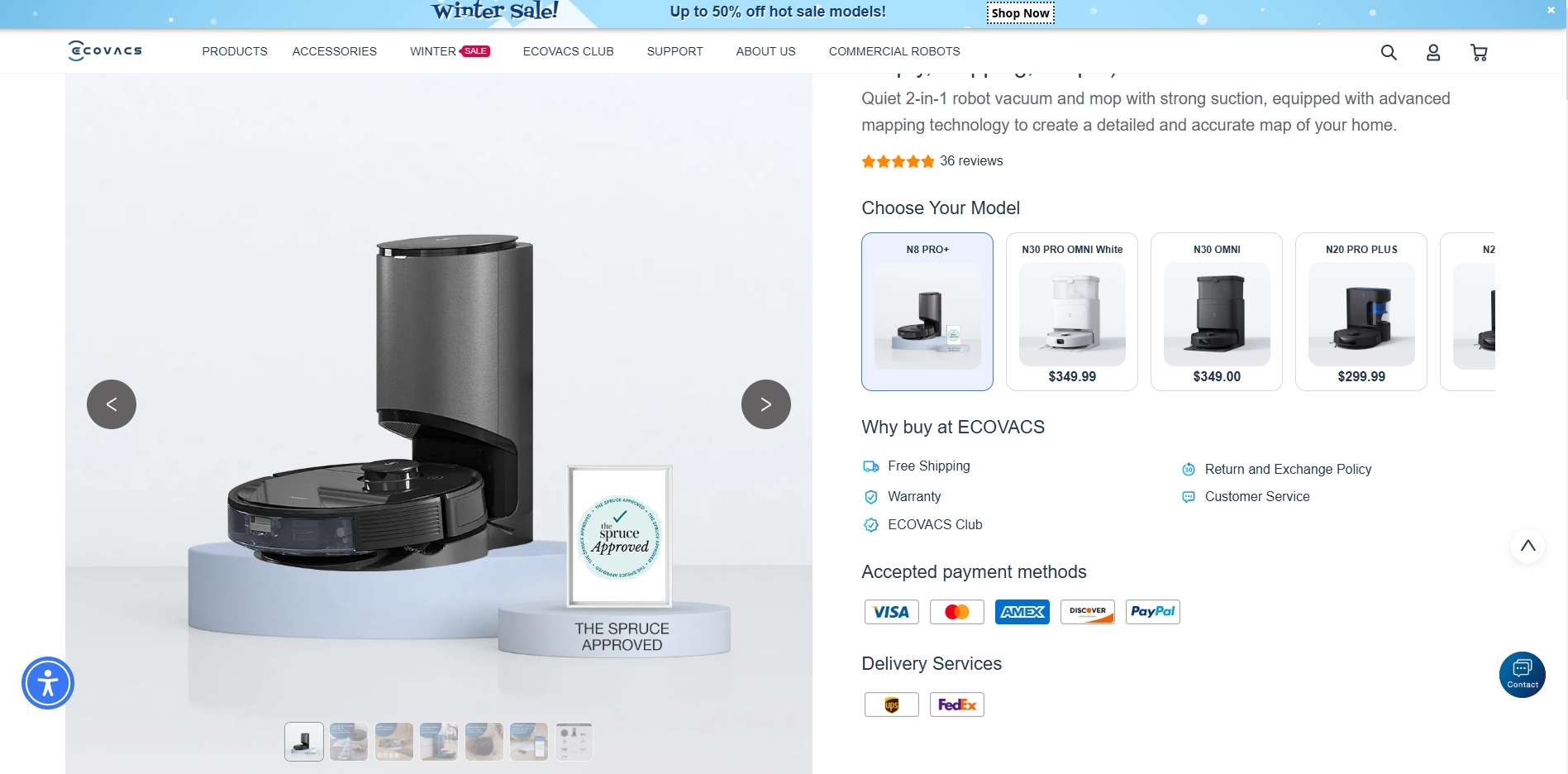
The Ecovacs Deebot Ozmo N8 Pro+ is a versatile hybrid robot vacuum and mop suitable for medium to large commercial and high-traffic spaces. It integrates self-emptying dustbin functionality, carpet detection, and efficient LiDAR navigation for multi-surface cleaning.
Pros:
Effective Vacuuming & Mopping: Delivers reliable cleaning performance on both carpets and hard floors.
Self-Emptying Dustbin: Minimizes manual intervention and reduces labor requirements.
Strong Suction Power: 2,600Pa suction efficiently captures dust, dirt, and small debris.
Automatic Carpet Detection: Adjusts suction when transitioning from hard floors to carpets for optimized cleaning.
Smart Features: Supports virtual boundaries, scheduling, zone cleaning, and voice control via Alexa and Google Assistant.
Cons:
High Price Point: Premium cost may limit utilization for smaller facilities.
Mapping Accuracy: Minor map inconsistencies may require manual adjustments.
Average Battery Life: 96 minutes may require recharging for larger cleaning areas.
Who It’s For:
Value-Conscious Facilities: Offers strong hybrid cleaning performance at a price lower than current premium models.
Medium to Large Spaces: Navigates and cleans efficiently across diverse flooring types.
Specs & Configurations:
Dimensions: 13.9 × 13.9 × 3.7 inches
Battery Life: 96 minutes
Type: Mop/Vacuum Hybrid
Features: Scheduling, Virtual Walls, Remote & Phone Control
Why You Should Choose This:
Combines vacuuming and mopping for consistent floor hygiene.
Self-emptying functionality reduces staff workload.
Carpet detection ensures optimized cleaning across surfaces.
Works with Alexa and Google Assistant for seamless control.
LiDAR navigation ensures systematic coverage and reliable performance.
Roborock Qrevo Curv
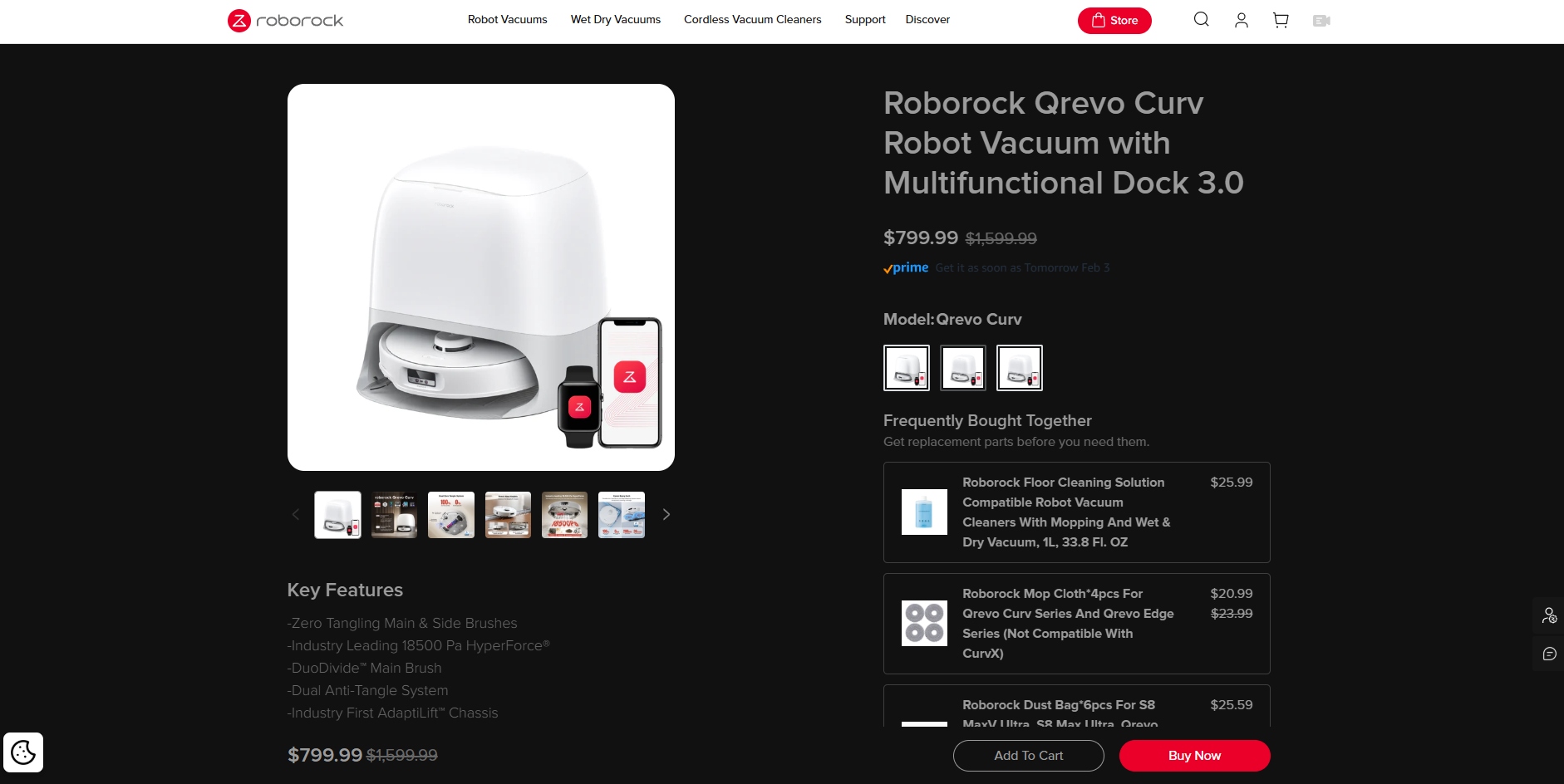
The Roborock Qrevo Curv is a high-performance hybrid robot vacuum and mop designed for multi-level, high-traffic commercial and residential spaces. It integrates self-lifting wheels, mop pad washing, and corner-reaching brushes for versatile multi-surface cleaning.
Pros:
Excellent Cleaning Performance: Efficiently vacuums and mops a variety of floor types.
Corner & Edge Reach: Side brushes and extendable mop pads access corners and wall edges.
Self-Lifting Chassis: Wheels lift the robot over thresholds up to 1.6 inches and cords.
Detachable Mop Pads: Mop pads can be removed for washing and maintenance.
Smart Features: Built-in voice assistant and optional security camera functionality enhance usability.
Cons:
Obstacle Challenges: May occasionally run over small obstacles during operation.
No Detergent Dispenser: Requires manual addition of cleaning solution for mopping tasks.
Carpet Dragging: Mop pads can unintentionally contact carpeted areas, limiting hybrid effectiveness.
Who It’s For:
Multi-Level Spaces: Ideal for facilities with thresholds, steps, and varied floor elevations.
Allergy-Sensitive Environments: Reaches corners and edges for thorough removal of dust, pet dander, and debris.
Design-Conscious Users: Curved design and optional finishes suit environments seeking aesthetic appeal.
Specs & Configurations:
Dimensions: 13.9 × 13.7 × 4.1 inches
Battery Life: 120 minutes
Type: Mop/Vacuum Hybrid
Features: Scheduling, Virtual Walls, Remote & Phone Control
Why You Should Choose This:
Vacuuming and mopping capabilities adapt to different flooring types.
Self-lifting wheels allow smooth movement across multi-level floors.
Side brushes and extendable mop pads ensure comprehensive coverage.
Detachable mop pads simplify cleaning and reduce cross-contamination.
Built-in voice assistant improves hands-free control in commercial and residential environments.
Ecovacs Deebot X9 Pro Omni
Source Link
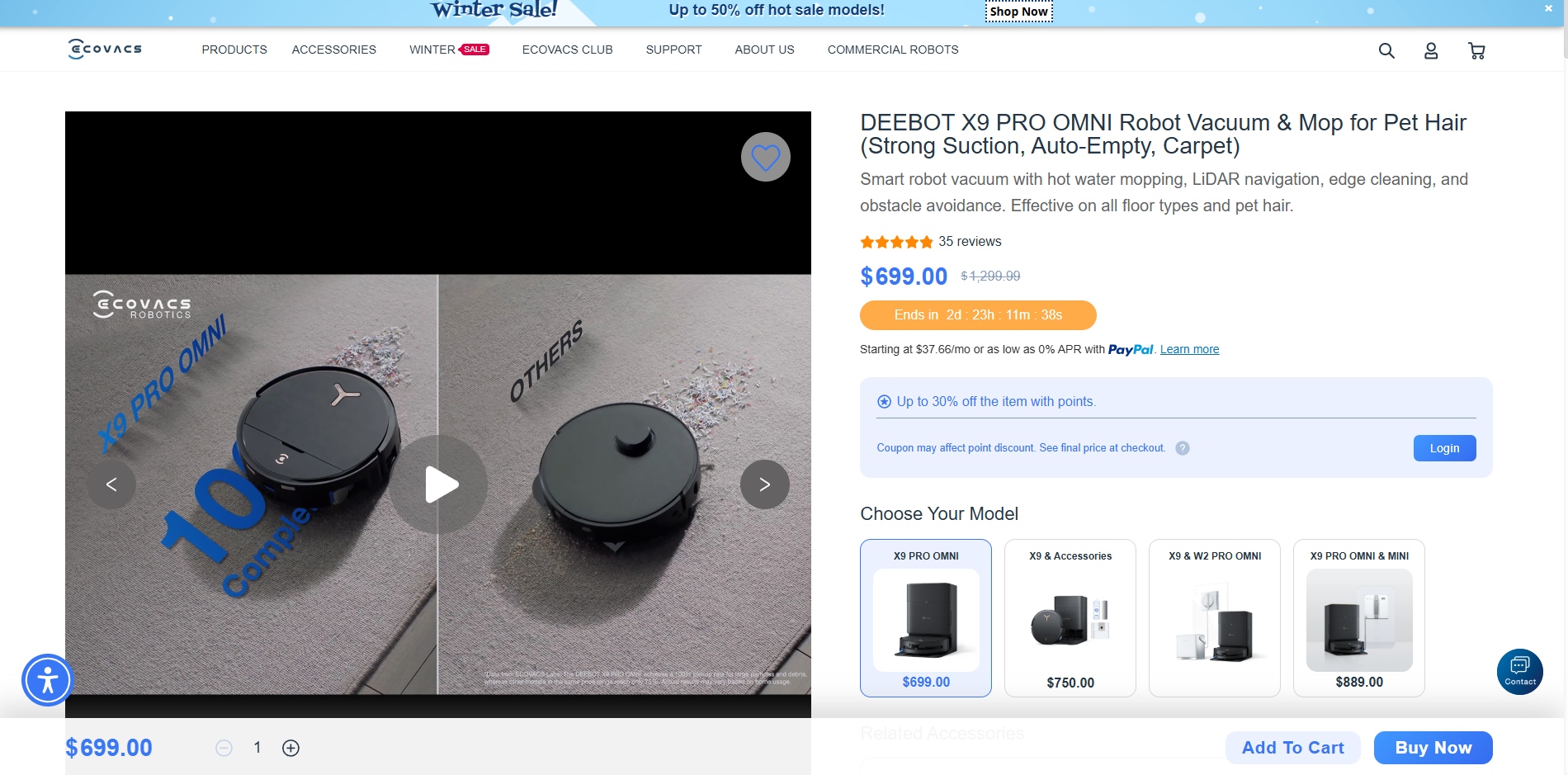
The Ecovacs Deebot X9 Pro Omni is a high-end hybrid robot vacuum and mop with Blast suction technology, self-cleaning roller mops, and advanced obstacle handling. It is ideal for multi-surface commercial environments requiring thorough cleaning and automation.
Pros:
Exceptional Vacuum Performance: Blast technology provides high suction for large debris and deep cleaning.
Self-Cleaning Mop: Roller mop refreshes continuously during operation to limit cross-contamination.
Obstacle Management: Navigates around furniture and obstacles with minimal human intervention.
Automatic Detergent Dispensing: Adjusts water and solution for optimal mopping.
Corner & Edge Reach: Side brush and mop extend into corners and along walls.
Cons:
Sluggish Controls: App and manual controls respond more slowly than some competitors.
Occasionally Gets Stuck: Rarely requires intervention in complex layouts.
High Price Point: Premium cost may not fit all budgets.
Who It’s For:
Cleaning Perfectionists: Optimized suction ensures carpets and floors are thoroughly cleaned.
Mixed Flooring Facilities: Equally effective on carpets and hard floors.
Specs & Configurations:
Dimensions: 13.9 × 13.8 × 3.9 inches
Battery Life: 115 minutes
Type: Mop/Vacuum Hybrid
Features: Scheduling, Virtual Walls, Remote & Phone Control
Why You Should Choose This:
Ensures high-efficiency vacuuming across multiple floor types.
Limits cross-contamination and reduces manual maintenance.
Base station empties the dustbin, washes, and dries mop pads.
Combines vacuuming and mopping in one machine, saving labor.
As facilities increasingly require 24/7 cleaning performance without expanding labor, ToDo Robotics acts as a distribution and deployment partner, helping organizations implement next-generation autonomous cleaning systems from leading manufacturers. Solutions such as Scrubber 50 and Scrubber 75 for precision scrubbing, Sparkoz TN70 and SH1 for intensive floor care, and platforms including Vacuum 40, Phantas, and ZACO X1000 for vacuuming, sweeping, and mopping enable consistent, efficient floor maintenance across hotels, hospitals, and retail spaces.
After seeing the top options, we’ll examine how to choose the right robot for your facility.
How To Choose The Best Automated Commercial Cleaning Robot
Selecting the right autonomous commercial cleaning solution determines long‑term operational efficiency, hygiene consistency, and labor optimization in high‑traffic facilities. Focus on core performance, integration, and total cost of ownership.
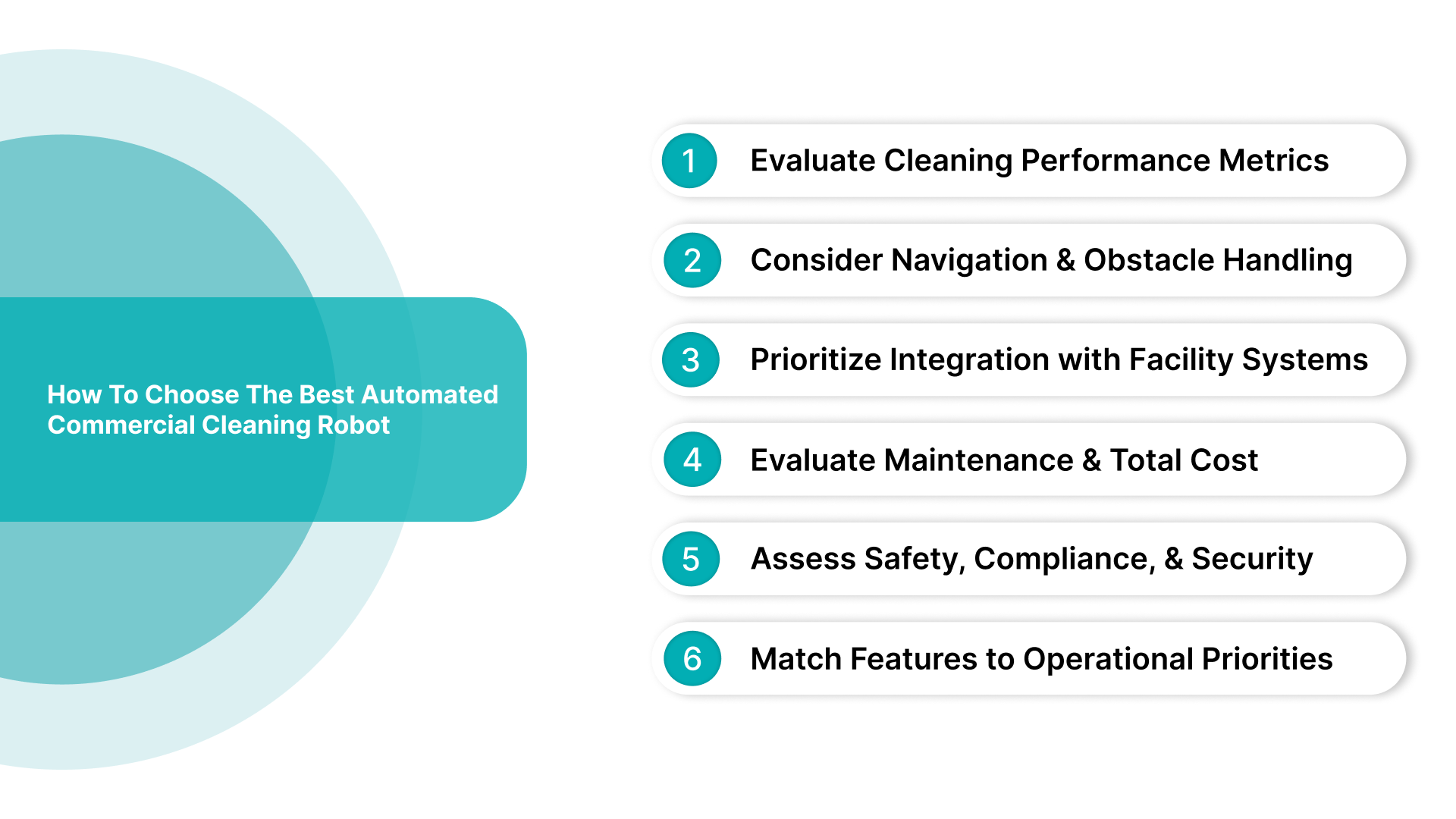
Evaluate Cleaning Performance Metrics
Assess suction power, brush design, and mop effectiveness to match facility flooring and soil levels. High suction and adaptive cleaning cycles ensure thorough debris removal in hotels, hospitals, and retail centers.
Suction Strength: Choose robots with adjustable suction capable of handling dust, sand, hair, and debris across carpet and hard surfaces.
Brush and Mop Systems: Prioritize modular brush sets and self‑cleaning mops that reduce cross‑contamination and manual maintenance.
Coverage Consistency: Ensure pattern‑based navigation (LiDAR/SLAM) minimizes missed zones in complex layouts.
Consider Navigation and Obstacle Handling
Effective autonomous cleaning depends on robust navigation algorithms, sensor fusion, and obstacle avoidance. These features decrease staff monitoring and increase uptime.
LiDAR and Vision Sensors: Provide detailed mapping, enabling robots to navigate crowded hospital corridors or retail aisles.
Cliff and Obstacle Detection: Prevent falls and collisions around furniture, equipment, and customer pathways.
Path Planning: Adjust routes in real time for changing facility layouts and peak footfall patterns.
Prioritize Integration with Facility Systems
Compatibility with building management and IoT platforms enhances scheduling, analytics, and resource reporting across multiple locations.
Remote Control & Scheduling: Choose robots that support centralized command and smart scheduling via app or web dashboards.
Building System Sync: Ensure API support for syncing with occupancy sensors, HVAC, or ERP systems.
Fleet Management Tools: Enable performance monitoring and fault alerts across robot fleets in airports or commercial campuses.
Evaluate Maintenance and Total Cost
Total cost of ownership includes consumables, service contracts, and longevity, not just the upfront price. Automated maintenance features reduce labor input.
Self‑Emptying and Mop Wash: Robots that empty bins and wash mop pads reduce staff workload and downtime.
Consumable Durability: Select models with long‑lasting brushes, filters, and batteries to lower replacement costs.
Serviceability: Ensure robust vendor support with accessible parts and local technician assistance.
Assess Safety, Compliance, and Security
Robotic systems must protect people, assets, and data while operating autonomously in public spaces.
Operational Safety Standards: Look for collision mitigation and regulatory compliance for commercial environments.
Data Security: Choose robots with encrypted telemetry and secure network communication.
Privacy Controls: Ensure image and sensor footprint respect customer and employee privacy policies.
Match Features to Operational Priorities
Align robot capabilities with specific facility needs to maximize ROI and performance.
Large Footprint Facilities: Prioritize long battery life, rapid recharge, and fleet coordination.
High Hygiene Requirements: Choose advanced mopping systems and UV or sanitization add‑ons where needed.
Labor Shortage Constraints: Robots with autonomous emptying and app‑based oversight reduce staffing dependency.
Selecting the best automated commercial cleaning robot means balancing performance, integration, maintenance, and safety to suit facility scale, foot traffic, and operational goals.
Conclusion
Autonomous commercial cleaning robots in 2026 redefine operational efficiency for hotels, hospitals, retail, and office spaces. High-end hybrids integrate vacuuming, mopping, and intelligent navigation.
By combining LiDAR mapping, adaptive suction, and self-cleaning mops, these robots reduce labor requirements, maintain hygiene consistency, and optimize cleaning schedules across large, high-traffic facilities. Autonomous commercial cleaning robot reviews highlight their ability to scale operations while freeing staff for higher-value tasks.
For expansive properties with mixed floor types, ToDo Robotics helps facilities scale autonomous cleaning by supporting the implementation of platforms like the MT1 for high-capacity sweeping and the CC1 for combined sweeping, scrubbing, and mopping. These systems reduce reliance on manual labor while helping maintain consistent hygiene standards across large footprints.
Contact ToDo Robotics to learn how autonomous commercial cleaning solutions from leading robotics manufacturers can enhance your operational workflows in 2026 and beyond.
FAQs
1. How long do commercial cleaning robots operate per charge?
Battery life varies by model, typically 90–135 minutes, with high-capacity units supporting large, multi-floor facilities and extended operational cycles without interruption.
2. Can these robots handle mixed flooring types effectively?
Yes, premium models automatically adjust suction and mop settings for carpet, hardwood, and tile, ensuring uniform cleaning without manual intervention.
3. Are these robots suitable for high-traffic areas?
Absolutely. Intelligent navigation, obstacle detection, and real-time mapping allow continuous cleaning in hospitals, retail stores, and restaurants with minimal disruption.
4. How do self-cleaning mops improve hygiene?
Self-cleaning mops refresh during operation, preventing cross-contamination between surfaces and maintaining consistent sanitation standards in food service and healthcare facilities.
5. What integration features support facility management systems?
Advanced robots sync with building management platforms, enable remote scheduling, fleet monitoring, occupancy-based cleaning, and automated reporting for operational efficiency.