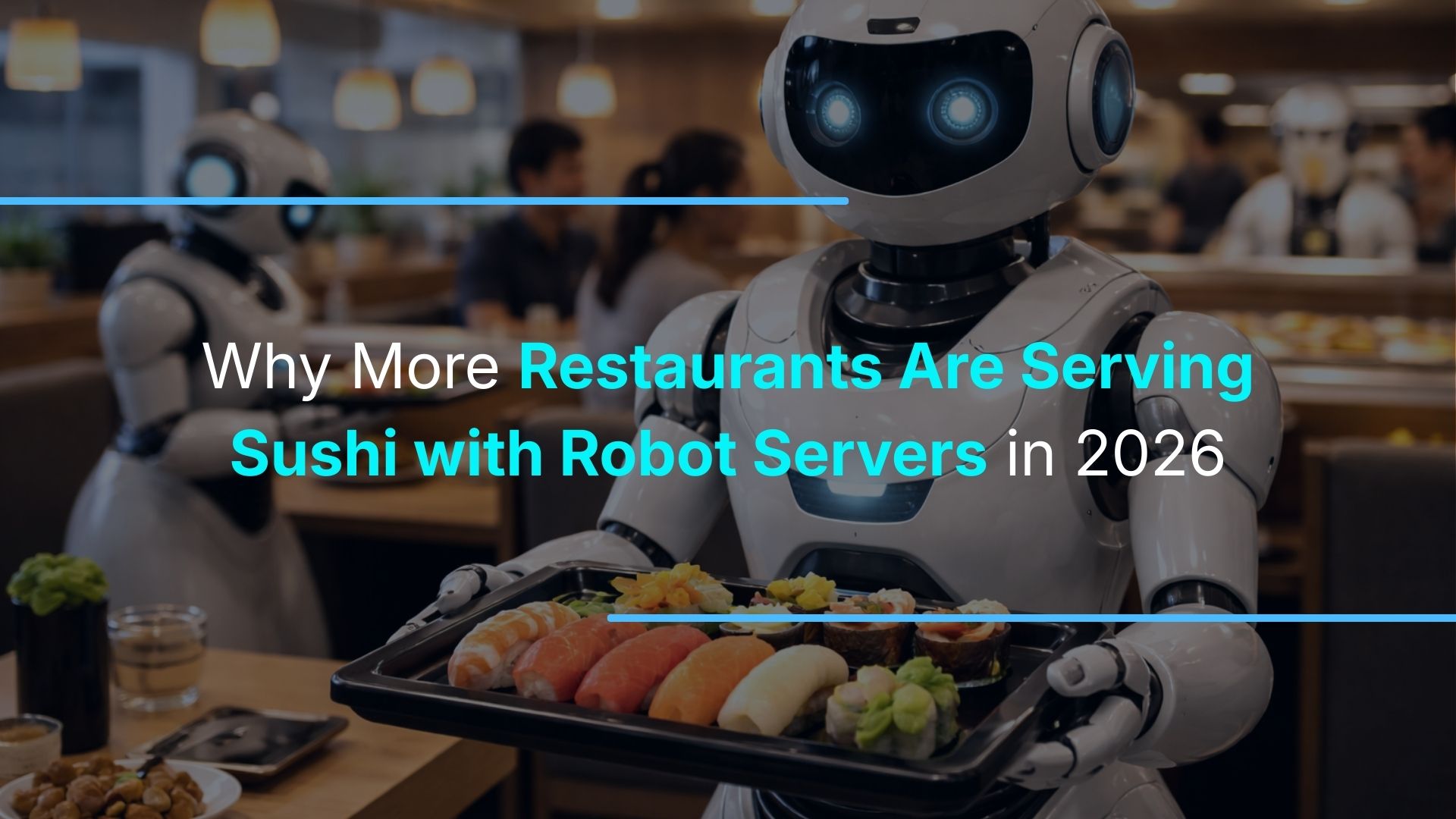
Sushi with robot server is no longer a novelty limited to overseas restaurants or viral videos. Across the United States, sushi restaurants are using indoor service robots to support food delivery within dining areas. These robots assist with transporting sushi plates, drinks, and trays from the kitchen to tables, helping teams manage service flow during busy periods.
Adoption has increased as restaurants face rising labor costs, staffing shortages, and high peak-hour demand. Rather than replacing servers, robot servers are used to handle repetitive delivery tasks so staff can focus on guest interaction and table service.
This guide explains how sushi restaurants use robot servers today, where they are deployed, how they work in practice, and what operators should consider before adoption.
Key Takeaways
Robot servers are actively used in U.S. sushi restaurants, supporting food delivery in dining areas rather than acting as novelty attractions.
They function as indoor service robots, transporting sushi plates, drinks, and trays from kitchen to tables without preparing food.
Restaurants adopt robot servers to reduce walking time and peak-hour delays, especially during busy dinner service.
Real deployments, such as Kura Sushi USA, show robots being used to improve delivery consistency and staff support.
Successful implementation depends on layout fit and workflow planning, not hardware alone, to protect guest experience and operational efficiency.
Robot Server In A Sushi Restaurant: What You Need to Know
A robot server in a sushi restaurant is an indoor service robot used within the dining area to assist with food and drink delivery. These robots move prepared items from the kitchen or service station to guest tables, helping reduce manual running during busy service periods.
Robot servers operate alongside staff in customer-facing spaces and are designed to navigate safely through dining rooms, aisles, and seating areas. Their role is limited to transport and delivery, not food preparation.
It is important to distinguish robot servers from other forms of sushi automation:
Kitchen sushi machines are used to prepare rice, roll sushi, or portion ingredients. They operate strictly in back-of-house kitchens.
Conveyor belt systems continuously circulate plates along fixed tracks and do not perform table-specific delivery.
Robot servers, by contrast, deliver finished dishes directly to assigned tables or service points.
In simple terms, robots serve sushi, they do not make it. They function as automated food runners, supporting service flow while chefs and servers handle preparation and hospitality.
Real Examples Of Sushi With Robot Server In The US
Several sushi restaurants in the United States have adopted robot servers to support dine-in operations, particularly in high-traffic and high-volume environments. These deployments focus on improving delivery consistency and reducing manual running, rather than replacing staff.
Below are documented examples of how robot servers are being used in practice:
Kura Sushi USA
Kura Sushi USA has implemented service robots, known as KuraBots, across a portion of its U.S. locations.
Why robots were introduced:
High dine-in traffic during peak meal hours
Long walking distances between kitchen and tables
Need to maintain service speed without increasing staffing pressure
How they are used operationally:
Delivering drinks, utensils, and condiments to tables
Supporting staff during peak service periods
Operating alongside the existing conveyor belt system
Reported operational impact:
Reduced repetitive walking for servers
More consistent delivery timing
Additional staff availability for guest interaction
The robots function strictly as delivery support and do not prepare food or replace table service staff.
Independent Sushi Restaurants Using Service Robots
Beyond large chains, many independent sushi restaurants across the U.S. have introduced indoor service robots similar to BellaBot-style platforms.
These restaurants typically implement robots due to:
Limited staffing availability
High weekend and dinner rush volume
Dining layouts with extended table distances
Common operational uses include:
Delivering sushi plates from kitchen to tables
Transporting multiple dishes in a single trip
Assisting servers during peak hours
In these environments, robots are often deployed during the busiest service windows, while traditional service continues during slower periods.
The consistent theme across U.S. sushi restaurants is practical deployment, using robots to stabilize service flow and reduce staff fatigue, rather than introducing automation for novelty or entertainment purposes.
For any restaurants seeking to modernize their dining spaces with robot servers, ToDo Robotics works with them to assess dining layouts, service flow, and staffing pressure. It helps identify where robot servers can deliver meaningful operational support, along with providing the right products suited to the environment.
How Robot Servers Work In Sushi Restaurants: Step-By-Step Process
Robot servers in sushi restaurants follow a structured delivery workflow designed to support daily service operations. Their role is limited to food transport, allowing teams to maintain consistent delivery timing during busy periods.
Below is a typical operational flow.
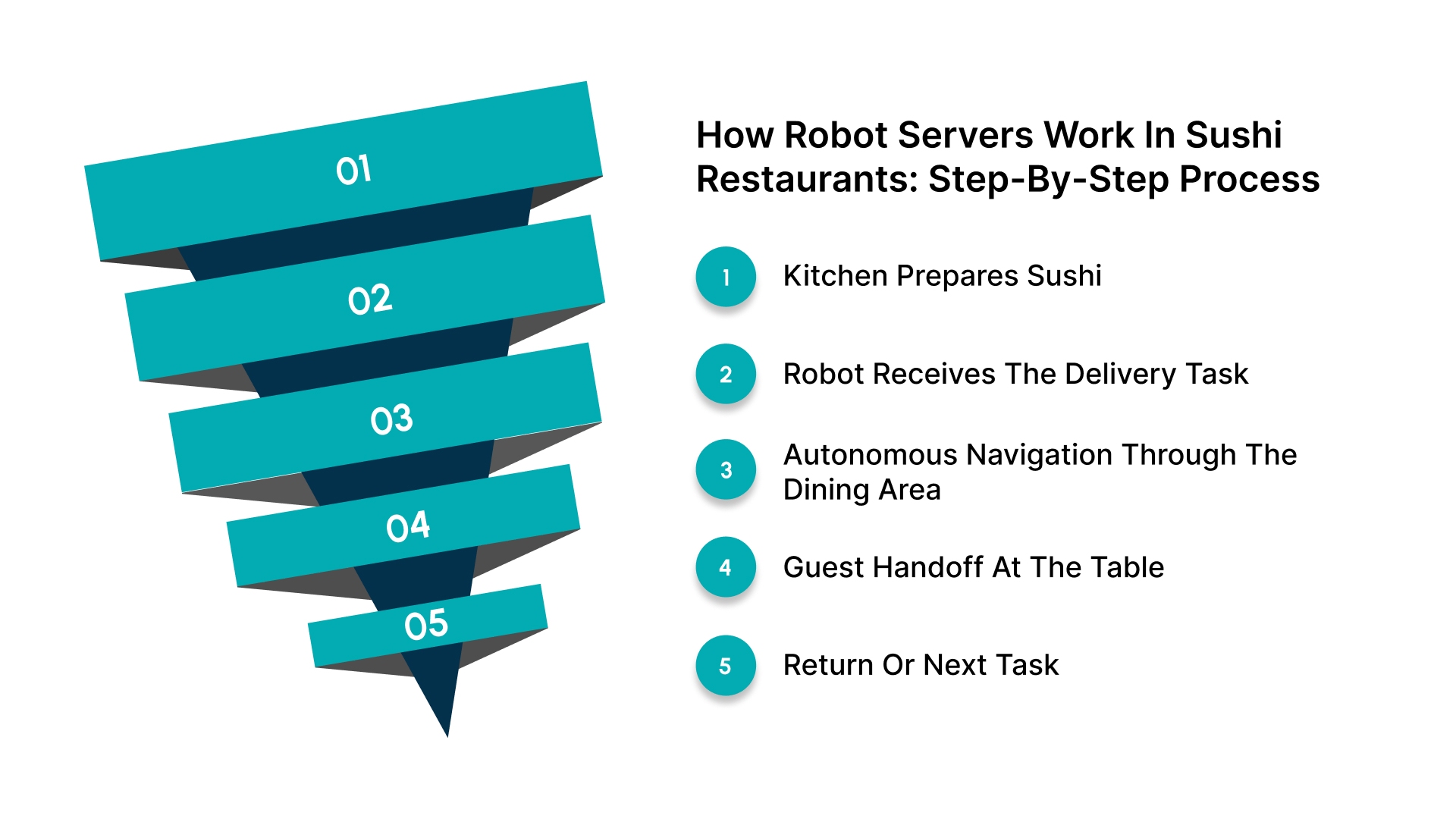
Step 1: Kitchen Prepares Sushi
Sushi is prepared by kitchen staff as usual. Once an order is ready, plates, trays, or drinks are placed onto the robot’s shelves or enclosed compartments.
No changes to food preparation or plating processes are required.
Step 2: Robot Receives The Delivery Task
A delivery task is assigned through the robot’s touchscreen interface or a staff-operated tablet. The destination table or service zone is selected manually.
Once confirmed, the robot locks the task and prepares for movement.
Step 3: Autonomous Navigation Through The Dining Area
Using LiDAR sensors and onboard mapping, the robot navigates through the dining room along pre-mapped routes.
During movement, the robot:
Detects people and obstacles in real time
Slows in crowded areas
Reroutes if pathways are blocked
This allows safe operation alongside guests and staff.
Step 4: Guest Handoff At The Table
Upon arrival, the robot stops at the assigned table and provides a visual or audio prompt to indicate delivery.
Guests or servers remove the items directly from the robot’s tray, completing the handoff without physical contact.
Step 5: Return Or Next Task
After delivery, the robot either:
Returns to the kitchen or standby area
Proceeds to the next assigned delivery
Navigates to its charging station when battery levels are low
This cycle repeats continuously throughout service hours.
By following this predictable workflow, robot servers help sushi restaurants maintain steady food delivery timing, reduce unnecessary walking, and support consistent service during peak dining periods.
Benefits Of Using Robot Servers In Sushi Restaurants
Sushi restaurants tend to operate in fast-paced dining environments with frequent table movement, compact kitchens, and high peak-hour volume. In these conditions, robot servers are used to improve delivery efficiency rather than change the service model.
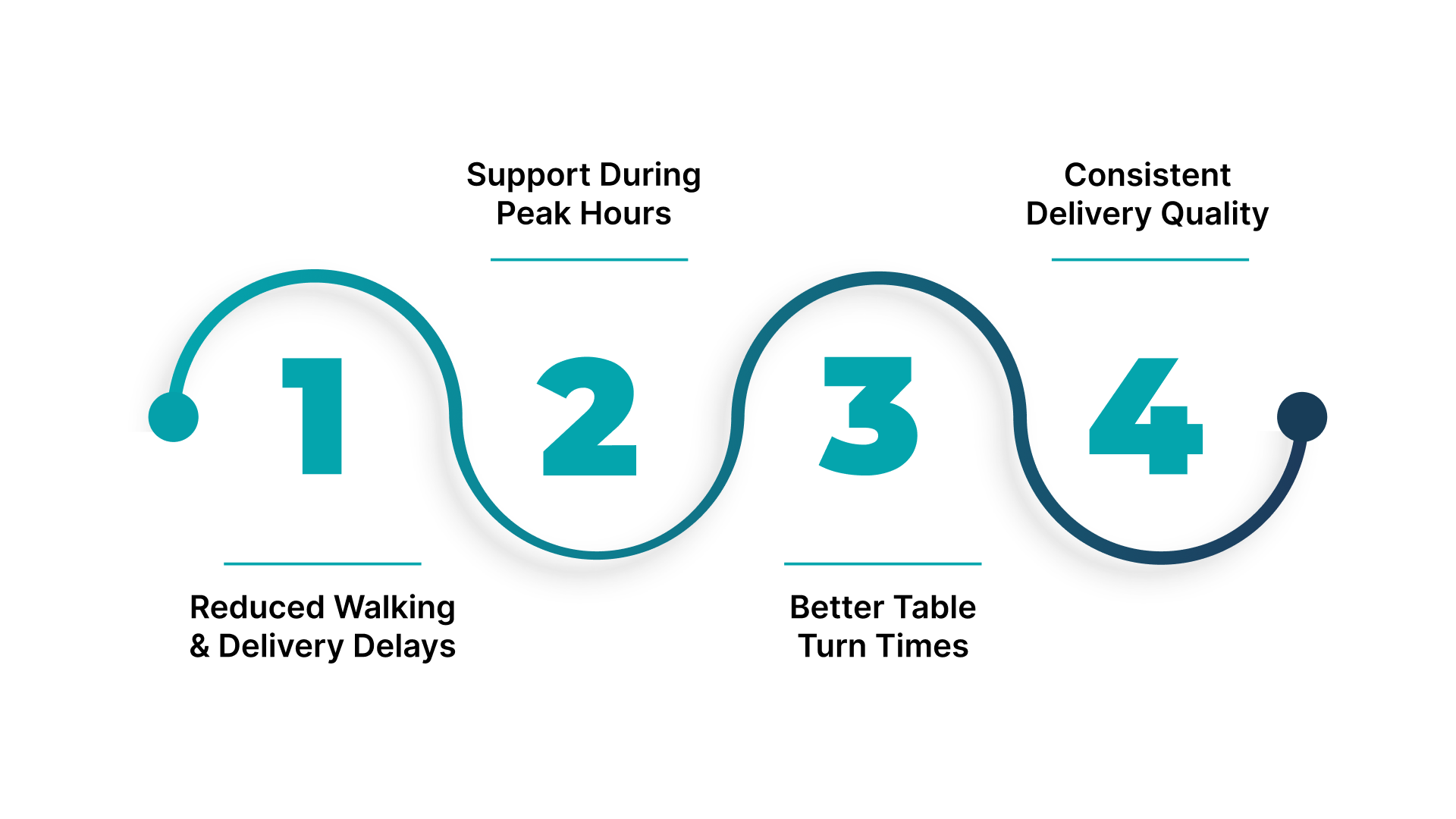
The primary operational benefits include:
1. Reduced Walking And Delivery Delays: In many sushi restaurants, servers spend a significant portion of each shift walking between the kitchen and dining area. Robot servers handle these repetitive delivery routes, allowing food to leave the kitchen immediately once ready.
This reduces delays caused by staff availability and keeps service moving during busy periods.
2. Support During Peak Hours: Dinner rushes and weekend service often create short-term staffing gaps. Robot servers provide consistent delivery support during these high-volume windows without requiring additional headcount.
Restaurants commonly deploy robots specifically during peak hours to stabilize service flow.
3. Better Table Turn Times: Faster delivery from kitchen to table helps guests begin meals sooner. While robots do not increase seating capacity, they help reduce idle time between order completion and food arrival.
Over the course of a service period, this can contribute to smoother table turnover.
4. Consistent Delivery Quality: Robot servers follow predefined routes and delivery steps, providing predictable timing regardless of shift changes or staffing variation.
This consistency helps restaurants maintain service standards even when team experience levels vary.
When used in the right context, robot servers help sushi restaurants improve delivery reliability and reduce physical workload for staff, without altering food preparation, hospitality, or guest interaction.
Customer And Staff Experience With Robot Servers
Customer and staff response plays a major role in the success of robot server deployments. In sushi restaurants where automation has been introduced, feedback has generally focused on service flow improvements rather than novelty.
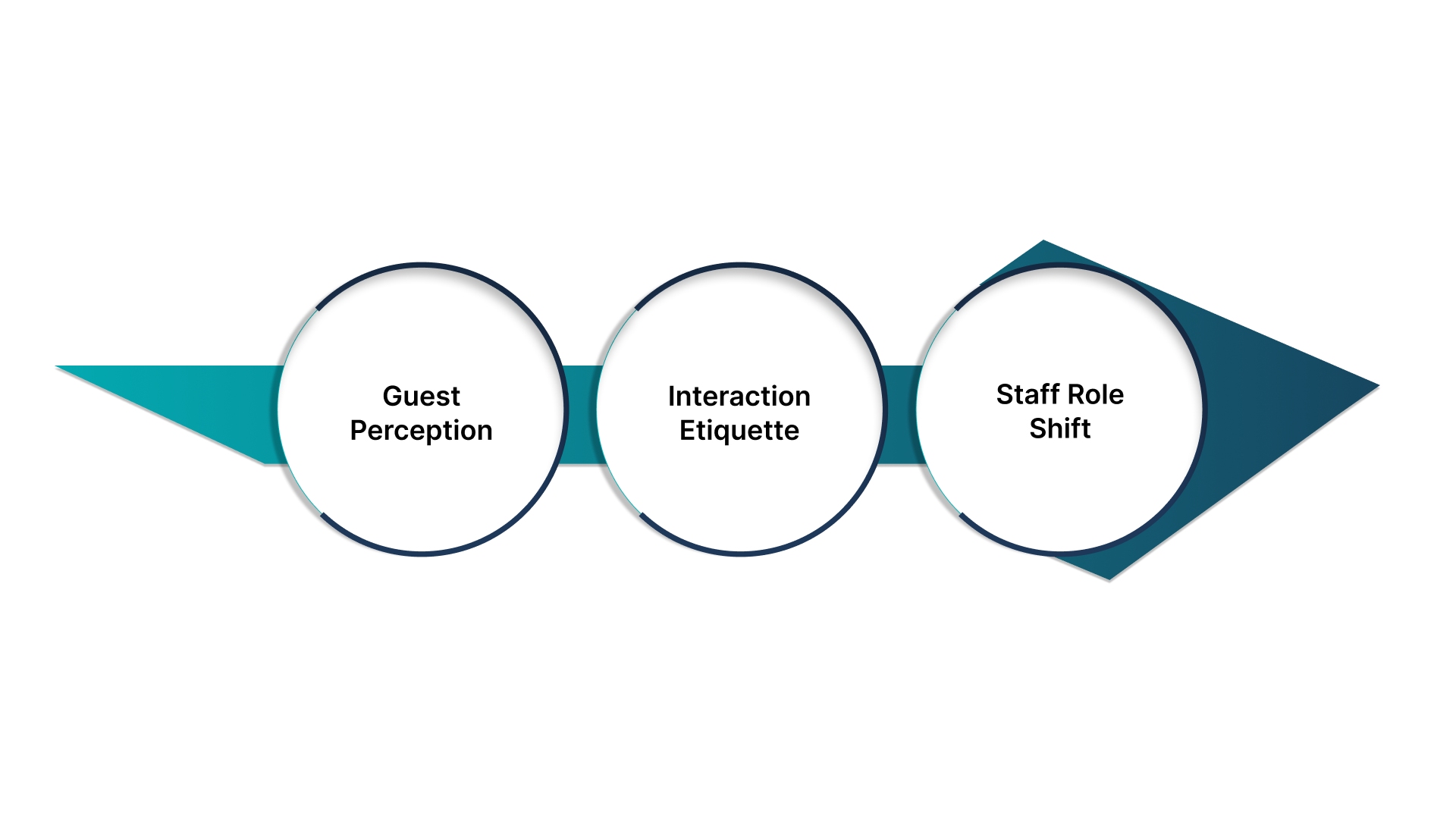
Guest Perception
Restaurants using robot servers have reported positive customer reactions following the introduction of robot servers, particularly around delivery speed and consistency.
Guests typically view robots as a functional part of the dining experience rather than a replacement for hospitality staff.
Common guest responses include:
Faster arrival of drinks or dishes
Clear delivery cues when food reaches the table
Minimal disruption to the dining atmosphere
Because robots do not take orders or interact conversationally, human service remains central to the guest experience.
Interaction Etiquette
Successful deployments rely on clear interaction design and staff guidance.
In practice:
Robots stop at tables and signal when delivery is complete
Guests or servers remove items directly from trays
Simple signage or brief staff instructions help avoid confusion
When expectations are clearly set, guest interaction with robot servers remains smooth and intuitive.
Staff Role Shift
From a staffing perspective, robot servers primarily affect how time is allocated, not job responsibilities.
Reported operational impacts include:
Reduced walking and physical strain
More time available for guest engagement
Improved consistency during peak service periods
Staff continue to manage ordering, hospitality, and table service, while robots support delivery logistics.
Across sushi restaurants, the most effective use of robot servers occurs when they are positioned as support tools, improving service flow without altering the core dining experience built around human interaction.
Considerations For Restaurants Evaluating Robot Servers
While robot servers can improve delivery efficiency, successful adoption depends on careful evaluation of operational fit. Restaurants that approach automation without planning may struggle to see consistent results.
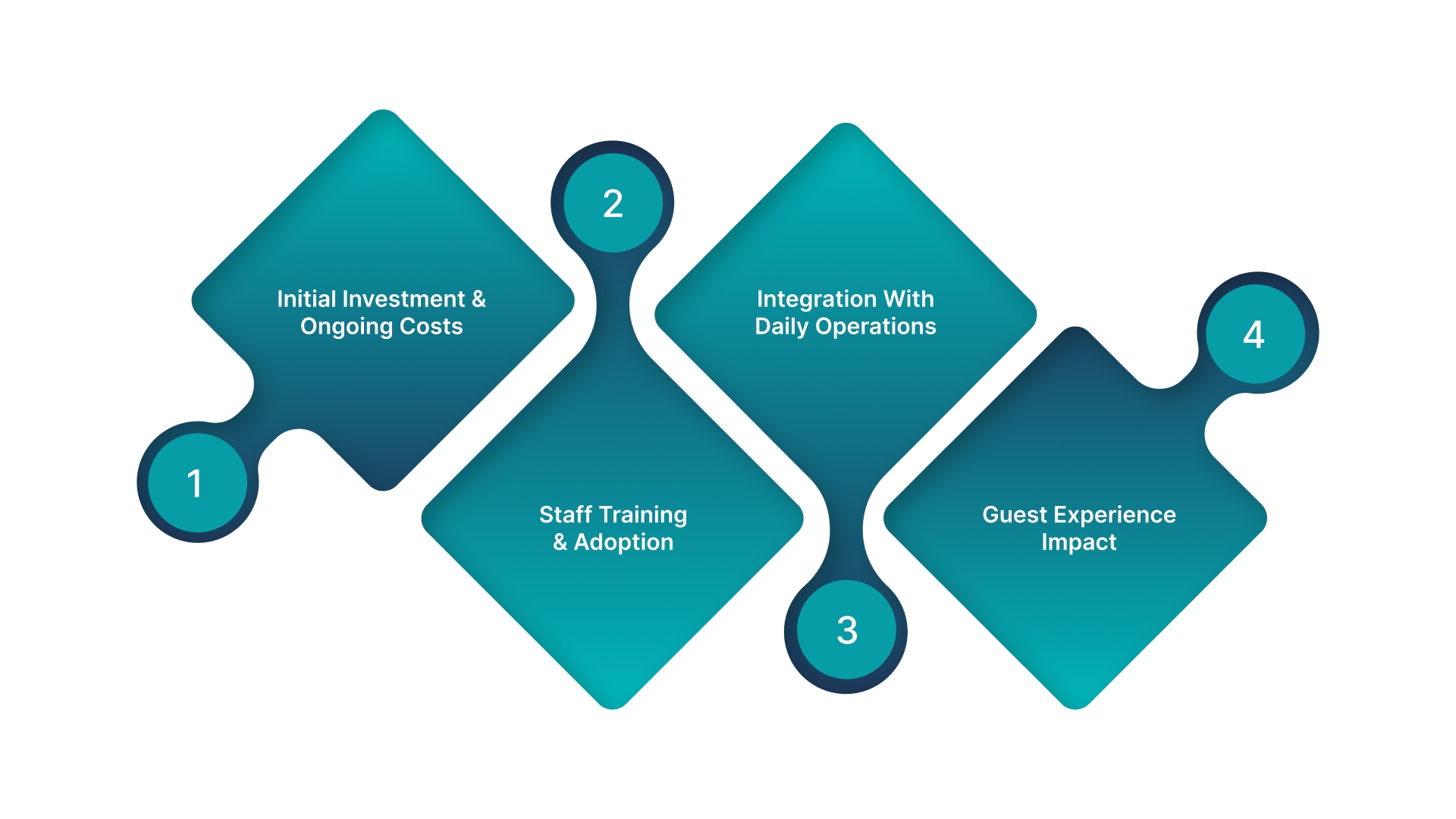
Key business considerations include:
1. Initial Investment And Ongoing Costs: Robot servers require upfront or subscription-based investment, along with ongoing support and maintenance. Restaurants should assess whether expected usage volume and walking distances justify the cost.
Robots tend to deliver the most value in locations with:
High dine-in traffic
Long delivery paths between kitchen and tables
Frequent peak-hour congestion
2. Staff Training And Adoption: Although robot servers are designed to be easy to operate, staff training remains essential.
Restaurants should plan for:
Basic dispatch and loading procedures
Clear responsibility ownership during shifts
Short onboarding sessions for new hires
Staff acceptance improves when robots are introduced as support tools rather than replacements.
3. Integration With Daily Operations: Robot servers work best when aligned with existing service flow.
Operators should consider:
Kitchen handoff points
Table numbering or zone mapping
Peak-hour deployment timing
Robots should fit into current workflows without requiring major operational changes.
4. Guest Experience Impact: Guest perception varies by restaurant type and clientele. Clear communication helps set expectations.
Best practices include:
Introducing robots as delivery assistants
Maintaining human interaction for ordering and service
Using signage or staff guidance where needed
When positioned correctly, robot servers typically enhance, rather than disrupt, the dining experience.
Evaluating these factors early helps restaurants determine whether robot servers will provide practical operational support or create unnecessary complexity.
How ToDo Robotics Implements Robot Servers In Sushi Restaurants
As sushi restaurants across the United States adapt to labor shortages and increasing dine-in volume, robot servers have become a practical way to support food delivery and maintain consistent service flow.
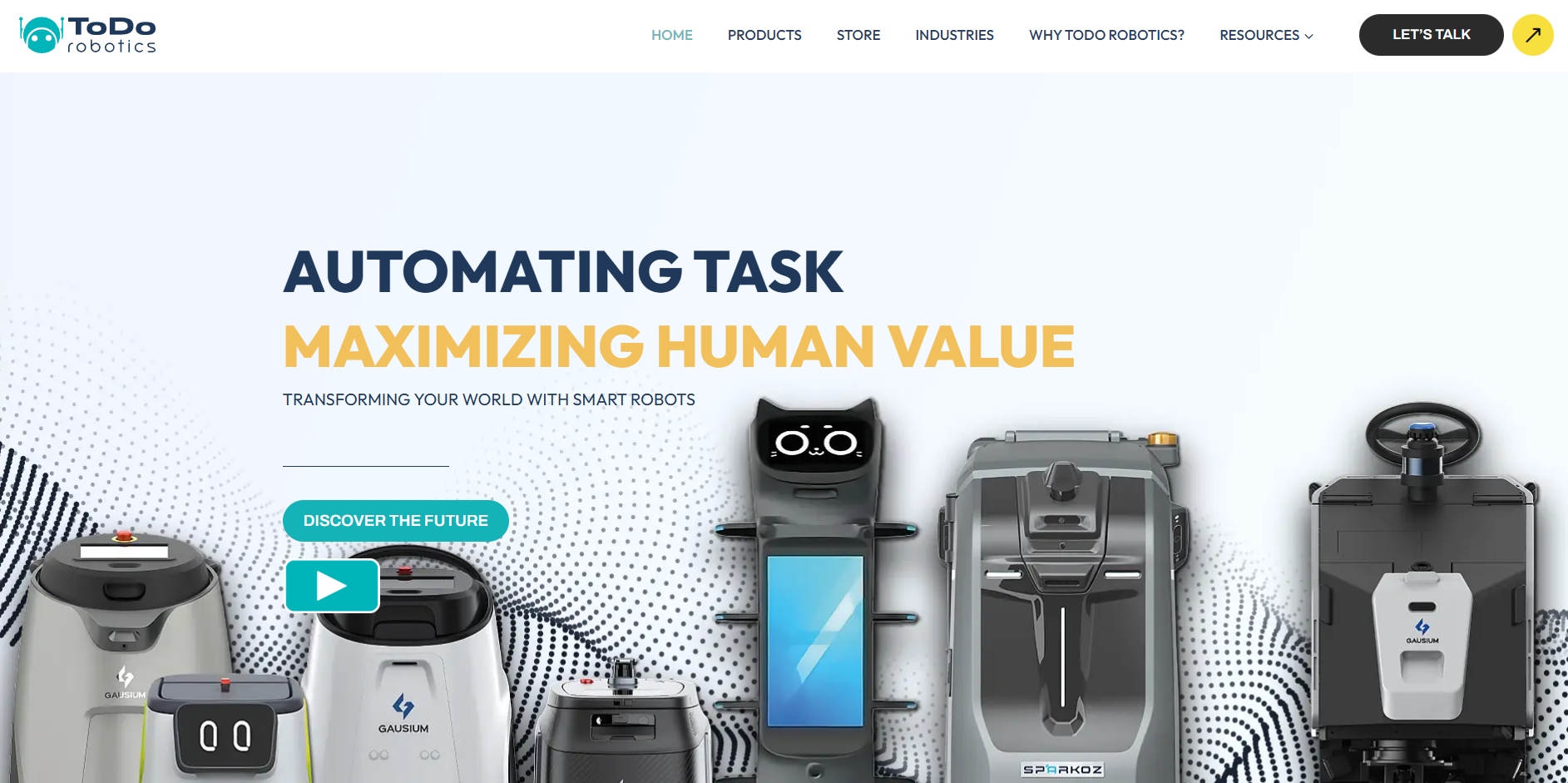
ToDo Robotics works with sushi operators to deploy service robot solutions designed specifically for indoor dining environments.
Rather than offering standardized technology packages, ToDo Robotics follows an application-specific approach based on restaurant layout, table density, service style, operating hours, and guest traffic patterns.
Depending on operational requirements, ToDo Robotics provides:
Indoor robot servers designed to transport sushi plates, drinks, and trays from kitchen to tables.
Multi-tray and enclosed delivery robots suited for high-volume dine-in service and extended dining layouts.
Autonomous navigation systems using LiDAR and vision-based mapping for safe movement in guest-facing areas.
Fleet management software that supports task dispatch, delivery tracking, and coordination across multiple robots.
Robot configurations are selected based on how sushi restaurants operate in practice — including walking distances, table turnover patterns, peak-hour pressure, and staffing availability.
To support reliable daily service, deployments may include:
Integration aligned with existing service workflows
Configurable speed zones for dining areas and back-of-house spaces
Automated charging to support continuous service periods
This approach ensures robot servers function as a support layer within daily operations rather than a separate or disruptive technology.
Beyond robot servers, ToDo Robotics offers a broader range of automation solutions to support consistency and cleanliness across sushi and hospitality environments.
These include:
Autonomous cleaning robots for dining rooms, corridors, and high-traffic areas.
Robotics consultation and site assessments to evaluate layout feasibility, workflow alignment, and expected ROI.
Installation and commissioning services, including mapping, testing, and on-site configuration.
Staff training programs, delivered in person or remotely to ensure safe and confident operation.
Ongoing maintenance and technical support, including preventive servicing, software updates, and parts availability.
By combining robot servers, cleaning automation, deployment expertise, and long-term support under a single framework, ToDo Robotics helps sushi restaurants adopt automation in a structured, operationally grounded way.
Conclusion
Robots serving food present different operational considerations depending on dining layout, service volume, staffing levels, and daily workflow demands. Deploying the wrong solution, or introducing automation without proper planning, can limit efficiency gains and negatively affect guest experience.
ToDo Robotics supports sushi restaurants and food-service operators through application-specific robot servers, workflow-aligned deployment planning, and full-lifecycle support designed for real dining environments.
Speak with ToDo Robotics to discuss how robot servers can support your service operations and long-term automation strategy.
Frequently Asked Questions (FAQs)
1. How long does it take to deploy robot servers in a sushi restaurant?
Deployment timelines typically range from a few days to a few weeks. The exact duration depends on dining layout complexity, route mapping, staff training, and any workflow adjustments required.
2. Can robot servers operate during busy dinner rushes?
Yes. Robot servers are often deployed specifically during peak lunch and dinner periods to support food delivery when service demand is highest and staffing is most stretched.
3. Do robot servers work with conveyor belt sushi concepts?
They can complement conveyor systems by delivering drinks, side dishes, or table-specific items that are not suitable for continuous belt circulation.
4. Are robot servers suitable for multi-floor sushi restaurants?
Some robot models can operate across floors using elevators integrated into the delivery workflow, provided building access, connectivity, and safety requirements are met.
5. What maintenance is required for robot servers?
Routine maintenance typically includes software updates, sensor cleaning, battery health checks, and periodic inspections, often covered through vendor support and service plans.